Rhizome of Chinese Goldthread
- Chinese
- 黄连
- Pinyin
- Chuan Huang Lian
- Latin
- Rhizoma Coptidis
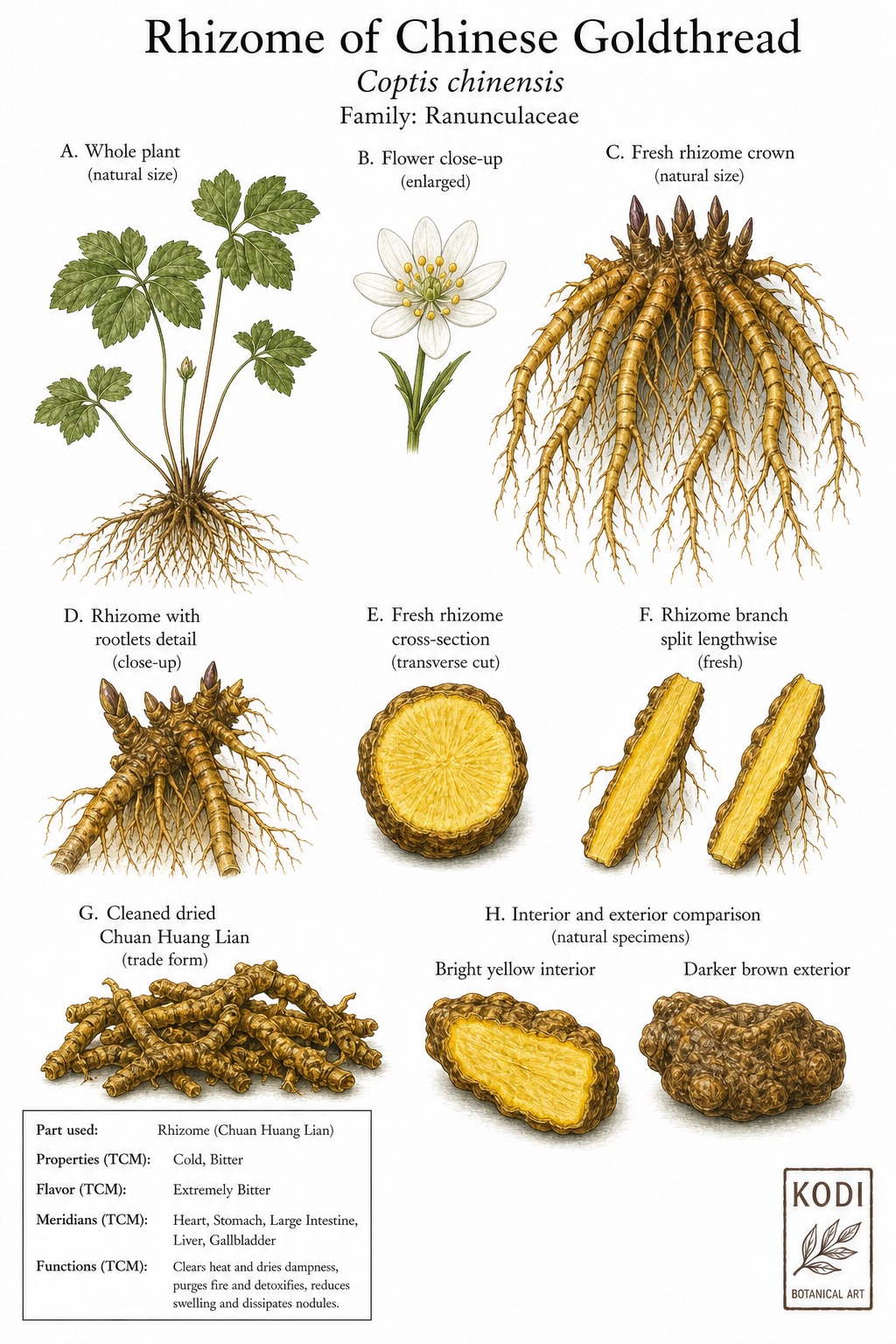
Known in TCM as Chuan Huang Lian (黄连), this bitter, cold herb enters the Heart, Liver, Stomach, Large Intestine, Gallbladder, and Spleen. Traditionally, it clears Heat and dries Dampness, most often applied for diarrhea, fever, and oral ulcers. Modern research has identified Berberine among its active constituents.
Part used: Rhizome
Also Known As
Latin: Rhizoma Coptidis | Pinyin: Chuan Huang Lian | Chinese: 黄连
TCM Properties
- Taste
- bitter
- Temperature
- cold
- Channels
- Heart, Liver, Stomach, Large Intestine, Gallbladder, Spleen
Traditional Use
Primary Actions
- Clears Heat and dries Dampness
- Drains Fire and resolves toxicity
- Clears Heart Fire
- Stops bleeding due to Blood Heat
Secondary Actions
- Cools the Blood and addresses bleeding from excess Heat
- Clears Liver and Stomach Fire
Classic Formulas
- Huang Lian Jie Du Tang … the definitive fire-draining and toxin-resolving formula for high fever and infections
- Zuo Jin Wan … pairs Huang Lian with Wu Zhu Yu (6:1) for Liver Fire invading Stomach with acid reflux
- Huang Lian E Jiao Tang … combines with nourishing substances for Heart Fire with Yin Deficiency and insomnia
Classical References
- Shen Nong Ben Cao Jing: 'Governs Heat conditions with eye pain, treats dysentery and mouth sores'
Modern Research
Active Compounds
- Berberine
- Coptisine
- Palmatine
- Magnoflorine
- Worenine
Studied Effects
- Berberine exhibits broad pharmacological properties including antimicrobial, anti-inflammatory, and antitumour effects; lowers cholesterol, triglycerides, and blood sugar in humans (PMID 32335802)
- Berberine shows therapeutic potential in chronic conditions including type 2 diabetes, hyperlipidemia, and cardiovascular disease (PMID 27671811)
- Berberine alleviates ulcerative colitis by inhibiting inflammation through targeting IRGM1 (PMID 39068762)
PubMed References
Safety & Interactions
Contraindications
- Spleen and Stomach deficiency cold … primary TCM contraindication
- Yin deficiency with secondary Heat signs
- Blood deficiency patterns with secondary Heat
- Jaundiced neonates … berberine displaces bilirubin; do not administer to newborns with jaundice
Cautions
- May prolong QTc interval in patients with underlying heart disease; use with caution in cardiac conditions
- Use with caution during pregnancy … intensely cold properties may disturb gestational balance
- Breastfeeding: use with caution; berberine transfers into breast milk
Drug Interactions
- CYP2D6, CYP2C9, and CYP3A4 substrate drugs … Huanglian inhibits CYP2D6, CYP2C9, and CYP3A4; may increase plasma levels and side effects of substrate drugs. Prolonged use may also induce CYP3A4, potentially decreasing drug concentrations (Unknown) Source: Memorial Sloan Kettering
Conditions
- Diarrhea Traditional ★★★★☆ JSON
- Fever Traditional ★★★★☆ JSON
- Oral Ulcers Traditional ★★★★☆ JSON
- Diabetes Clinical ★★★★☆ JSON
- Insomnia Traditional ★★★☆☆ JSON
- Hypertension Research ★★★☆☆ JSON
- High Cholesterol Clinical ★★★☆☆ JSON
Frequently Asked Questions
What is Rhizome of Chinese Goldthread used for?
Rhizome of Chinese Goldthread is traditionally used to Clears Heat and dries Dampness, Drains Fire and resolves toxicity, Clears Heart Fire, Stops bleeding due to Blood Heat. Research has investigated its effects on: Berberine exhibits broad pharmacological properties including antimicrobial, anti-inflammatory, and antitumour effects; lowers cholesterol, triglycerides, and blood sugar in humans (PMID 32335802); Berberine shows therapeutic potential in chronic conditions including type 2 diabetes, hyperlipidemia, and cardiovascular disease (PMID 27671811).
What are other names for Rhizome of Chinese Goldthread?
Rhizome of Chinese Goldthread is also known as Coptidis. In TCM: 黄连 (Chuan Huang Lian); Rhizoma Coptidis.
Is Rhizome of Chinese Goldthread safe during pregnancy?
The safety of Rhizome of Chinese Goldthread during pregnancy has not been established. Consult a qualified healthcare provider before use.
What are the contraindications for Rhizome of Chinese Goldthread?
Rhizome of Chinese Goldthread should not be used in: Spleen and Stomach deficiency cold … primary TCM contraindication; Yin deficiency with secondary Heat signs; Blood deficiency patterns with secondary Heat; Jaundiced neonates … berberine displaces bilirubin; do not administer to newborns with jaundice. Consult a qualified healthcare provider before use.
Does Rhizome of Chinese Goldthread interact with any medications?
Rhizome of Chinese Goldthread may interact with: CYP2D6, CYP2C9, and CYP3A4 substrate drugs - Huanglian inhibits CYP2D6, CYP2C9, and CYP3A4; may increase plasma levels and side effects of substrate drugs. Prolonged use may also induce CYP3A4, potentially decreasing drug concentrations - (Unknown severity). Always inform your healthcare provider of any herbal supplements you are taking.