Rhizome of Asiatic Moonseed
- Chinese
- 蝙蝠葛根
- Pinyin
- Bian Fu Ge Gen
- Latin
- Rhizoma Menispermi
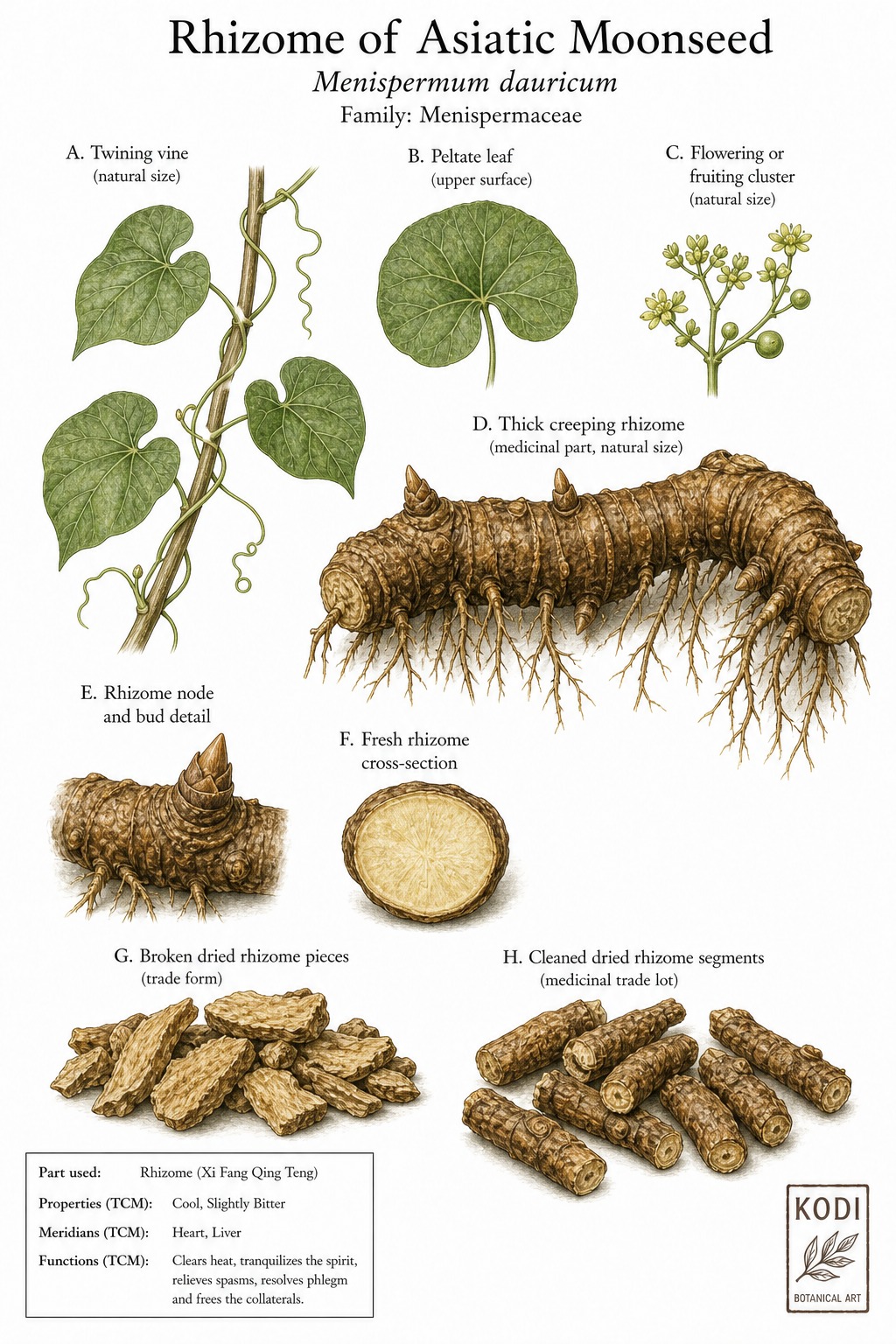
Known in TCM as Bian Fu Ge Gen (蝙蝠葛根), this bitter, cold herb enters the Lung, Stomach, and Large Intestine. Traditionally, it clears heat and resolves toxicity ... this Menispermum dauricum rhizome lane is best known for swollen painful throat, mumps, toxic-heat cough, and other inflammatory upper-body conditions, most often applied for pharyngitis, tonsillitis, and dysentery. Modern research has identified Dauricine among its active constituents.
Part used: Rhizome
Also Known As
Latin: Rhizoma Menispermi | Pinyin: Bian Fu Ge Gen | Chinese: 蝙蝠葛根
TCM Properties
- Taste
- bitter
- Temperature
- cold
- Channels
- Lung, Stomach, Large Intestine
Traditional Use
Primary Actions
- Clears heat and resolves toxicity ... this Menispermum dauricum rhizome lane is best known for swollen painful throat, mumps, toxic-heat cough, and other inflammatory upper-body conditions.
- Reduces swelling and alleviates pain ... classical use includes severe throat swelling where a bitter-cold herb was used to directly reach the affected area.
- Resolves damp-heat in the intestines ... older use includes dysentery and enteritis when heat, toxicity, and dampness combine.
- Dispels wind-damp in painful obstruction patterns ... beyond throat complaints, the rhizome also appears in rheumatic and arthralgia applications.
Secondary Actions
- IMPORT NOTE ... the inherited pinyin here is unusual, but the Latin and source-plant identity clearly place this record in the Menispermi Rhizoma or Bei Dou Gen tradition already represented elsewhere in the library.
- This page should be treated as a naming-lane sibling of the already-live `chinese-cinquefoil` record, which was earlier corrected to the real Asiatic moonseed identity.
Classic Formulas
- Moonseed rhizome with Ban Lan Gen and Niu Bang Zi ... common toxic-heat sore-throat strategy when swelling and pain dominate.
- Pairing with Bai Tou Weng and Huang Lian ... traditional logic when damp-heat dysentery or enteritis needs both detoxification and intestinal heat clearing.
- Slow-swallow throat methods ... older administration style for severe throat swelling so the bitter-cold action contacts the affected tissue.
Classical References
- Traditional references describe Rhizoma Menispermi as bitter, cold, and slightly toxic, used for sore throat, toxic cough, damp-heat dysentery, and painful obstruction.
- The naming needs care ... this is not actually cinquefoil, and it should also be distinguished from Shan Dou Gen despite overlapping throat indications.
Modern Research
Active Compounds
- Dauricine ... the best-known Menispermum dauricum bisbenzylisoquinoline alkaloid
- Oxoisoaporphine and related alkaloids ... newer identified constituents with anti-inflammatory and cytotoxic study interest
- Phenolic and non-alkaloid fractions from the rhizome ... supportive anti-inflammatory and neuroprotective research components
Studied Effects
- A 2024 review summarized the pharmacological activity of dauricine, the best-known alkaloid from Menispermum dauricum, covering anti-inflammatory, neuroprotective, cardiovascular, and antitumor directions (PMID 39355570).
- A 2024 alkaloid study isolated rare oxoisoaporphines from Menispermum dauricum and reported anti-inflammatory activity, reinforcing why this rhizome stays relevant in inflammation-oriented research (PMID 38830388).
- Phenolic alkaloids from Menispermum dauricum rhizome protected against brain ischemia injury in experimental work, showing that modern pharmacology extends beyond throat applications alone (PMID 22395403).
PubMed References
- Dauricine: Review of Pharmacological Activity. (2024)
- Rare oxoisoaporphine alkaloids from Menispermum dauricum with potential anti-inflammatory activity. (2024)
- Phenolic alkaloids from Menispermum dauricum rhizome protect against brain ischemia injury via regulation of GLT-1, EAAC1 and ROS generation. (2012)
Safety & Interactions
Contraindications
- Spleen and Stomach deficiency-cold
- Diarrhea without heat or toxicity
- Unsupervised high-dose use
Cautions
- This Menispermum rhizome is slightly toxic and has a meaningful alkaloid burden, so dose and source control matter.
- The page should be read alongside the already-live Bei Dou Gen lane rather than as a brand-new gentle herb with a broader safety margin.
- Overdose may provoke gastrointestinal distress, sweating, dizziness, chest oppression, or hypotensive symptoms.
Conditions
- Pharyngitis Traditional ★★★★☆ JSON
- Tonsillitis Traditional ★★★☆☆ JSON
- Dysentery Traditional ★★☆☆☆ JSON
- Rheumatoid Arthritis Traditional ★★☆☆☆ JSON
Frequently Asked Questions
What is Rhizome of Asiatic Moonseed used for?
Rhizome of Asiatic Moonseed is traditionally used to Clears heat and resolves toxicity ... this Menispermum dauricum rhizome lane is best known for swollen painful throat, mumps, toxic-heat cough, and other inflammatory upper-body conditions., Reduces swelling and alleviates pain ... classical use includes severe throat swelling where a bitter-cold herb was used to directly reach the affected area., Resolves damp-heat in the intestines ... older use includes dysentery and enteritis when heat, toxicity, and dampness combine., Dispels wind-damp in painful obstruction patterns ... beyond throat complaints, the rhizome also appears in rheumatic and arthralgia applications.. Research has investigated its effects on: A 2024 review summarized the pharmacological activity of dauricine, the best-known alkaloid from Menispermum dauricum, covering anti-inflammatory, neuroprotective, cardiovascular, and antitumor directions (PMID 39355570).; A 2024 alkaloid study isolated rare oxoisoaporphines from Menispermum dauricum and reported anti-inflammatory activity, reinforcing why this rhizome stays relevant in inflammation-oriented research (PMID 38830388)..
What are other names for Rhizome of Asiatic Moonseed?
Rhizome of Asiatic Moonseed is also known as Menispermi Rhizoma, Asiatic Moonseed Rhizome, Bei Dou Gen Lineage. In TCM: 蝙蝠葛根 (Bian Fu Ge Gen); Rhizoma Menispermi.
Is Rhizome of Asiatic Moonseed safe during pregnancy?
The safety of Rhizome of Asiatic Moonseed during pregnancy has not been established. Consult a qualified healthcare provider before use.
What are the contraindications for Rhizome of Asiatic Moonseed?
Rhizome of Asiatic Moonseed should not be used in: Spleen and Stomach deficiency-cold; Diarrhea without heat or toxicity; Unsupervised high-dose use. Consult a qualified healthcare provider before use.