Reed Rhizome
- Chinese
- 芦根
- Pinyin
- Lu Gen
- Latin
- Rhizoma Phragmitis
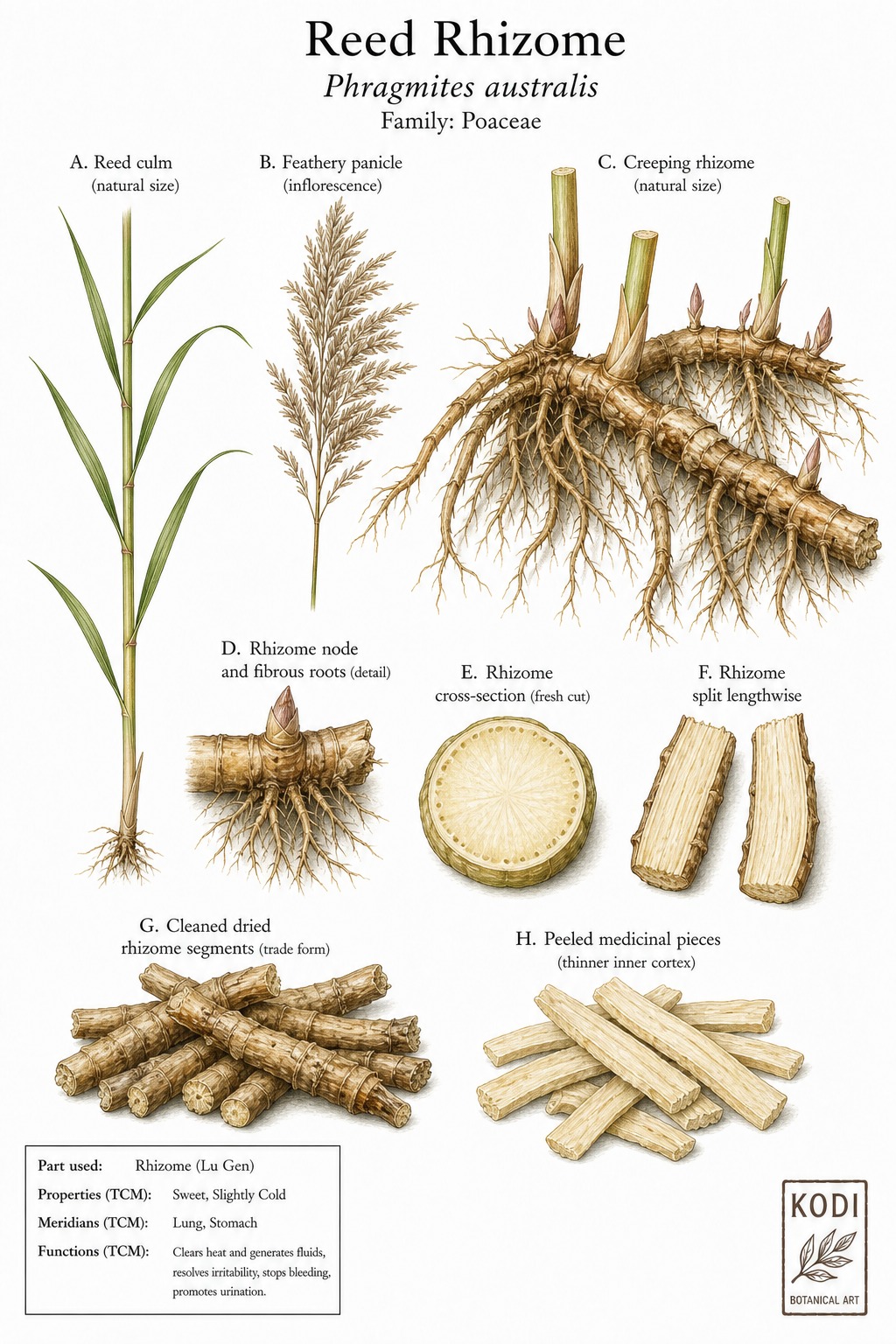
Known in TCM as Lu Gen (芦根), this sweet, cold herb enters the Lung and Stomach. Traditionally, it clears heat and generates fluids ... Lu Gen is a classic cooling rhizome for fever, thirst, dry mouth, and irritability after heat injures body fluids, most often applied for fever, nausea, and cough. Modern research has identified Polysaccharides among its active constituents.
Part used: Rhizome
Also Known As
Latin: Rhizoma Phragmitis | Pinyin: Lu Gen | Chinese: 芦根
TCM Properties
- Taste
- sweet
- Temperature
- cold
- Channels
- Lung, Stomach
Traditional Use
Primary Actions
- Clears heat and generates fluids ... Lu Gen is a classic cooling rhizome for fever, thirst, dry mouth, and irritability after heat injures body fluids.
- Clears Lung heat and relieves cough ... it is used for cough, thick sputum, feverish chest heat, and early warm-disease patterns affecting the respiratory tract.
- Clears Stomach heat and stops vomiting ... traditional use extends to nausea, retching, and thirst when heat in the Stomach pushes qi upward.
- Promotes urination and guides heat out through fluids ... it is chosen when febrile or damp-heat conditions produce scanty urination or heat-strangury irritation.
Secondary Actions
- Lu Gen should be distinguished from Bai Mao Gen ... both are sweet and cooling grasses, but Lu Gen is more about fluids, vomiting, and Lung-Stomach heat, while Bai Mao Gen is more strongly bleeding and urinary-heat focused.
- Fresh Lu Gen is often considered stronger for generating fluids and clearing heat than dried processed segments.
Classic Formulas
- Wei Jing Tang ... classic Lung-abscess and phlegm-heat formula where Lu Gen clears heat and protects fluids.
- Lu Gen Tang ... traditional heat-injuring-fluids and vomiting context that centers the reed rhizome directly.
- Warm-disease combinations with Tian Hua Fen or Mai Men Dong ... common strategy when fever, thirst, dryness, and irritability travel together.
Classical References
- Traditional materia medica describes Lu Gen as sweet and cold, entering the Lung and Stomach to clear heat, generate fluids, stop vomiting, and promote urination.
- Its long-standing food-medicine crossover helps explain why it is often used in convalescent beverages and gentle febrile-support formulas.
Modern Research
Active Compounds
- Polysaccharides and water-soluble carbohydrate fractions ... important to hydration-support and immunologic research
- Phenolic acids and flavonoids ... recurrent antioxidant and anti-inflammatory constituents in Phragmites studies
- Amino acids and trace mineral nutrients ... part of the rhizome's food-medicine profile
Studied Effects
- A 2022 narrative review summarized traditional uses, phytochemistry, pharmacology, and toxicology of Rhizoma Phragmitis, providing a strong modern overview for Lu Gen's cooling, respiratory, and fluid-generating roles (PMID 35319074).
- An experimental study reported hepatoprotective and antioxidant activity from aqueous extract of Phragmites australis rhizome, showing that modern investigation extends beyond the herb's classic fever and cough indications (PMID 24601081).
- A 2024 systematic review and meta-analysis evaluated Phragmites communis for acute respiratory tract infections, giving Lu Gen a direct modern clinical literature footprint in respiratory illness research (PMID 38510651).
PubMed References
- Traditional Uses, Phytochemistry, Pharmacology and Toxicology of Rhizoma phragmitis: A Narrative Review. (2022)
- Hepatoprotective and antioxidant activities of the aqueous extract from the rhizome of Phragmites australis. (2013)
- Chinese medicine Phragmites communis (Lu Gen) for acute respiratory tract infections: a systematic review and meta-analysis of randomized controlled trials. (2024)
Safety & Interactions
Contraindications
- Spleen and Stomach deficiency-cold with loose stool
- Copious clear urination without heat signs or thirst
Cautions
- Lu Gen is generally gentle, but persistent fever, repeated vomiting, bloody sputum, or urinary pain still need proper diagnosis rather than extended self-treatment.
- Fresh and dried reed rhizome are not always used identically, because fresh material is typically considered more fluid-generating and cooling.
Conditions
- Fever Traditional ★★★★☆ JSON
- Nausea Traditional ★★★☆☆ JSON
- Cough Traditional ★★★☆☆ JSON
- Urinary Tract Infection Traditional ★★☆☆☆ JSON
- Upper Respiratory Infection Research ★★☆☆☆ JSON
Frequently Asked Questions
What is Reed Rhizome used for?
Reed Rhizome is traditionally used to Clears heat and generates fluids ... Lu Gen is a classic cooling rhizome for fever, thirst, dry mouth, and irritability after heat injures body fluids., Clears Lung heat and relieves cough ... it is used for cough, thick sputum, feverish chest heat, and early warm-disease patterns affecting the respiratory tract., Clears Stomach heat and stops vomiting ... traditional use extends to nausea, retching, and thirst when heat in the Stomach pushes qi upward., Promotes urination and guides heat out through fluids ... it is chosen when febrile or damp-heat conditions produce scanty urination or heat-strangury irritation.. Research has investigated its effects on: A 2022 narrative review summarized traditional uses, phytochemistry, pharmacology, and toxicology of Rhizoma Phragmitis, providing a strong modern overview for Lu Gen's cooling, respiratory, and fluid-generating roles (PMID 35319074).; An experimental study reported hepatoprotective and antioxidant activity from aqueous extract of Phragmites australis rhizome, showing that modern investigation extends beyond the herb's classic fever and cough indications (PMID 24601081)..
What are other names for Reed Rhizome?
Reed Rhizome is also known as Lu Gen, Common Reed Rhizome, Phragmites Rhizome. In TCM: 芦根 (Lu Gen); Rhizoma Phragmitis.
Is Reed Rhizome safe during pregnancy?
The safety of Reed Rhizome during pregnancy has not been established. Consult a qualified healthcare provider before use.
What are the contraindications for Reed Rhizome?
Reed Rhizome should not be used in: Spleen and Stomach deficiency-cold with loose stool; Copious clear urination without heat signs or thirst. Consult a qualified healthcare provider before use.