Red Peony Root
- Chinese
- 赤芍
- Pinyin
- Chi Shao
- Latin
- Radix Paeoniae Rubra
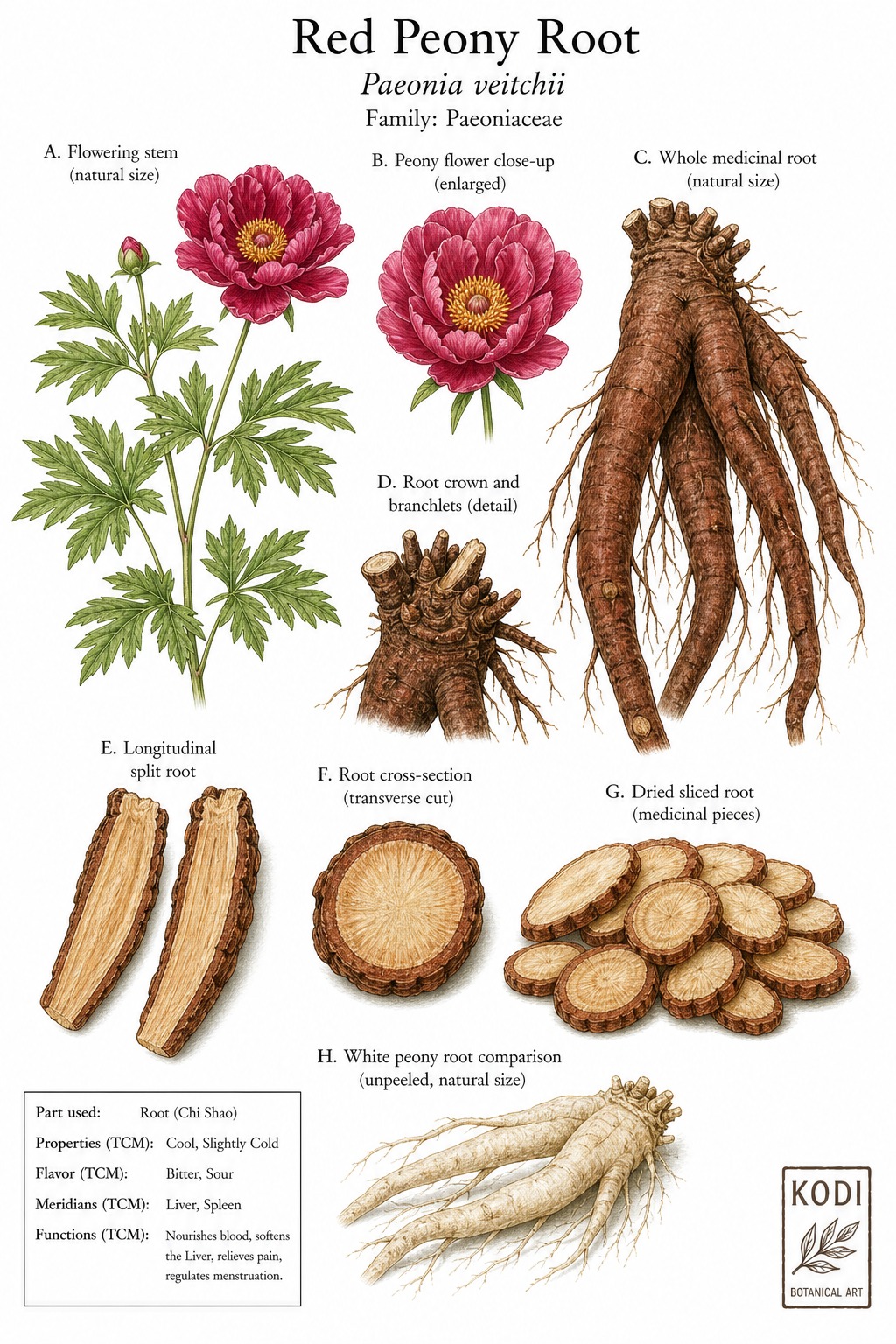
Known in TCM as Chi Shao (赤芍), this bitter, slightly cold herb enters the Liver and Spleen. Traditionally, it cools blood and clears heat from the blood level ... Chi Shao is used when rashes, redness, swelling, or febrile blood-heat patterns show a vivid hot quality, most often applied for blood stasis, dysmenorrhea, and traumatic injury. Modern research has identified Paeoniflorin among its active constituents.
Part used: Root
Also Known As
Latin: Radix Paeoniae Rubra | Pinyin: Chi Shao | Chinese: 赤芍
TCM Properties
- Taste
- bitter
- Temperature
- slightly cold
- Channels
- Liver, Spleen
Traditional Use
Primary Actions
- Cools blood and clears heat from the blood level ... Chi Shao is used when rashes, redness, swelling, or febrile blood-heat patterns show a vivid hot quality.
- Invigorates blood and dispels stasis ... unlike the more astringing nourishing Bai Shao lane, red peony moves congealed blood and is used for fixed pain, dysmenorrhea, traumatic swelling, and mass-type stasis patterns.
- Reduces swelling and relieves pain ... classical use extends to sores, abscesses, and inflamed painful conditions where heat and blood stasis combine.
Secondary Actions
- Chi Shao should stay distinct from the still-stub white peony pages ... both come from Paeonia, but red peony is the blood-cooling, stasis-moving lane rather than the softer yin-preserving astringent lane.
- Depending on source species and processing, commerce may include Paeonia lactiflora or Paeonia veitchii material, but the medicinal logic stays centered on the darker unpeeled Chi Shao profile.
Classic Formulas
- Xue Fu Zhu Yu Tang ... classic blood-stasis formula where Chi Shao cools and moves blood at the same time.
- Qing Wen Bai Du Yin ... heat-in-the-blood context showing Chi Shao's blood-cooling role.
- Tao Hong Si Wu Tang and related gynecologic stasis formulas ... common use when painful menses or postpartum stasis needs both movement and heat-clearing.
Classical References
- Traditional materia medica describes Chi Shao as bitter and slightly cold, entering the Liver and Spleen to cool blood, dispel stasis, and alleviate pain.
- The standard teaching contrast with Bai Shao is central ... Chi Shao moves and cools more strongly, while Bai Shao nourishes and restrains more strongly.
Modern Research
Active Compounds
- Paeoniflorin ... one of the best-known peony glycosides studied in red peony research
- Albiflorin and related monoterpene glycosides ... bioactive constituents relevant to anti-inflammatory and immunologic work
- Paeonol, pentagalloylglucose, and related phenolic compounds ... major contributors to blood-stasis and inflammation-focused pharmacology
Studied Effects
- A 2024 review summarized ethnopharmacology, phytochemistry, and therapeutic mechanisms of Paeoniae Radix Rubra, especially in blood-stasis syndrome research, reinforcing the herb's anti-inflammatory and microcirculatory interest (PMID 38850115).
- A 2024 review of total paeony glycosides isolated from Radix Paeoniae Rubra detailed anti-inflammatory, immunoregulatory, antioxidant, and vascular research pathways, showing why Chi Shao remains a modern pharmacology focus (PMID 39329953).
- A 2020 review of total glucosides of paeony highlighted autoimmune-disease and mechanism work around paeony glycosides, supporting broader translational interest in the red-peony chemical family as well (PMID 32371143).
PubMed References
- Paeoniae Radix Rubra: A Review of Ethnopharmacology, Phytochemistry, Pharmacological Activities, Therapeutic Mechanism for Blood Stasis Syndrome, and Quality Control. (2024)
- Progress in the Study of Chemical Structure and Pharmacological Effects of Total Paeony Glycosides Isolated from Radix Paeoniae Rubra. (2024)
- Total glucosides of paeony: A review of its phytochemistry, role in autoimmune diseases, and mechanisms of action. (2020)
Safety & Interactions
Contraindications
- Pregnancy without professional supervision
- Heavy menstrual bleeding or active bleeding disorders without clear blood-heat or blood-stasis rationale
- Concurrent anticoagulant or antiplatelet therapy without monitoring
Cautions
- Chi Shao is not interchangeable with Bai Shao ... the two peony lanes overlap botanically but differ meaningfully in traditional action profile.
- Because the herb moves blood as well as cools it, it is used more cautiously in pregnancy and in people with easy bruising or bleeding.
Drug Interactions
- Anticoagulant or antiplatelet drugs ... possible additive bleeding risk
Conditions
- Blood Stasis Traditional ★★★★☆ JSON
- Dysmenorrhea Traditional ★★★☆☆ JSON
- Traumatic Injury Traditional ★★★☆☆ JSON
- Abscess Traditional ★★☆☆☆ JSON
Frequently Asked Questions
What is Red Peony Root used for?
Red Peony Root is traditionally used to Cools blood and clears heat from the blood level ... Chi Shao is used when rashes, redness, swelling, or febrile blood-heat patterns show a vivid hot quality., Invigorates blood and dispels stasis ... unlike the more astringing nourishing Bai Shao lane, red peony moves congealed blood and is used for fixed pain, dysmenorrhea, traumatic swelling, and mass-type stasis patterns., Reduces swelling and relieves pain ... classical use extends to sores, abscesses, and inflamed painful conditions where heat and blood stasis combine.. Research has investigated its effects on: A 2024 review summarized ethnopharmacology, phytochemistry, and therapeutic mechanisms of Paeoniae Radix Rubra, especially in blood-stasis syndrome research, reinforcing the herb's anti-inflammatory and microcirculatory interest (PMID 38850115).; A 2024 review of total paeony glycosides isolated from Radix Paeoniae Rubra detailed anti-inflammatory, immunoregulatory, antioxidant, and vascular research pathways, showing why Chi Shao remains a modern pharmacology focus (PMID 39329953)..
What are other names for Red Peony Root?
Red Peony Root is also known as Paeonia veitchii, Red Peony, Chi Shao Root. In TCM: 赤芍 (Chi Shao); Radix Paeoniae Rubra.
Is Red Peony Root safe during pregnancy?
Red Peony Root is not recommended during pregnancy. Because the herb moves blood as well as cools it, it is used more cautiously in pregnancy and in people with easy bruising or bleeding.
What are the contraindications for Red Peony Root?
Red Peony Root should not be used in: Pregnancy without professional supervision; Heavy menstrual bleeding or active bleeding disorders without clear blood-heat or blood-stasis rationale; Concurrent anticoagulant or antiplatelet therapy without monitoring. Consult a qualified healthcare provider before use.
Does Red Peony Root interact with any medications?
Red Peony Root may interact with: Anticoagulant or antiplatelet drugs ... possible additive bleeding risk. Always inform your healthcare provider of any herbal supplements you are taking.