Red Halloysite
- Chinese
- 赤石脂
- Pinyin
- Chi Shi Zhi
- Latin
- Halloysitum Rubrum
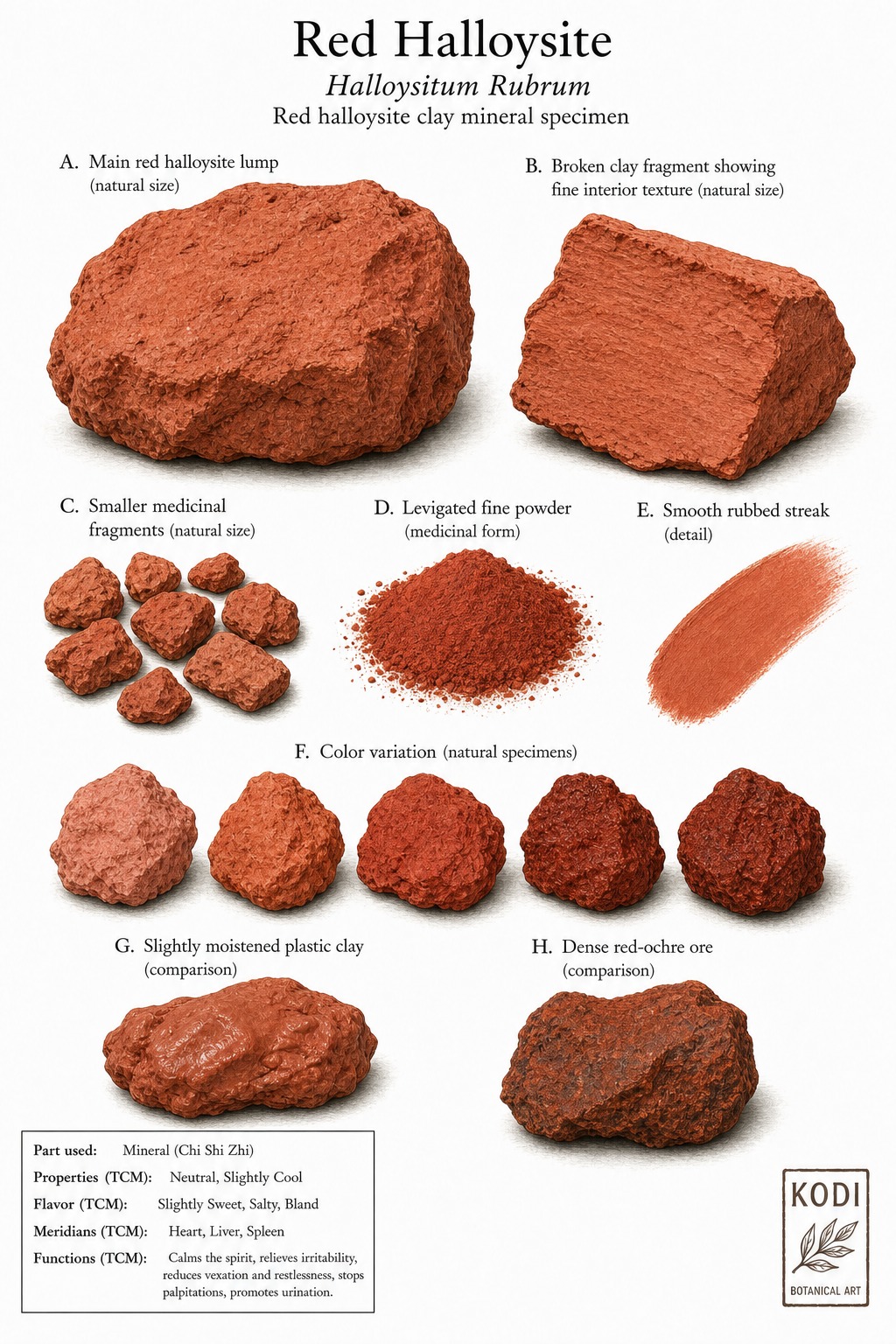
Known in TCM as Chi Shi Zhi (赤石脂), this sweet and sour and astringent, warm herb enters the Large Intestine and Stomach. Traditionally, it astringes the intestines and stops chronic diarrhea ... Chi Shi Zhi is a classic mineral for long-standing slippery leakage, especially chronic diarrhea or dysentery from deficiency and cold weakness rather than acute damp-heat attack, most often applied for diarrhea, dysentery, and abnormal uterine bleeding. Modern research has identified Hydrated among its active constituents.
Part used: Halloysite clay
Also Known As
Latin: Halloysitum Rubrum | Pinyin: Chi Shi Zhi | Chinese: 赤石脂
TCM Properties
- Taste
- sweet, sour, astringent
- Temperature
- warm
- Channels
- Large Intestine, Stomach
Traditional Use
Primary Actions
- Astringes the intestines and stops chronic diarrhea ... Chi Shi Zhi is a classic mineral for long-standing slippery leakage, especially chronic diarrhea or dysentery from deficiency and cold weakness rather than acute damp-heat attack.
- Astringes to stop bleeding ... it is used for blood in the stool, uterine bleeding, and other lower-burner bleeding patterns where containment has failed.
- Promotes healing of sores and generates flesh ... external use includes chronic ulcers, damp lesions, and wounds that need drying, protection, and closure.
Secondary Actions
- Chi Shi Zhi is classically paired with Yu Yu Liang, and both minerals belong to the narrow astringent-mineral group used for chronic leakage rather than acute pathogen-expelling work.
- Because the herb is heavy and binding, it is chosen after the main pathogen has been controlled, not when retained damp-heat, food stagnation, or severe constipation still need to be cleared.
Classic Formulas
- Chi Shi Zhi Yu Yu Liang Tang ... defining formula for unremitting diarrhea after mistaken treatment or exhausted intestinal qi.
- Tao Hua Tang ... classic use for chronic deficiency-cold dysenteric diarrhea with persistent leakage.
- Chi Shi Zhi with Hai Piao Xiao or other astringent hemostatics ... later strategy for lower-burner bleeding and persistent discharge.
Classical References
- Traditional materia medica describes Chi Shi Zhi as sweet, sour, astringent, and warm, entering the Stomach and Large Intestine to secure leakage, stop bleeding, and heal sores.
- Its clinical scope is narrow but important ... chronic deficiency-type leakage, not acute pathogen excess.
Modern Research
Active Compounds
- Hydrated aluminosilicate halloysite clay ... the core mineral matrix
- Iron-bearing red clay fractions ... the source of the characteristic red coloration
- Trace calcium, magnesium, and related mineral components ... variable constituents identified in quality studies
Studied Effects
- Modern Chi Shi Zhi-specific literature is sparse and concentrates more on mineral identification, composition, and quality control than on direct human efficacy trials.
- A 1991 quality study used X-ray diffraction to examine Halloysitum rubrum and found that its composition is complex and variable, reinforcing why authenticated medicinal sourcing matters (PMID 1804180).
- Current physiologic interpretations of the herb's anti-diarrheal and wound-healing use remain inferential, resting mainly on its adsorptive clay character and the older traditional evidence base rather than on robust clinical trials.
PubMed References
Safety & Interactions
Contraindications
- Acute diarrhea or dysentery with unresolved damp-heat or food retention
- Constipation or dry difficult stool
Cautions
- Because Chi Shi Zhi is heavy and strongly astringent, unexplained gastrointestinal bleeding or prolonged diarrhea still requires proper medical evaluation.
- This herb is usually used when leakage must be secured, not when the body still needs to expel a pathogen.
Conditions
Frequently Asked Questions
What is Red Halloysite used for?
Red Halloysite is traditionally used to Astringes the intestines and stops chronic diarrhea ... Chi Shi Zhi is a classic mineral for long-standing slippery leakage, especially chronic diarrhea or dysentery from deficiency and cold weakness rather than acute damp-heat attack., Astringes to stop bleeding ... it is used for blood in the stool, uterine bleeding, and other lower-burner bleeding patterns where containment has failed., Promotes healing of sores and generates flesh ... external use includes chronic ulcers, damp lesions, and wounds that need drying, protection, and closure.. Research has investigated its effects on: Modern Chi Shi Zhi-specific literature is sparse and concentrates more on mineral identification, composition, and quality control than on direct human efficacy trials.; A 1991 quality study used X-ray diffraction to examine Halloysitum rubrum and found that its composition is complex and variable, reinforcing why authenticated medicinal sourcing matters (PMID 1804180)..
What are other names for Red Halloysite?
Red Halloysite is also known as Halloysite Clay, Red Halloysite Clay, Rubrum. In TCM: 赤石脂 (Chi Shi Zhi); Halloysitum Rubrum.
Is Red Halloysite safe during pregnancy?
The safety of Red Halloysite during pregnancy has not been established. Consult a qualified healthcare provider before use.
What are the contraindications for Red Halloysite?
Red Halloysite should not be used in: Acute diarrhea or dysentery with unresolved damp-heat or food retention; Constipation or dry difficult stool. Consult a qualified healthcare provider before use.