Purpleflower Crotalaria Herb
- Chinese
- 农吉利
- Pinyin
- Nong Ji Li
- Latin
- Herba Crotalariae
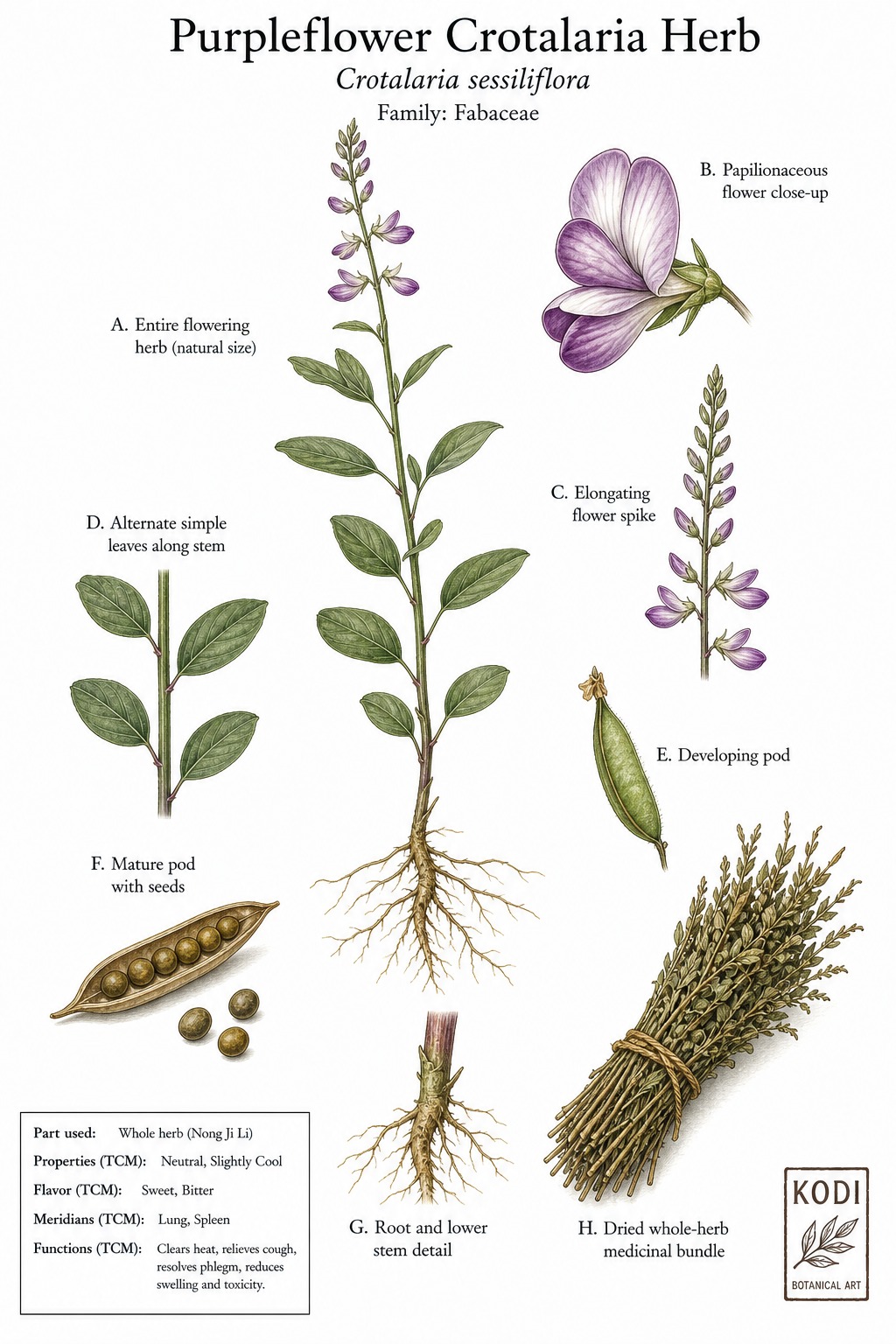
Known in TCM as Nong Ji Li (农吉利), this sweet and bland, neutral herb enters the Liver, Large Intestine, and Lung. Traditionally, it clears heat and resolves toxin ... regional use includes sores, carbuncles, swollen lesions, and older folk antitumor contexts, most often applied for cough, wheezing, and abscess. Modern research has identified Monocrotaline among its active constituents.
Part used: Whole herb
Also Known As
Latin: Herba Crotalariae | Pinyin: Nong Ji Li | Chinese: 农吉利
TCM Properties
- Taste
- sweet, bland
- Temperature
- neutral
- Channels
- Liver, Large Intestine, Lung
Traditional Use
Primary Actions
- Clears heat and resolves toxin ... regional use includes sores, carbuncles, swollen lesions, and older folk antitumor contexts.
- Relieves cough and eases dyspnea ... traditional use extends to cough, wheezing, and Lung heat or toxic-heat obstruction patterns.
- Promotes urination and drains damp-heat ... some folk use includes painful or dark urination when heat toxin and dampness combine.
Secondary Actions
- This is not a Tribulus fruit page despite the Ji Li sound in its name ... Nong Ji Li is a whole Crotalaria herb and should stay separate from Tribulus-derived Ji Li records.
- Modern safety discussion is dominated by monocrotaline and other pyrrolizidine alkaloids, so any historical antitumor reputation must be read through a strict hepatotoxicity lens.
Classic Formulas
- Regional toxic-heat formulas combine Nong Ji Li with Ban Zhi Lian or Bai Hua She She Cao when swelling, persistent lesions, or folk antitumor use is the concern.
- Wheezing patterns pair it with Sang Bai Pi or Ting Li Zi when toxic heat and obstructed Lung descent combine.
- External toxic-swelling use combines it with Jin Yin Hua or Pu Gong Ying for boils, sores, and inflamed lesions.
Classical References
- Traditional glossary sources summarize Nong Ji Li as clearing toxin and relieving cough and dyspnea.
- Older and modern Chinese literature also records use for cervical, esophageal, and skin cancer traditions, but that history does not override the herb's serious pyrrolizidine-alkaloid risk.
Modern Research
Active Compounds
- Monocrotaline and related pyrrolizidine alkaloids ... the dominant safety-critical constituents
- Flavonoids such as quercetin and kaempferol ... repeatedly reported phytochemical fractions
- Sessiliflorin-type and chromone compounds ... additional constituents identified from the whole herb
Studied Effects
- A 2003 phytochemical study isolated seven antioxidative compounds from the aerial parts of Crotalaria sessiliflora, illustrating why the herb continues to attract laboratory interest despite safety concerns (PMID 12729010).
- A classic alkaloid report confirmed pyrrolizidine alkaloids in the seeds of Crotalaria sessiliflora, reinforcing that hepatotoxic alkaloid burden is central to any safety discussion of the species (PMID 17226470).
- A 2016 Chinese phytochemical study identified multiple constituents from the whole plant, including a new compound, showing that the herb's chemical profile is broader than monocrotaline alone even though toxicity remains the practical limiting issue (PMID 29877686).
PubMed References
Safety & Interactions
Contraindications
- Pregnancy
- Pre-existing liver disease or elevated liver enzymes
- Paediatric use
- Concurrent hepatotoxic drug therapy
Cautions
- Crotalaria sessiliflora contains pyrrolizidine alkaloids, especially monocrotaline-related chemistry, and should be treated as a hepatotoxic high-risk herb rather than a casual folk tonic.
- Short-term symptom relief or historical antitumor use does not remove the risk of cumulative liver injury, vascular toxicity, or broader heavy-exposure harm.
- Source confusion with other Crotalaria species can worsen both efficacy uncertainty and toxicology risk.
Drug Interactions
- Hepatotoxic drugs ... additive liver-injury risk
- CYP3A4 or CYP2A6 modifying drugs ... may alter metabolic activation of toxic pyrrolizidine alkaloids
Conditions
Frequently Asked Questions
What is Purpleflower Crotalaria Herb used for?
Purpleflower Crotalaria Herb is traditionally used to Clears heat and resolves toxin ... regional use includes sores, carbuncles, swollen lesions, and older folk antitumor contexts., Relieves cough and eases dyspnea ... traditional use extends to cough, wheezing, and Lung heat or toxic-heat obstruction patterns., Promotes urination and drains damp-heat ... some folk use includes painful or dark urination when heat toxin and dampness combine.. Research has investigated its effects on: A 2003 phytochemical study isolated seven antioxidative compounds from the aerial parts of Crotalaria sessiliflora, illustrating why the herb continues to attract laboratory interest despite safety concerns (PMID 12729010).; A classic alkaloid report confirmed pyrrolizidine alkaloids in the seeds of Crotalaria sessiliflora, reinforcing that hepatotoxic alkaloid burden is central to any safety discussion of the species (PMID 17226470)..
What are other names for Purpleflower Crotalaria Herb?
Purpleflower Crotalaria Herb is also known as Ye Bai He, Xiang Ling Cao, Crotalaria. In TCM: 农吉利 (Nong Ji Li); Herba Crotalariae.
Is Purpleflower Crotalaria Herb safe during pregnancy?
Purpleflower Crotalaria Herb is not recommended during pregnancy.
What are the contraindications for Purpleflower Crotalaria Herb?
Purpleflower Crotalaria Herb should not be used in: Pregnancy; Pre-existing liver disease or elevated liver enzymes; Paediatric use; Concurrent hepatotoxic drug therapy. Consult a qualified healthcare provider before use.
Does Purpleflower Crotalaria Herb interact with any medications?
Purpleflower Crotalaria Herb may interact with: Hepatotoxic drugs ... additive liver-injury risk; CYP3A4 or CYP2A6 modifying drugs ... may alter metabolic activation of toxic pyrrolizidine alkaloids. Always inform your healthcare provider of any herbal supplements you are taking.