Prepared Soybean
- Chinese
- 豆豉
- Pinyin
- Dou Chi
- Latin
- Semen Sojae Praeparatum
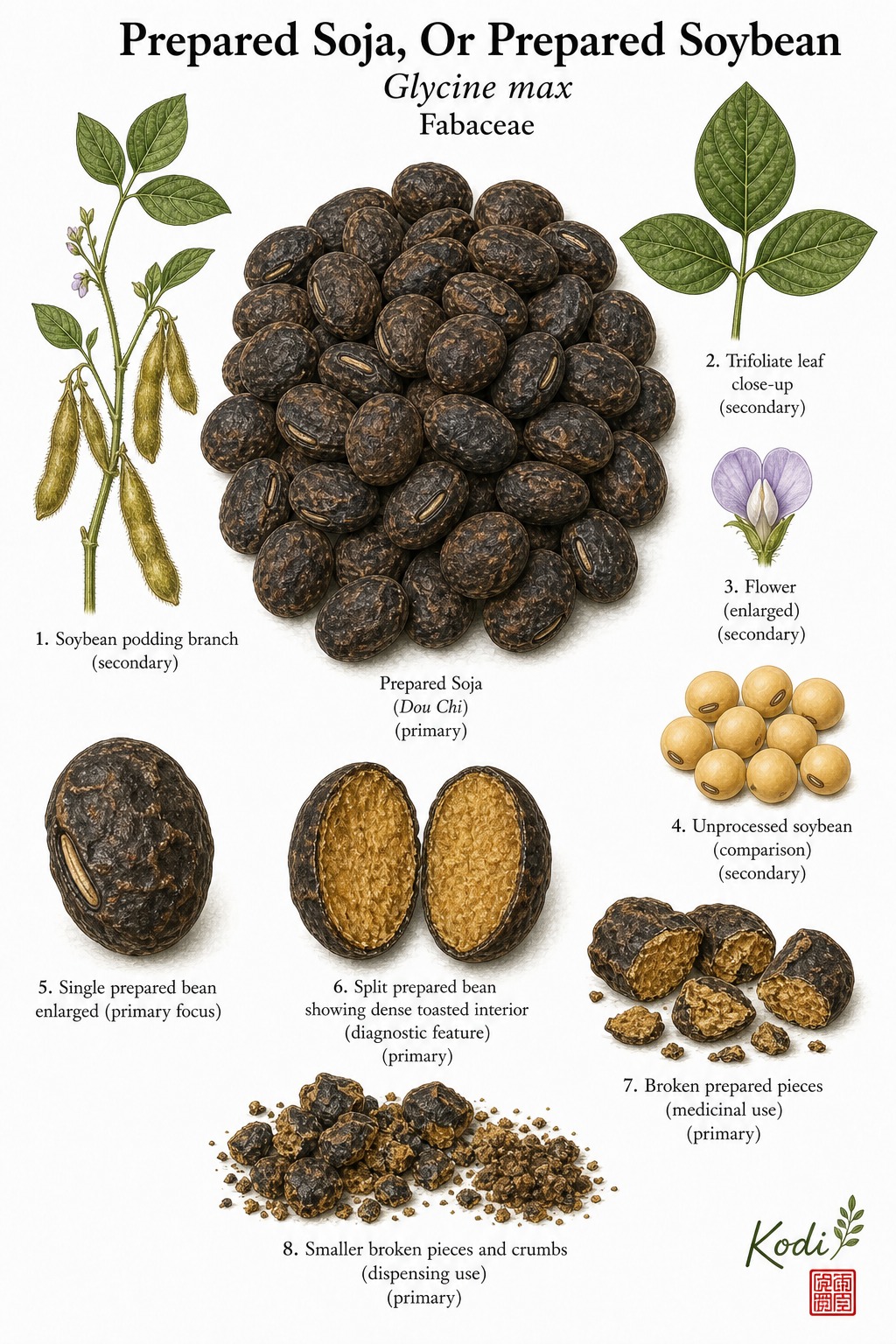
Known in TCM as Dou Chi (豆豉), this sweet and slightly bitter and acrid, neutral herb enters the Lung and Stomach. Traditionally, it releases the exterior gently ... Dou Chi is a mild fermented soybean used at the shallow stage of external disorders when fever, slight chills, or body discomfort are present, most often applied for common cold, fever, and insomnia. Modern research has identified Isoflavones among its active constituents.
Part used: Seed
Also Known As
Latin: Semen Sojae Praeparatum | Pinyin: Dou Chi | Chinese: 豆豉
TCM Properties
- Taste
- sweet, slightly bitter, acrid
- Temperature
- neutral
- Channels
- Lung, Stomach
Traditional Use
Primary Actions
- Releases the exterior gently ... Dou Chi is a mild fermented soybean used at the shallow stage of external disorders when fever, slight chills, or body discomfort are present.
- Relieves irritability and chest vexation ... classical use reaches restless sleep, post-febrile agitation, and constrained heat that has not fully cleared.
- Harmonizes the middle and redirects mild nausea ... because it is food-derived and lightly fermentative, it is often chosen when exterior symptoms overlap with stomach upset.
Secondary Actions
- This record overlaps materially with `fermented-soybean` ... that sibling already carries the more explicit common-English label for the same Semen Sojae Praeparatum tradition.
- The point of this page is the generic Dou Chi naming lane shown in the local prompt ... dry processed medicinal soybean, not fresh edamame or casual culinary soybeans.
Classic Formulas
- Cong Chi Tang ... classic two-herb pairing with Cong Bai for very early wind-cold.
- Zhi Zi Chi Tang ... Dou Chi helps relieve irritability, vexation, and constrained heat after febrile disease.
- Sang Ju Yin and related warm-disease formulas ... Dou Chi can serve as a light exterior-releasing assistant when cough and mild surface Heat are present.
Classical References
- Traditional medicine consistently treats Dou Chi as a mild exterior-releasing substance rather than a harsh diaphoresis herb.
- Its role in relieving vexation explains why it appears in both early-stage illness and lingering post-febrile restlessness.
- Different fermentation or processing methods can shift its warm-cool expression slightly, which helps explain lineage differences in use.
Modern Research
Active Compounds
- Isoflavones such as daidzein and genistein ... soybean-derived constituents altered by fermentation
- Fermentation-derived peptides and amino acids ... important contributors to Dou Chi's chemistry relative to raw soybeans
- Phenolic compounds and microbiota-active metabolites ... relevant to anti-inflammatory and gut-brain research
Studied Effects
- A 2025 study characterized chemical-property changes and component conversion during Semen Sojae Praeparatum fermentation, confirming that processing materially changes the medicinal soybean profile (PMID 41278093).
- A 2019 study reported anti-inflammatory and analgesic effects from fermented soybean along with acute-toxicity data, giving a practical modern correlate for Dou Chi's mild medicinal use (PMID 31856816).
- A rat study found that Semen Sojae Praeparatum altered depression-like behaviors through intestinal microbiota effects, offering a possible mechanistic bridge to the traditional irritability and vexation lane (PMID 34863499).
PubMed References
- Characterization of chemical properties and components conversion during the fermentation of Semen Sojae Praeparatum. (2025)
- Anti-inflammatory, analgesic and acute toxicity effects of fermented soybean. (2019)
- Semen Sojae Praeparatum alters depression-like behaviors in chronic unpredictable mild stress rats via intestinal microbiota. (2021)
Safety & Interactions
Contraindications
- Known soy allergy
- Breastfeeding situations in which preserving milk supply is a priority
Cautions
- Medicinal Dou Chi is not interchangeable with soy sauce, natto, or casual snack soybeans.
- Processing methods differ, so product identity matters if the goal is a true Semen Sojae Praeparatum effect.
Conditions
Frequently Asked Questions
What is Prepared Soybean used for?
Prepared Soybean is traditionally used to Releases the exterior gently ... Dou Chi is a mild fermented soybean used at the shallow stage of external disorders when fever, slight chills, or body discomfort are present., Relieves irritability and chest vexation ... classical use reaches restless sleep, post-febrile agitation, and constrained heat that has not fully cleared., Harmonizes the middle and redirects mild nausea ... because it is food-derived and lightly fermentative, it is often chosen when exterior symptoms overlap with stomach upset.. Research has investigated its effects on: A 2025 study characterized chemical-property changes and component conversion during Semen Sojae Praeparatum fermentation, confirming that processing materially changes the medicinal soybean profile (PMID 41278093).; A 2019 study reported anti-inflammatory and analgesic effects from fermented soybean along with acute-toxicity data, giving a practical modern correlate for Dou Chi's mild medicinal use (PMID 31856816)..
What are other names for Prepared Soybean?
Prepared Soybean is also known as Prepared Soja, Medicinal Fermented Soybean, Dan Dou Chi. In TCM: 豆豉 (Dou Chi); Semen Sojae Praeparatum.
Is Prepared Soybean safe during pregnancy?
The safety of Prepared Soybean during pregnancy has not been established. Consult a qualified healthcare provider before use.
What are the contraindications for Prepared Soybean?
Prepared Soybean should not be used in: Known soy allergy; Breastfeeding situations in which preserving milk supply is a priority. Consult a qualified healthcare provider before use.