Prepared Aster Root
- Chinese
- 制紫苀
- Pinyin
- Zhi Zi Wan
- Latin
- Radix Asteris Praeparata
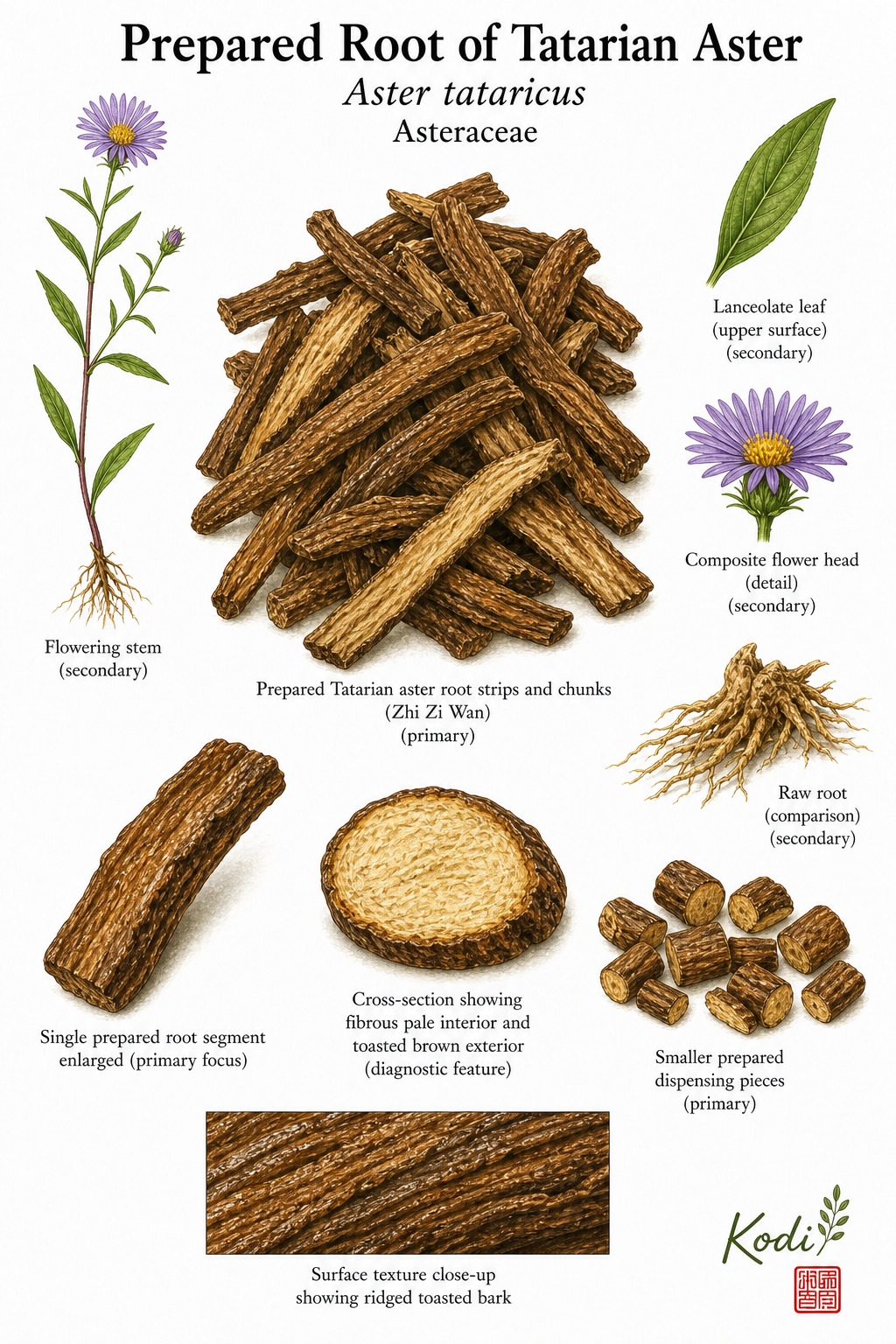
Known in TCM as Zhi Zi Wan (制紫苀), this bitter and acrid, slightly warm herb enters the Lung. Traditionally, it moistens the Lung and transforms phlegm while stopping cough ... prepared Zi Wan is a classic processed cough-lane herb for chronic or lingering respiratory patterns, most often applied for cough, dry cough, and productive cough. Modern research has identified Triterpenes, among its active constituents.
Part used: Root
Also Known As
Latin: Radix Asteris Praeparata | Pinyin: Zhi Zi Wan | Chinese: 制紫苀
TCM Properties
- Taste
- bitter, acrid
- Temperature
- slightly warm
- Channels
- Lung
Traditional Use
Primary Actions
- Moistens the Lung and transforms phlegm while stopping cough ... prepared Zi Wan is a classic processed cough-lane herb for chronic or lingering respiratory patterns.
- Redirects rebellious Lung Qi downward ... it is used when cough is persistent, accompanied by difficult sputum, throat irritation, or weak descent of Lung Qi.
- Moderates the raw root's roughness ... the prepared form is chosen when a smoother, more dispensing-friendly root is preferred.
Secondary Actions
- This processed page should stay distinct from the still-stub raw Zi Wan sibling ... both treat cough, but the prepared form is the darker, more clinically readied lane.
- Compared with Bai Bu, prepared Zi Wan leans a bit more toward expectoration and phlegm handling while still moistening the Lung.
Classic Formulas
- Zhi Sou San ... classic post-exterior lingering-cough formula where Zi Wan is a key cough-relieving herb.
- Bai Bu Tang and related antitussive traditions ... Zi Wan commonly pairs with Bai Bu for stubborn cough.
- Er Mu San and mixed phlegm-dryness cough formulas ... prepared Zi Wan is used when cough needs both moistening and downward movement.
Classical References
- Traditional materia medica places Zi Wan among the major antitussive roots that moisten the Lung, transform phlegm, and direct Qi downward.
- Prepared forms are traditionally selected to improve dispensing and moderate rough or irritant qualities.
Modern Research
Active Compounds
- Triterpenes, shionone-related compounds, and related Aster root constituents ... key compounds in modern Zi Wan research
- Flavonoids and phenolic constituents ... supportive anti-inflammatory and antioxidant compounds
- Root extract fractions with antitussive and expectorant activity ... described in modern studies
Studied Effects
- A 2025 review summarized the botany, phytochemistry, ethnopharmacology, pharmacology, toxicology, and utilization of Aster tataricus, confirming its longstanding role as a lung-focused cough herb (PMID 40271061).
- Aster tataricus root showed expectorant, antitussive, and anti-inflammatory activities in experimental work, which aligns closely with the traditional clinical role of Zi Wan (PMID 25701752).
- A 2025 antiviral study found broad in vitro and in vivo activity from Aster tataricus extract and active compounds, adding to modern interest in the respiratory pharmacology of the herb family (PMID 40665421).
PubMed References
- Aster tataricus L. f.: a review on the botany, phytochemistry, ethnopharmacology, pharmacology, toxicology and comprehensive utilization. (2025)
- Expectorant, antitussive, anti-inflammatory activities and compositional analysis of Aster tataricus. (2015)
- Aster tataricus extract and its active compounds display a broad spectrum of antiviral activity in vitro and in vivo. (2025)
Safety & Interactions
Cautions
- Evidence for the prepared form is often extrapolated from the broader Zi Wan root literature rather than from standardized processed-slice trials.
Conditions
Frequently Asked Questions
What is Prepared Aster Root used for?
Prepared Aster Root is traditionally used to Moistens the Lung and transforms phlegm while stopping cough ... prepared Zi Wan is a classic processed cough-lane herb for chronic or lingering respiratory patterns., Redirects rebellious Lung Qi downward ... it is used when cough is persistent, accompanied by difficult sputum, throat irritation, or weak descent of Lung Qi., Moderates the raw root's roughness ... the prepared form is chosen when a smoother, more dispensing-friendly root is preferred.. Research has investigated its effects on: A 2025 review summarized the botany, phytochemistry, ethnopharmacology, pharmacology, toxicology, and utilization of Aster tataricus, confirming its longstanding role as a lung-focused cough herb (PMID 40271061).; Aster tataricus root showed expectorant, antitussive, and anti-inflammatory activities in experimental work, which aligns closely with the traditional clinical role of Zi Wan (PMID 25701752)..
What are other names for Prepared Aster Root?
Prepared Aster Root is also known as Prepared Zi Wan, Processed Tatarian Aster Root, Asteris. In TCM: 制紫苀 (Zhi Zi Wan); Radix Asteris Praeparata.
Is Prepared Aster Root safe during pregnancy?
The safety of Prepared Aster Root during pregnancy has not been established. Consult a qualified healthcare provider before use.