Prepared Corydalis Tuber
- Chinese
- 制玄胡
- Pinyin
- Zhi Xuan Hu
- Latin
- Rhizoma Corydalis Praeparatum
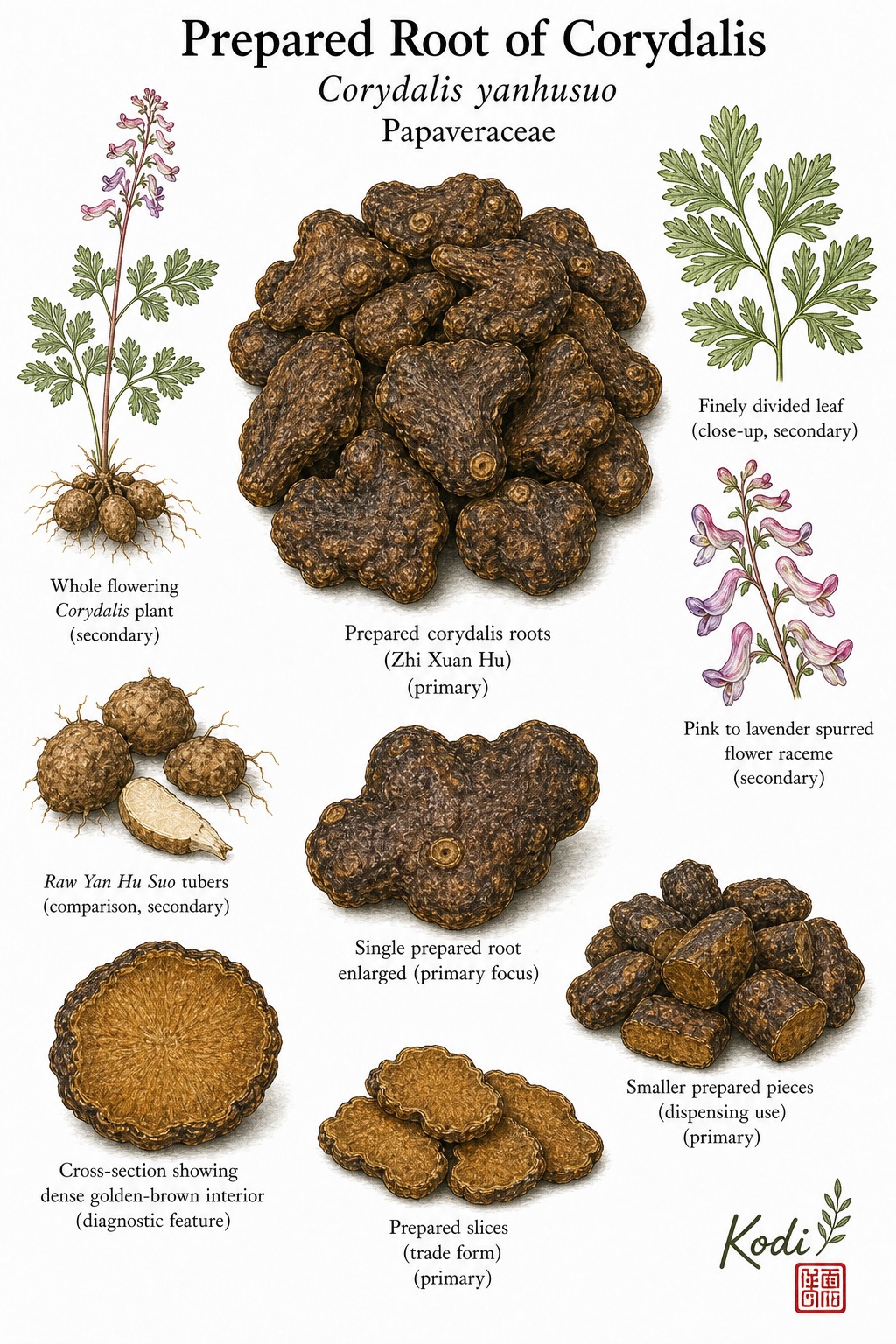
Known in TCM as Zhi Xuan Hu (制玄胡), this acrid and bitter, warm herb enters the Heart, Liver, and Spleen. Traditionally, it invigorates blood, moves Qi, and stops pain ... prepared Corydalis is one of the classic all-purpose pain herbs when pain arises from stagnation rather than deficiency cold alone, most often applied for abdominal pain, dysmenorrhea, and chest pain. Modern research has identified Tetrahydropalmatine among its active constituents.
Part used: Rhizome
Also Known As
Latin: Rhizoma Corydalis Praeparatum | Pinyin: Zhi Xuan Hu | Chinese: 制玄胡
TCM Properties
- Taste
- acrid, bitter
- Temperature
- warm
- Channels
- Heart, Liver, Spleen
Traditional Use
Primary Actions
- Invigorates blood, moves Qi, and stops pain ... prepared Corydalis is one of the classic all-purpose pain herbs when pain arises from stagnation rather than deficiency cold alone.
- Especially useful for abdominal, chest, and menstrual pain ... vinegar-leaning processed Corydalis traditions are often directed more strongly toward Liver-channel, blood-stasis, and constrained pain patterns.
- Used in trauma and fixed pain patterns ... it appears when bruising, blood stasis, or constrained circulation produces stubborn discomfort.
Secondary Actions
- This page follows the processed Zhi Xuan Hu lane rather than the still-stub raw Corydalis siblings ... the preparation note matters because vinegar and wine processing alter alkaloid composition and clinical direction.
- Prepared Corydalis is a stronger pain-focused lane than many simple blood-moving herbs, but it is not a replacement for aconite-style warming or rhubarb-style accumulation clearing.
Classic Formulas
- Jin Ling Zi San ... classic Liver-Qi and blood-stasis pain formula where Corydalis is a key analgesic herb.
- Yuan Hu Zhi Tong Pian lineage ... modern pain-formula tradition built directly around Yanhusuo's analgesic role.
- Gynecologic and trauma formulas ... prepared Corydalis is widely chosen when pain is fixed, stabbing, or stagnation-based.
Classical References
- Traditional medicine summarizes Yanhusuo as a blood-and-Qi moving pain herb that can treat many locations of stagnation pain.
- Processed forms, especially vinegar-treated forms, are classically associated with stronger channel-guiding and pain-relieving use.
Modern Research
Active Compounds
- Tetrahydropalmatine ... one of the best-known Corydalis alkaloids linked to analgesic activity
- Protopine, dehydrocorydaline, and related alkaloids ... major constituents in pharmacologic and processing studies
- Multiple tertiary alkaloids ... composition shifts measurably after vinegar or wine processing
Studied Effects
- A 2021 review of Corydalis yanhusuo processing and compatibility summarized phytochemistry, pharmacology, pharmacokinetics, and safety, confirming that processing is central to how the herb is used clinically (PMID 35003289).
- A 2021 review on the analgesic properties of Corydalis yanhusuo described the extract as a historically important pain medicine and summarized multiple active compounds and mechanisms (PMID 34946576).
- A study on vinegar and wine processing showed that preparation changes the alkaloid content and composition of Corydalis Rhizoma, giving direct chemical support to the processed Zhi Xuan Hu lane (PMID 25093987).
PubMed References
- Processing and Compatibility of Corydalis yanhusuo: Phytochemistry, Pharmacology, Pharmacokinetics, and Safety. (2021)
- The Analgesic Properties of Corydalis yanhusuo. (2021)
- Influence of vinegar and wine processing on the alkaloid content and composition of the traditional Chinese medicine Corydalis Rhizoma (Yanhusuo). (2014)
Safety & Interactions
Contraindications
- Pregnancy unless specifically prescribed
- Active bleeding without stasis
Cautions
- Corydalis alkaloids can have sedating or centrally active effects, so high-dose or casual use is not appropriate.
- Because it moves blood and Qi, self-treatment in pregnancy or unexplained pain patterns is not appropriate.
Drug Interactions
- Sedatives or centrally acting pain medicines ... possible additive CNS effects
- Anticoagulant or antiplatelet therapies ... theoretical additive bleeding or bruising concern in blood-moving use
Conditions
- Abdominal Pain Traditional ★★★★☆ JSON
- Dysmenorrhea Traditional ★★★★☆ JSON
- Chest Pain Traditional ★★★☆☆ JSON
- Traumatic Injury Traditional ★★★☆☆ JSON
Frequently Asked Questions
What is Prepared Corydalis Tuber used for?
Prepared Corydalis Tuber is traditionally used to Invigorates blood, moves Qi, and stops pain ... prepared Corydalis is one of the classic all-purpose pain herbs when pain arises from stagnation rather than deficiency cold alone., Especially useful for abdominal, chest, and menstrual pain ... vinegar-leaning processed Corydalis traditions are often directed more strongly toward Liver-channel, blood-stasis, and constrained pain patterns., Used in trauma and fixed pain patterns ... it appears when bruising, blood stasis, or constrained circulation produces stubborn discomfort.. Research has investigated its effects on: A 2021 review of Corydalis yanhusuo processing and compatibility summarized phytochemistry, pharmacology, pharmacokinetics, and safety, confirming that processing is central to how the herb is used clinically (PMID 35003289).; A 2021 review on the analgesic properties of Corydalis yanhusuo described the extract as a historically important pain medicine and summarized multiple active compounds and mechanisms (PMID 34946576)..
What are other names for Prepared Corydalis Tuber?
Prepared Corydalis Tuber is also known as Prepared Yanhusuo, Processed Corydalis, Corydalis. In TCM: 制玄胡 (Zhi Xuan Hu); Rhizoma Corydalis Praeparatum.
Is Prepared Corydalis Tuber safe during pregnancy?
Prepared Corydalis Tuber is not recommended during pregnancy. Because it moves blood and Qi, self-treatment in pregnancy or unexplained pain patterns is not appropriate.
What are the contraindications for Prepared Corydalis Tuber?
Prepared Corydalis Tuber should not be used in: Pregnancy unless specifically prescribed; Active bleeding without stasis. Consult a qualified healthcare provider before use.
Does Prepared Corydalis Tuber interact with any medications?
Prepared Corydalis Tuber may interact with: Sedatives or centrally acting pain medicines ... possible additive CNS effects; Anticoagulant or antiplatelet therapies ... theoretical additive bleeding or bruising concern in blood-moving use. Always inform your healthcare provider of any herbal supplements you are taking.