Charred Lotus Rhizome Node
- Chinese
- 藕炭
- Pinyin
- Ou Tan
- Latin
- Nodus Nelumbinis Rhizomatis Carbonisatus
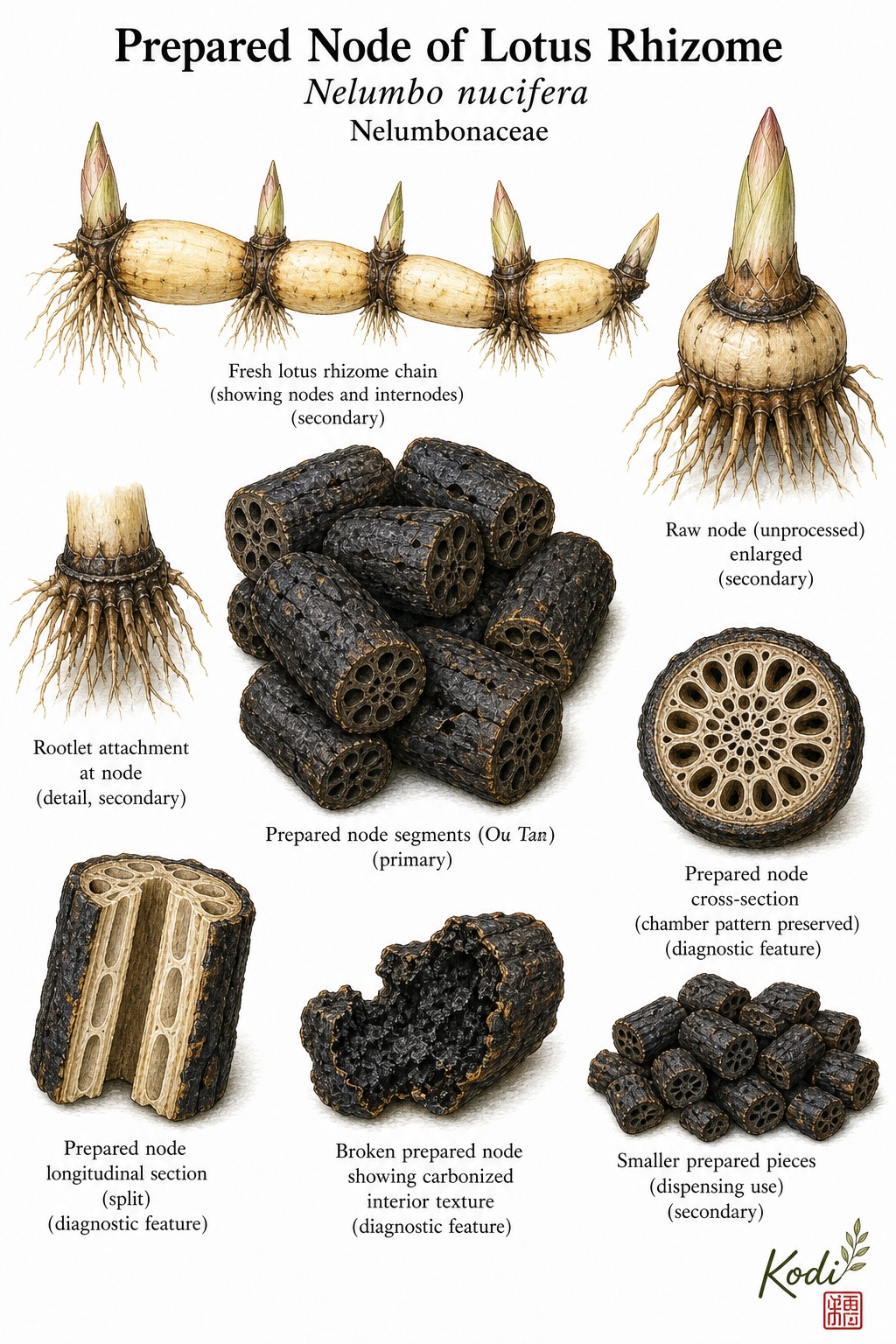
Known in TCM as Ou Tan (藕炭), this sweet and astringent, neutral herb enters the Liver, Lung, and Stomach. Traditionally, it stops bleeding more strongly than raw Ou Jie ... Ou Tan is the charred hemostatic lane of lotus rhizome node, used when bleeding is active or recurrent and a stronger astringent effect is desired, most often applied for hemoptysis, hematuria, and abnormal uterine bleeding. Modern research has identified Tannins among its active constituents.
Part used: Node
Also Known As
Latin: Nodus Nelumbinis Rhizomatis Carbonisatus | Pinyin: Ou Tan | Chinese: 藕炭
TCM Properties
- Taste
- sweet, astringent
- Temperature
- neutral
- Channels
- Liver, Lung, Stomach
Traditional Use
Primary Actions
- Stops bleeding more strongly than raw Ou Jie ... Ou Tan is the charred hemostatic lane of lotus rhizome node, used when bleeding is active or recurrent and a stronger astringent effect is desired.
- Addresses bleeding without completely trapping stasis ... like raw lotus node, the charred form is still valued for balancing hemostasis with a modest ability to avoid leaving stagnant blood behind.
- Used for upper, lower, and gynecologic bleeding patterns ... traditional indications include hemoptysis, hematuria, abnormal uterine bleeding, and bleeding after traumatic injury.
Secondary Actions
- This page should stay clearly darker and more hemostatic than raw Ou Jie ... the processing emphasis is carbonization for bleeding, not fresh lotus food or juice use.
- Compared with the raw node, Ou Tan is less about lightly resolving stasis and more about securing hemostasis.
Classic Formulas
- Hemostatic herb pairings with Bai Mao Gen or Ce Bai Ye ... common practical logic when blood-heat bleeding needs a sweet, gentle adjunct.
- Trauma and cough-blood formulas ... charred lotus node is added when bleeding needs stronger control without losing all blood-moving flexibility.
Classical References
- Traditional herb guides distinguish raw Ou Jie from Ou Tan by saying the charred form is stronger for stopping bleeding.
- The herb's valued nuance is that it helps arrest bleeding without acting like a purely trapping astringent.
- Modern inference ... direct PubMed literature specific to Ou Tan is sparse, so this record leans mainly on established materia medica distinctions between raw and carbonized lotus node.
Modern Research
Active Compounds
- Tannins and polyphenols ... likely contributors to astringent and hemostatic behavior
- Flavonoids ... common Nelumbo constituents with antioxidant relevance
- Carbonization-derived transformed phenolics ... inferred from broader charred-herb research
Studied Effects
- Direct modern research specific to Ou Tan is limited relative to other Nelumbo plant parts.
- Broader lotus-node and charred-herb literature supports the traditional idea that carbonization shifts the medicinal direction toward stronger hemostatic use.
- Because evidence is sparse, this record keeps the modern section conservative and does not overstate herb-specific biomedical claims.
Safety & Interactions
Cautions
- Use of any hemostatic herb for unexplained internal bleeding should not delay proper medical evaluation.
- The charred form is chosen for stronger bleeding control and should not be assumed interchangeable with fresh lotus products.
Conditions
- Hemoptysis Traditional ★★★☆☆ JSON
- Hematuria Traditional ★★★☆☆ JSON
- Abnormal Uterine Bleeding Traditional ★★★☆☆ JSON
- Traumatic Injury Traditional ★★☆☆☆ JSON
Frequently Asked Questions
What is Charred Lotus Rhizome Node used for?
Charred Lotus Rhizome Node is traditionally used to Stops bleeding more strongly than raw Ou Jie ... Ou Tan is the charred hemostatic lane of lotus rhizome node, used when bleeding is active or recurrent and a stronger astringent effect is desired., Addresses bleeding without completely trapping stasis ... like raw lotus node, the charred form is still valued for balancing hemostasis with a modest ability to avoid leaving stagnant blood behind., Used for upper, lower, and gynecologic bleeding patterns ... traditional indications include hemoptysis, hematuria, abnormal uterine bleeding, and bleeding after traumatic injury.. Research has investigated its effects on: Direct modern research specific to Ou Tan is limited relative to other Nelumbo plant parts.; Broader lotus-node and charred-herb literature supports the traditional idea that carbonization shifts the medicinal direction toward stronger hemostatic use..
What are other names for Charred Lotus Rhizome Node?
Charred Lotus Rhizome Node is also known as Lotus Node Charcoal, Prepared Node of Lotus Rhizome, Nelumbinis. In TCM: 藕炭 (Ou Tan); Nodus Nelumbinis Rhizomatis Carbonisatus.
Is Charred Lotus Rhizome Node safe during pregnancy?
Charred Lotus Rhizome Node is generally considered safe during pregnancy in normal amounts. Therapeutic or concentrated doses should be discussed with a qualified healthcare provider before use.