Stir-Fried Bitter Orange
- Chinese
- 炒枳壳
- Pinyin
- Chao Zhi Qiao
- Latin
- Fructus Aurantii Praeparata
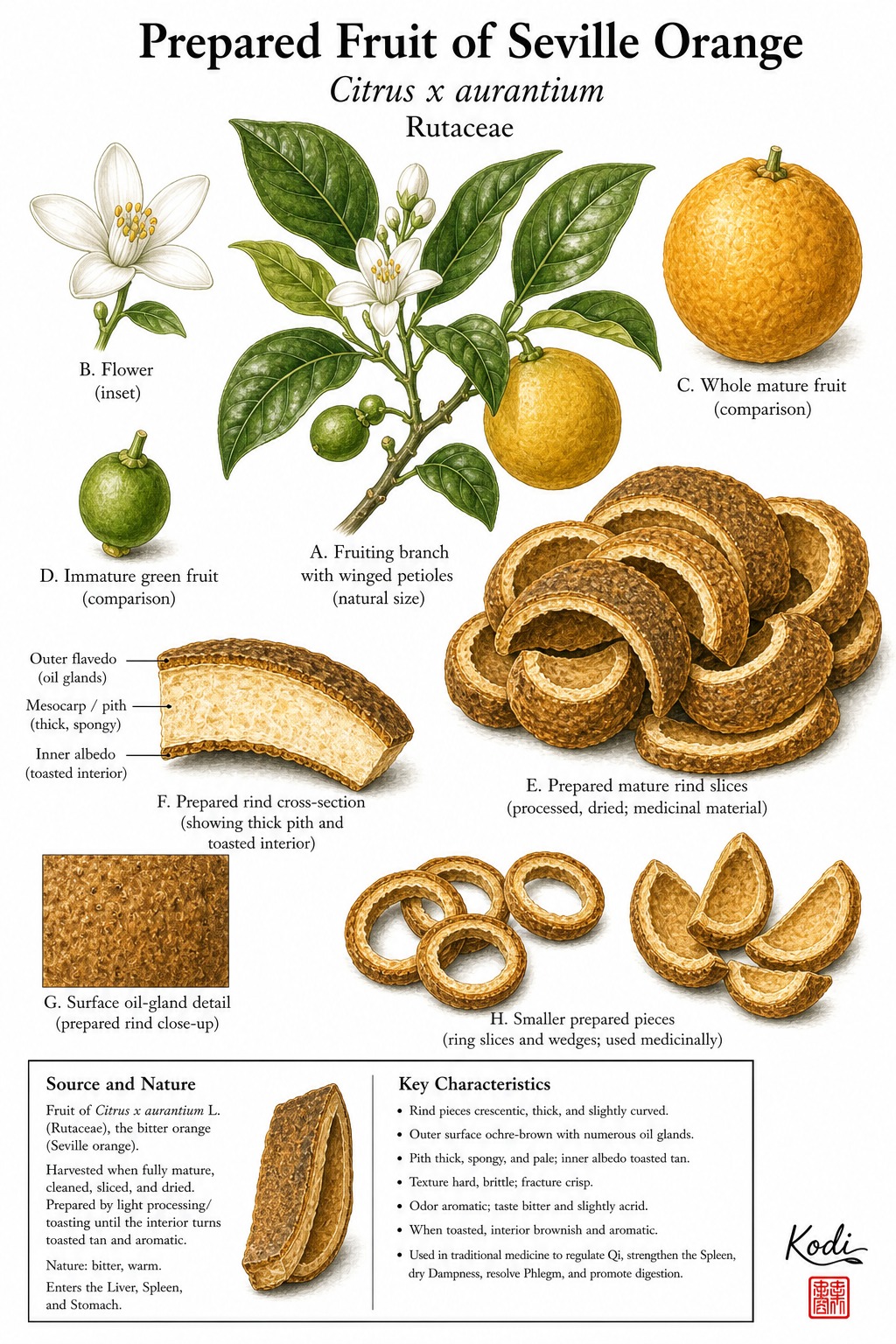
Known in TCM as Chao Zhi Qiao (炒枳壳), this bitter and pungent and sour, neutral herb enters the Spleen, Stomach, and Large Intestine. Traditionally, it regulates Qi and relieves distention ... Chao Zhi Qiao is used for chest, rib-side, and abdominal fullness when stagnation is present but the practitioner wants a somewhat milder and more middle-focused citrus mover, most often applied for dyspepsia, abdominal distension, and constipation. Modern research has identified p-Synephrine among its active constituents.
Part used: Fruit
Also Known As
Latin: Fructus Aurantii Praeparata | Pinyin: Chao Zhi Qiao | Chinese: 炒枳壳
TCM Properties
- Taste
- bitter, pungent, sour
- Temperature
- neutral
- Channels
- Spleen, Stomach, Large Intestine
Traditional Use
Primary Actions
- Regulates Qi and relieves distention ... Chao Zhi Qiao is used for chest, rib-side, and abdominal fullness when stagnation is present but the practitioner wants a somewhat milder and more middle-focused citrus mover.
- Supports digestion and guides Qi downward ... the processed mature fruit helps with post-meal fullness, belching, food stagnation, and bowel sluggishness when stagnation is prominent.
- Opens the chest and diaphragm ... it remains useful when phlegm and constrained Qi create chest oppression, pressure, or discomfort below the ribs.
Secondary Actions
- Compared with raw Zhi Qiao, the stir-fried form is generally viewed as a little less cool, slightly gentler on the middle burner, and more digestion-oriented.
- This page should remain distinct from both mature raw Zhi Qiao and the stronger immature-fruit Zhi Shi page ... Chao Zhi Qiao is processed mature bitter orange, not the harsher immature fruit.
Classic Formulas
- Zhi Zhu Wan (枳术丸) ... classic pairing of Zhi Qiao with Bai Zhu for focal distention, reduced appetite, and postprandial fullness.
- Qi-regulating formulas with Chai Hu, Xiang Fu, or Chen Pi ... common strategy when constrained Liver-Spleen Qi causes rib-side and abdominal discomfort.
- Chest-obstruction formulas with Gua Lou or Xie Bai ... used when constrained Qi and phlegm create pressure, stuffiness, or pain in the chest.
Classical References
- Traditional herbology contrasts Zhi Qiao with Zhi Shi and preserves the mature fruit as the gentler option for regulating rather than forcefully breaking Qi.
- Stir-frying is commonly used to moderate coolness and strengthen the herb's middle-burner and digestive direction.
- PREPARATION NOTE: Chao Zhi Qiao is processed mature Citrus aurantium material, not a separate species and not an immature Zhi Shi product.
Modern Research
Active Compounds
- p-Synephrine ... the protoalkaloid most often discussed in modern bitter-orange safety and stimulant literature
- Naringin and related flavanones ... major citrus glycosides relevant to antioxidant and metabolic research
- Neohesperidin and hesperidin ... additional flavonoids commonly profiled in Fructus Aurantii studies
- Furanocoumarins such as bergapten and 6',7'-dihydroxybergamottin ... constituents relevant to CYP3A4 interaction concerns
Studied Effects
- A 2011 safety review found mixed benefit claims for Citrus aurantium and ongoing concerns about blood-pressure effects and CYP-related interactions, especially outside traditional decoction contexts (PMID 21480414).
- A 2018 interaction study concluded that Citrus aurantium has meaningful drug-interaction potential involving CYP pathways, reinforcing the need for medication review when concentrated products are used (PMID 30233359).
- A 2024 integrated phytochemical and network-pharmacology study compared immature and mature Aurantii Fructus materials, expanding the modern constituent map relevant to the broader Zhi Shi and Zhi Qiao lineage (PMID 38399454).
PubMed References
- The safety of Citrus aurantium (bitter orange) and its primary protoalkaloid p-synephrine. (2011)
- Potential Metabolic Drug-Drug Interaction of Citrus aurantium L. (Rutaceae) Evaluating by Its Effect on 3 CYP450. (2018)
- Integrated UPLC/Q-TOF-MS/MS Analysis and Network Pharmacology to Reveal the Neuroprotective Mechanisms and Potential Pharmacological Ingredients of Aurantii Fructus Immaturus and Aurantii Fructus. (2024)
Safety & Interactions
Contraindications
- Pregnancy without qualified supervision
- Marked Qi deficiency or prolapse patterns without clear stagnation or distention
Cautions
- Weight-loss or sports-performance bitter-orange extracts are not equivalent to ordinary Chao Zhi Qiao decoction material.
- Patients with hypertension, palpitations, or stimulant sensitivity should treat concentrated bitter-orange products cautiously, especially when caffeine is also present.
- Medication review remains important because bitter orange can affect drug metabolism and cardiovascular tone.
Drug Interactions
- CYP3A4 substrate drugs ... bitter orange contains furanocoumarins that may alter drug metabolism
- Stimulants or caffeine-containing products ... combined use may increase cardiovascular stimulation, blood pressure, or palpitations
Conditions
- Dyspepsia Traditional ★★★★☆ JSON
- Abdominal Distension Traditional ★★★★☆ JSON
- Constipation Traditional ★★★☆☆ JSON
- Chest Pain Traditional ★★★☆☆ JSON
Frequently Asked Questions
What is Stir-Fried Bitter Orange used for?
Stir-Fried Bitter Orange is traditionally used to Regulates Qi and relieves distention ... Chao Zhi Qiao is used for chest, rib-side, and abdominal fullness when stagnation is present but the practitioner wants a somewhat milder and more middle-focused citrus mover., Supports digestion and guides Qi downward ... the processed mature fruit helps with post-meal fullness, belching, food stagnation, and bowel sluggishness when stagnation is prominent., Opens the chest and diaphragm ... it remains useful when phlegm and constrained Qi create chest oppression, pressure, or discomfort below the ribs.. Research has investigated its effects on: A 2011 safety review found mixed benefit claims for Citrus aurantium and ongoing concerns about blood-pressure effects and CYP-related interactions, especially outside traditional decoction contexts (PMID 21480414).; A 2018 interaction study concluded that Citrus aurantium has meaningful drug-interaction potential involving CYP pathways, reinforcing the need for medication review when concentrated products are used (PMID 30233359)..
What are other names for Stir-Fried Bitter Orange?
Stir-Fried Bitter Orange is also known as Prepared Seville Orange, Processed Zhi Qiao, Aurantium. In TCM: 炒枳壳 (Chao Zhi Qiao); Fructus Aurantii Praeparata.
Is Stir-Fried Bitter Orange safe during pregnancy?
The safety of Stir-Fried Bitter Orange during pregnancy has not been established. Consult a qualified healthcare provider before use.
What are the contraindications for Stir-Fried Bitter Orange?
Stir-Fried Bitter Orange should not be used in: Pregnancy without qualified supervision; Marked Qi deficiency or prolapse patterns without clear stagnation or distention. Consult a qualified healthcare provider before use.
Does Stir-Fried Bitter Orange interact with any medications?
Stir-Fried Bitter Orange may interact with: CYP3A4 substrate drugs ... bitter orange contains furanocoumarins that may alter drug metabolism; Stimulants or caffeine-containing products ... combined use may increase cardiovascular stimulation, blood pressure, or palpitations. Always inform your healthcare provider of any herbal supplements you are taking.