Honey-Fried Ephedra
- Chinese
- 炙麻黄
- Pinyin
- Zhi Ma Huang
- Latin
- Herba Ephedrae Praeparata
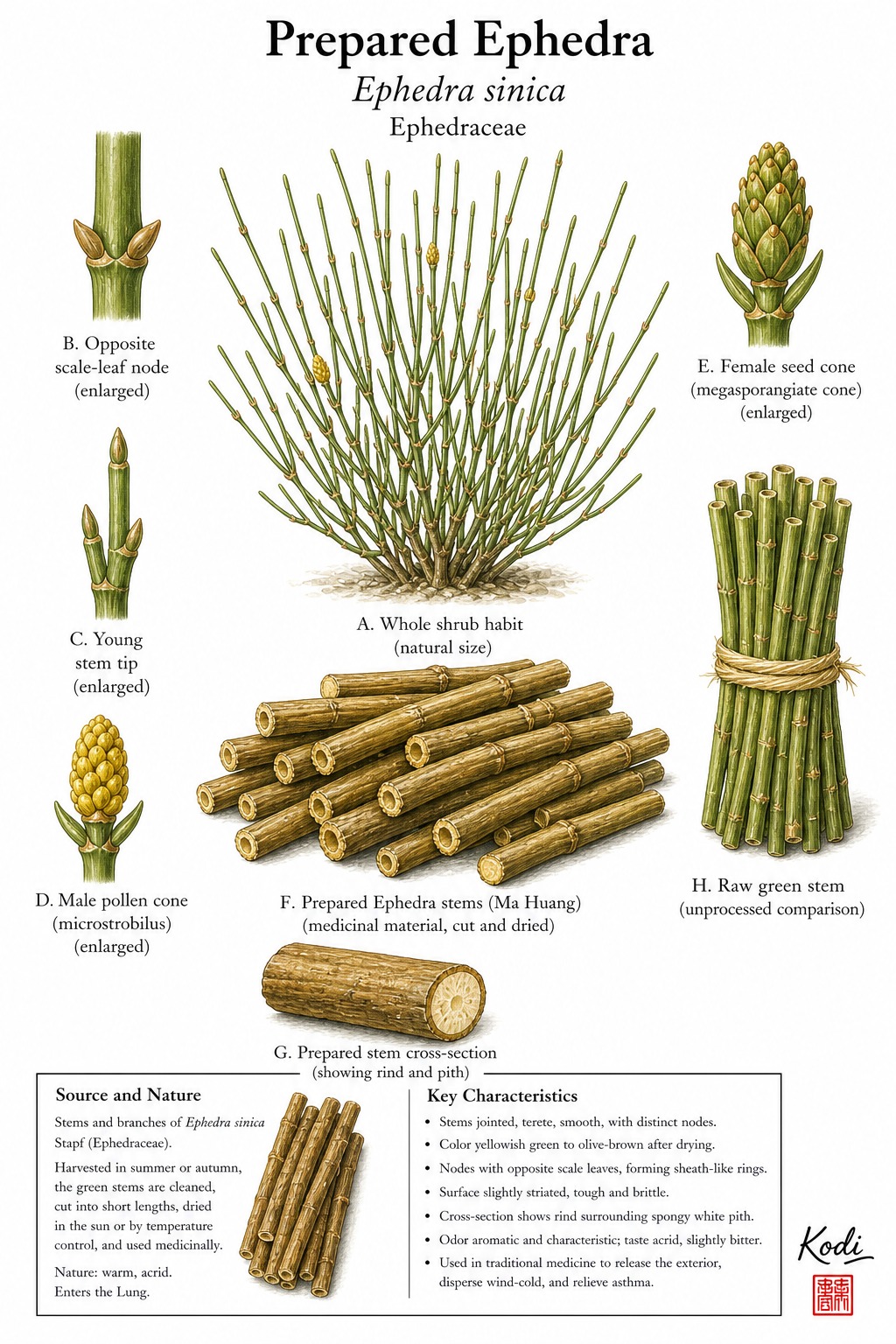
Known in TCM as Zhi Ma Huang (炙麻黄), this acrid and slightly bitter and slightly sweet, warm herb enters the Lung and Bladder. Traditionally, it disseminates Lung Qi and calms cough and wheezing ... Zhi Ma Huang is chosen when cough, chest tightness, or asthma need Ma Huang's opening action but not the full sweating force of the raw herb, most often applied for asthma, cough, and wheezing. Modern research has identified Ephedrine among its active constituents.
Part used: Whole herb
Also Known As
Latin: Herba Ephedrae Praeparata | Pinyin: Zhi Ma Huang | Chinese: 炙麻黄
TCM Properties
- Taste
- acrid, slightly bitter, slightly sweet
- Temperature
- warm
- Channels
- Lung, Bladder
Traditional Use
Primary Actions
- Disseminates Lung Qi and calms cough and wheezing ... Zhi Ma Huang is chosen when cough, chest tightness, or asthma need Ma Huang's opening action but not the full sweating force of the raw herb.
- Moderates the overly dispersing nature of raw Ma Huang ... honey-frying tempers the strongest exterior-releasing and diaphoresis-promoting qualities while preserving the herb's ability to open the Lungs.
- Supports treatment of cold-constrained or phlegm-obstructed wheezing ... especially when the prescription needs Ma Huang's Lung-opening power in a somewhat gentler, more internally directed form.
Secondary Actions
- Compared with raw Ma Huang, honey-fried Ma Huang is classically understood as less strongly sweating and more focused on relieving cough and asthma.
- This page should stay distinct from Ma Huang Gen ... ephedra root stops sweating, while Zhi Ma Huang is still an aerial-stem Ma Huang medicine that opens the Lungs.
Classic Formulas
- Ma Xing Shi Gan Tang (麻杏石甘汤) ... modern dispensing often prefers prepared Ma Huang when the priority is cough and wheezing rather than strong exterior release.
- Ding Chuan Tang (定喘汤) modification logic ... processed Ma Huang is frequently favored when wheezing and phlegm predominate but sweating should be moderated.
- She Gan Ma Huang Tang (射干麻黄汤) ... formula lineage for cold-phlegm constrained wheezing in which Ma Huang's Lung-opening role remains central.
Classical References
- Traditional processing texts describe honey-frying Ma Huang as a way to soften its harsh dispersing nature and redirect the herb more toward cough and wheezing.
- Modern materia medica teaching preserves the raw-versus-prepared distinction ... raw Ma Huang for stronger exterior excess and sweating, Zhi Ma Huang for gentler antitussive and antiasthmatic use.
- PREPARATION NOTE: Zhi Ma Huang is still Ma Huang and still safety-sensitive ... processing moderates but does not remove ephedra alkaloid risk.
Modern Research
Active Compounds
- Ephedrine ... the best-known sympathomimetic alkaloid associated with bronchodilatory and stimulant effects
- Pseudoephedrine and methylephedrine ... related alkaloids contributing to decongestant and adrenergic activity
- Ephedra polysaccharides ... non-alkaloid fractions studied for anti-inflammatory and immunologic effects
- Flavonoids and tannins ... supportive constituents explored in broader pharmacologic profiling
Studied Effects
- Review literature summarizes Ma Huang phytochemistry, pharmacology, clinical use, and alkaloid toxicity, reinforcing that even processed Ephedrae Herba remains a high-caution medicinal (PMID 36677722).
- A pharmacokinetic study found that honey-fried ephedra reduced absorption of ephedrine and pseudoephedrine compared with unprocessed ephedra, offering a modern explanation for why Zhi Ma Huang is considered less strongly diaphoresis-promoting (PMID 28706557).
- Serious cardiovascular adverse events have been reported with Ma Huang exposure, including stroke and myocardial injury, and those risks still matter when processed forms are misunderstood as safe self-care stimulants (PMID 11795249).
PubMed References
- Ephedrae Herba: A Review of Its Phytochemistry, Pharmacology, Clinical Application, and Alkaloid Toxicity (2023)
- Comparative Pharmacokinetics and Bioavailability of Three Ephedrines in Rat after Oral Administration of Unprocessed and Honey-Fried Ephedra Extract by Response Surface Experimental Design (2017)
- Adverse cardiovascular events temporally associated with ma huang, an herbal source of ephedrine (2002)
Safety & Interactions
Contraindications
- Hypertension, arrhythmia, coronary artery disease, or prior stroke
- Anxiety, panic disorder, severe insomnia, or agitation
- Pregnancy and breastfeeding
- Concurrent use of stimulant-style supplements without direct medical supervision
Cautions
- Honey-frying moderates but does not neutralize Ma Huang's cardiovascular and stimulant risk.
- Ephedra-containing dietary supplements were banned by the FDA in the United States in 2004 because they presented an unreasonable risk of illness or injury.
- Zhi Ma Huang should be used only in trained formula-based practice and not as a casual cough, weight-loss, or energy product.
Drug Interactions
- MAO inhibitors ... risk of severe hypertensive or stimulant reactions
- Other stimulants such as caffeine, amphetamine-like agents, or decongestants ... additive cardiovascular and CNS effects
- Beta-agonists, bronchodilators, or blood-pressure medications ... unpredictable adrenergic interaction
Conditions
Frequently Asked Questions
What is Honey-Fried Ephedra used for?
Honey-Fried Ephedra is traditionally used to Disseminates Lung Qi and calms cough and wheezing ... Zhi Ma Huang is chosen when cough, chest tightness, or asthma need Ma Huang's opening action but not the full sweating force of the raw herb., Moderates the overly dispersing nature of raw Ma Huang ... honey-frying tempers the strongest exterior-releasing and diaphoresis-promoting qualities while preserving the herb's ability to open the Lungs., Supports treatment of cold-constrained or phlegm-obstructed wheezing ... especially when the prescription needs Ma Huang's Lung-opening power in a somewhat gentler, more internally directed form.. Research has investigated its effects on: Review literature summarizes Ma Huang phytochemistry, pharmacology, clinical use, and alkaloid toxicity, reinforcing that even processed Ephedrae Herba remains a high-caution medicinal (PMID 36677722).; A pharmacokinetic study found that honey-fried ephedra reduced absorption of ephedrine and pseudoephedrine compared with unprocessed ephedra, offering a modern explanation for why Zhi Ma Huang is considered less strongly diaphoresis-promoting (PMID 28706557)..
What are other names for Honey-Fried Ephedra?
Honey-Fried Ephedra is also known as Prepared Ephedra, Honey-Processed Ma Huang, Ephedra. In TCM: 炙麻黄 (Zhi Ma Huang); Herba Ephedrae Praeparata.
Is Honey-Fried Ephedra safe during pregnancy?
Honey-Fried Ephedra is not recommended during pregnancy.
What are the contraindications for Honey-Fried Ephedra?
Honey-Fried Ephedra should not be used in: Hypertension, arrhythmia, coronary artery disease, or prior stroke; Anxiety, panic disorder, severe insomnia, or agitation; Pregnancy and breastfeeding; Concurrent use of stimulant-style supplements without direct medical supervision. Consult a qualified healthcare provider before use.
Does Honey-Fried Ephedra interact with any medications?
Honey-Fried Ephedra may interact with: MAO inhibitors ... risk of severe hypertensive or stimulant reactions; Other stimulants such as caffeine, amphetamine-like agents, or decongestants ... additive cardiovascular and CNS effects; Beta-agonists, bronchodilators, or blood-pressure medications ... unpredictable adrenergic interaction. Always inform your healthcare provider of any herbal supplements you are taking.