Plant Soot Powder
- Chinese
- 百草霜
- Pinyin
- Bai Cao Shuang
- Latin
- Pulvis Fumi Carbonisatus
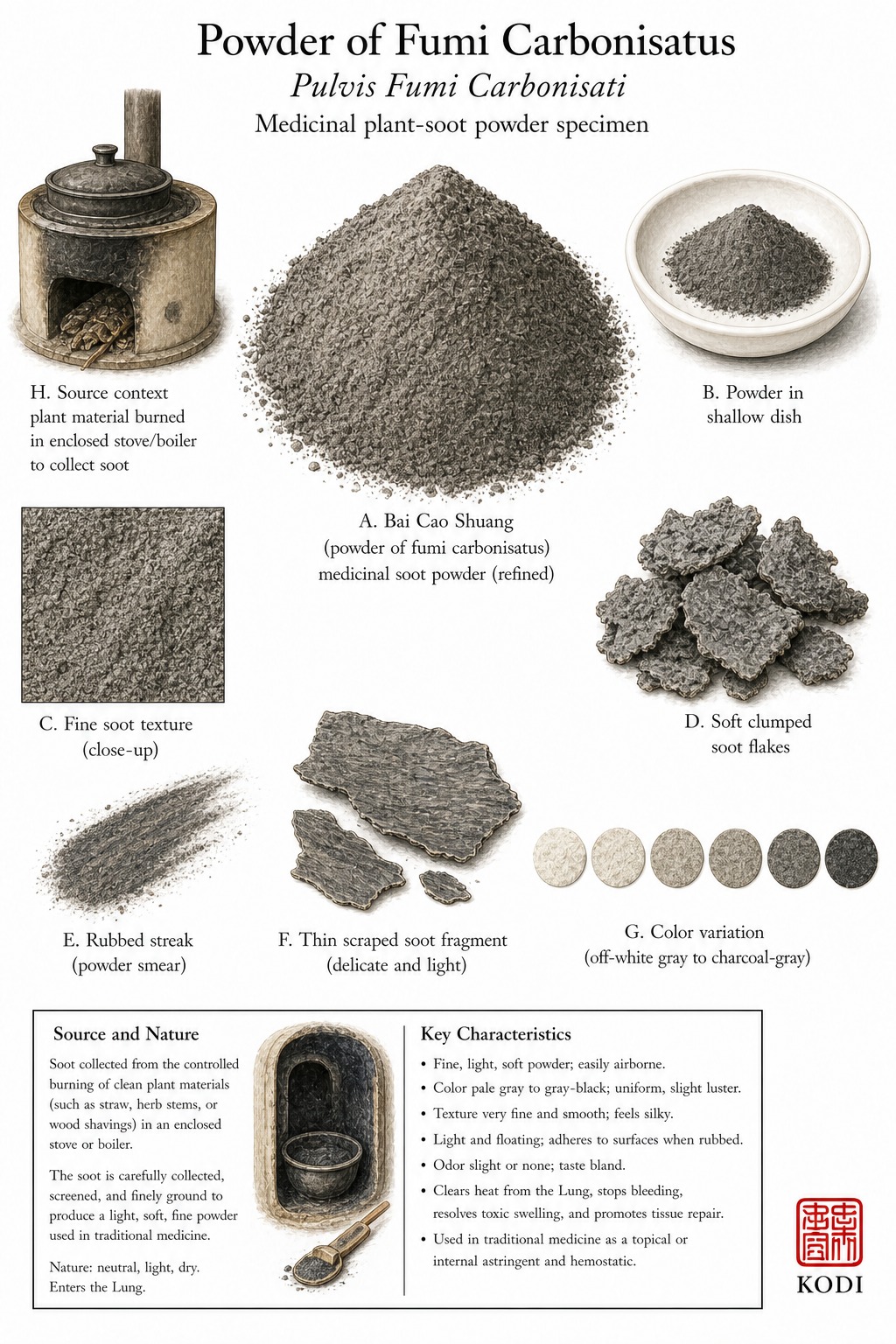
Known in TCM as Bai Cao Shuang (百草霜), this acrid, warm herb enters the Liver, Lung, and Stomach. Traditionally, it stops bleeding, especially when bleeding arises from the Lung or Stomach and a warming, constricting powder is preferred, most often applied for hemoptysis, indigestion, and abdominal pain.
Part used: Powder
Also Known As
Latin: Pulvis Fumi Carbonisatus | Pinyin: Bai Cao Shuang | Chinese: 百草霜
TCM Properties
- Taste
- acrid
- Temperature
- warm
- Channels
- Liver, Lung, Stomach
Traditional Use
Primary Actions
- Stops bleeding, especially when bleeding arises from the Lung or Stomach and a warming, constricting powder is preferred.
- Removes food retention and helps settle the middle burner when stagnant food and focal discomfort are part of the picture.
- Has a traditional drying and adsorptive character that made it useful in older materia medica for both internal and external hemostatic support.
Secondary Actions
- Bai Cao Shuang is an unusual processed-material herb rather than a straightforward plant part, which is why trade naming often sounds more like an industrial description than a botanical one.
- The record belongs in the hemostatic tradition first, with food-retention relief as a secondary classic lane.
Classical References
- Traditional references classify Bai Cao Shuang as acrid and warm, entering the Liver, Lung, and Stomach to stop bleeding and reduce food retention.
- Its use is older, pragmatic, and preparation-driven rather than built around a modern phytochemical identity.
Modern Research
Studied Effects
- No herb-specific PubMed-indexed medicinal literature was identified for Bai Cao Shuang as a classical TCM hemostatic. Contemporary indexed references are sparse and often non-clinical.
Safety & Interactions
Contraindications
- Unknown source material or contaminated soot preparation
Cautions
- Because this medicine is sourced from soot, contamination and preparation quality are more concerning than for ordinary herbs.
- Bleeding symptoms require proper medical evaluation rather than relying on improvised hemostatic powders.
Conditions
- Hemoptysis Traditional ★★☆☆☆ JSON
- Indigestion Traditional ★★☆☆☆ JSON
- Abdominal Pain Traditional ★☆☆☆☆ JSON
- Diarrhea Traditional ★☆☆☆☆ JSON
Frequently Asked Questions
What is Plant Soot Powder used for?
Plant Soot Powder is traditionally used to Stops bleeding, especially when bleeding arises from the Lung or Stomach and a warming, constricting powder is preferred., Removes food retention and helps settle the middle burner when stagnant food and focal discomfort are part of the picture., Has a traditional drying and adsorptive character that made it useful in older materia medica for both internal and external hemostatic support.. Research has investigated its effects on: No herb-specific PubMed-indexed medicinal literature was identified for Bai Cao Shuang as a classical TCM hemostatic. Contemporary indexed references are sparse and often non-clinical..
What are other names for Plant Soot Powder?
Plant Soot Powder is also known as Boiler soot, Soot from the bottom of a boiler. In TCM: 百草霜 (Bai Cao Shuang); Pulvis Fumi Carbonisatus.
Is Plant Soot Powder safe during pregnancy?
The safety of Plant Soot Powder during pregnancy has not been established. Consult a qualified healthcare provider before use.
What are the contraindications for Plant Soot Powder?
Plant Soot Powder should not be used in: Unknown source material or contaminated soot preparation. Consult a qualified healthcare provider before use.