Pomegranate Fruit
- Chinese
- 石榴
- Pinyin
- Shi Liu
- Latin
- Fructus Punicae Granati
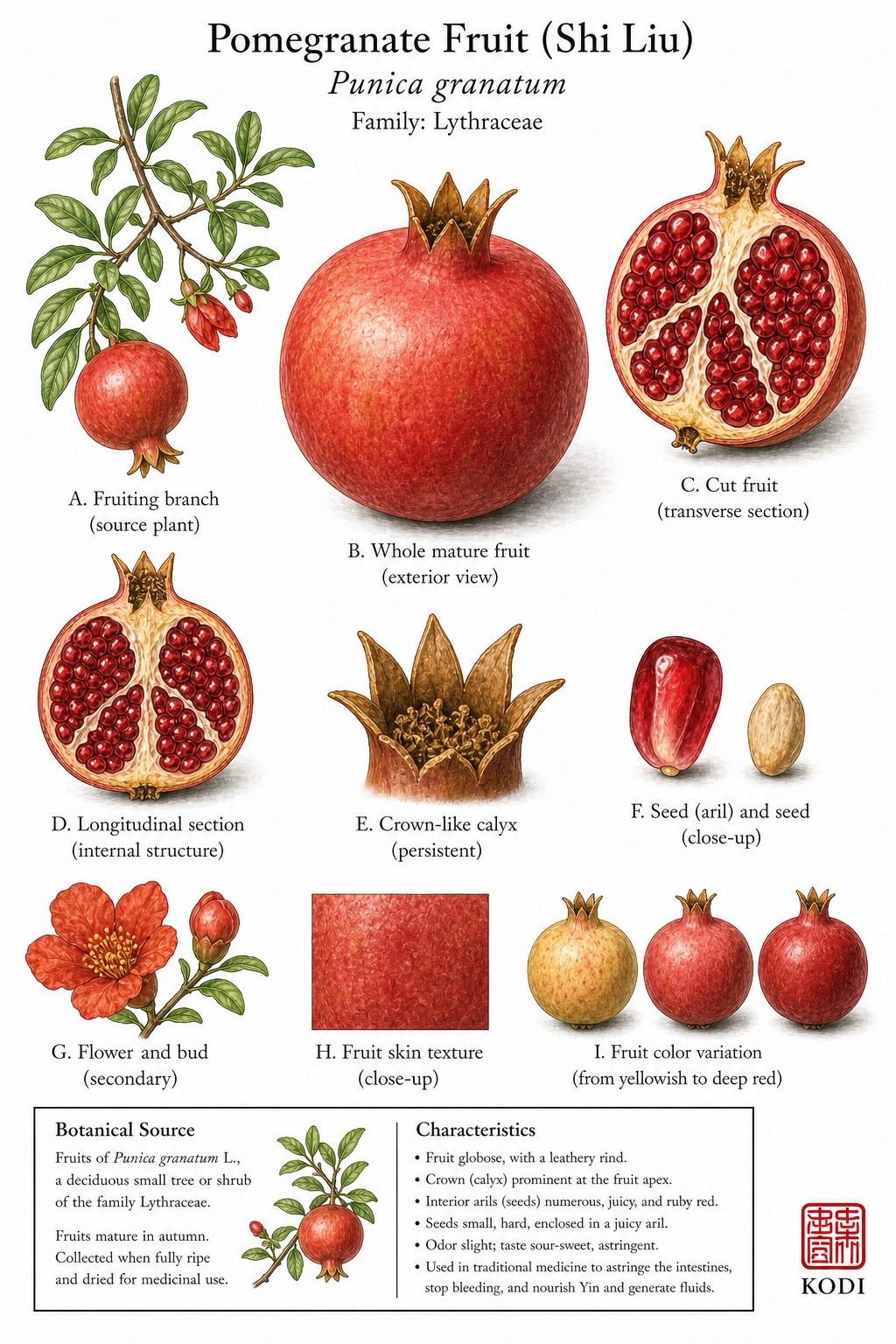
Known in TCM as Shi Liu (石榴), this sweet and sour, neutral herb enters the Stomach and Large Intestine. Traditionally, it generates fluids and gently relieves thirst, especially when summer heat or fluid loss has left the mouth dry and appetite reduced, most often applied for diarrhea, abdominal pain, and poor appetite. Modern research has identified Punicalagins among its active constituents.
Part used: Fruit
Also Known As
Latin: Fructus Punicae Granati | Pinyin: Shi Liu | Chinese: 石榴
TCM Properties
- Taste
- sweet, sour
- Temperature
- neutral
- Channels
- Stomach, Large Intestine
Traditional Use
Primary Actions
- Generates fluids and gently relieves thirst, especially when summer heat or fluid loss has left the mouth dry and appetite reduced.
- Astringes the intestines in a mild food-medicine way, making the whole fruit more suitable for gentle support in loose stools than the much stronger rind medicine Shi Liu Pi.
- Harmonizes the Stomach and supports appetite when sour-sweet fruit is preferred over stronger bitter or astringent medicinals.
Secondary Actions
- IDENTITY NOTE: the whole fruit Shi Liu is not the same therapeutic lane as Shi Liu Pi, the dried rind. The rind is the stronger astringent and parasite-focused medicinal.
- This record sits closer to diet therapy and food-medicine use than to heavy decoction-drug use.
Classical References
- Traditional use treats Shi Liu as a sour-sweet fruit that can support fluids and digestion while mildly binding the intestines.
- When stronger bowel-binding, anti-dysenteric, or anti-parasitic action is needed, traditional practice generally moves to the rind rather than the fresh or whole fruit.
Modern Research
Active Compounds
- Punicalagins and ellagitannins
- Anthocyanins from juice and arils
- Seed oil and related lipid fractions
- Polyphenolic antioxidant complexes
Studied Effects
- A 2022 review summarized medicinal uses, pharmacologic activities, phytochemistry, and molecular mechanisms across Punica granatum extracts, supporting the broad modern research base behind the plant (PMID 36076615).
- A comprehensive review of pomegranate juice highlighted polyphenols and therapeutic potential relevant to cardiovascular, antioxidant, and inflammatory research (PMID 32608443).
- A review focused on pomegranate seeds summarized their bioactive compounds and pharmacologic potential, extending modern evidence beyond the rind alone (PMID 33040298).
PubMed References
- Medicinal uses, pharmacological activities, phytochemistry, and the molecular mechanisms of Punica granatum L. (pomegranate) plant extracts: A review. (2022)
- Pomegranate juice as a functional food: a comprehensive review of its polyphenols, therapeutic merits, and recent patents. (2020)
- Bioactive Compounds and Pharmacological Potential of Pomegranate (Punica granatum) Seeds - A Review. (2020)
Safety & Interactions
Contraindications
- Early-stage diarrhea where a pathogen still needs to be expelled if used in strongly astringent preparations
Cautions
- The whole fruit is generally gentle, but medicinally concentrated extracts are different from ordinary culinary use.
Conditions
- Diarrhea Traditional ★★☆☆☆ JSON
- Abdominal Pain Traditional ★☆☆☆☆ JSON
- Poor Appetite Traditional ★☆☆☆☆ JSON
Frequently Asked Questions
What is Pomegranate Fruit used for?
Pomegranate Fruit is traditionally used to Generates fluids and gently relieves thirst, especially when summer heat or fluid loss has left the mouth dry and appetite reduced., Astringes the intestines in a mild food-medicine way, making the whole fruit more suitable for gentle support in loose stools than the much stronger rind medicine Shi Liu Pi., Harmonizes the Stomach and supports appetite when sour-sweet fruit is preferred over stronger bitter or astringent medicinals.. Research has investigated its effects on: A 2022 review summarized medicinal uses, pharmacologic activities, phytochemistry, and molecular mechanisms across Punica granatum extracts, supporting the broad modern research base behind the plant (PMID 36076615).; A comprehensive review of pomegranate juice highlighted polyphenols and therapeutic potential relevant to cardiovascular, antioxidant, and inflammatory research (PMID 32608443)..
What are other names for Pomegranate Fruit?
Pomegranate Fruit is also known as Pomegranate, Shi Liu fruit. In TCM: 石榴 (Shi Liu); Fructus Punicae Granati.
Is Pomegranate Fruit safe during pregnancy?
The safety of Pomegranate Fruit during pregnancy has not been established. Consult a qualified healthcare provider before use.
What are the contraindications for Pomegranate Fruit?
Pomegranate Fruit should not be used in: Early-stage diarrhea where a pathogen still needs to be expelled if used in strongly astringent preparations. Consult a qualified healthcare provider before use.