Cattail Pollen
- Chinese
- 蒲黄
- Pinyin
- Pu Huang
- Latin
- Pollen Typhae
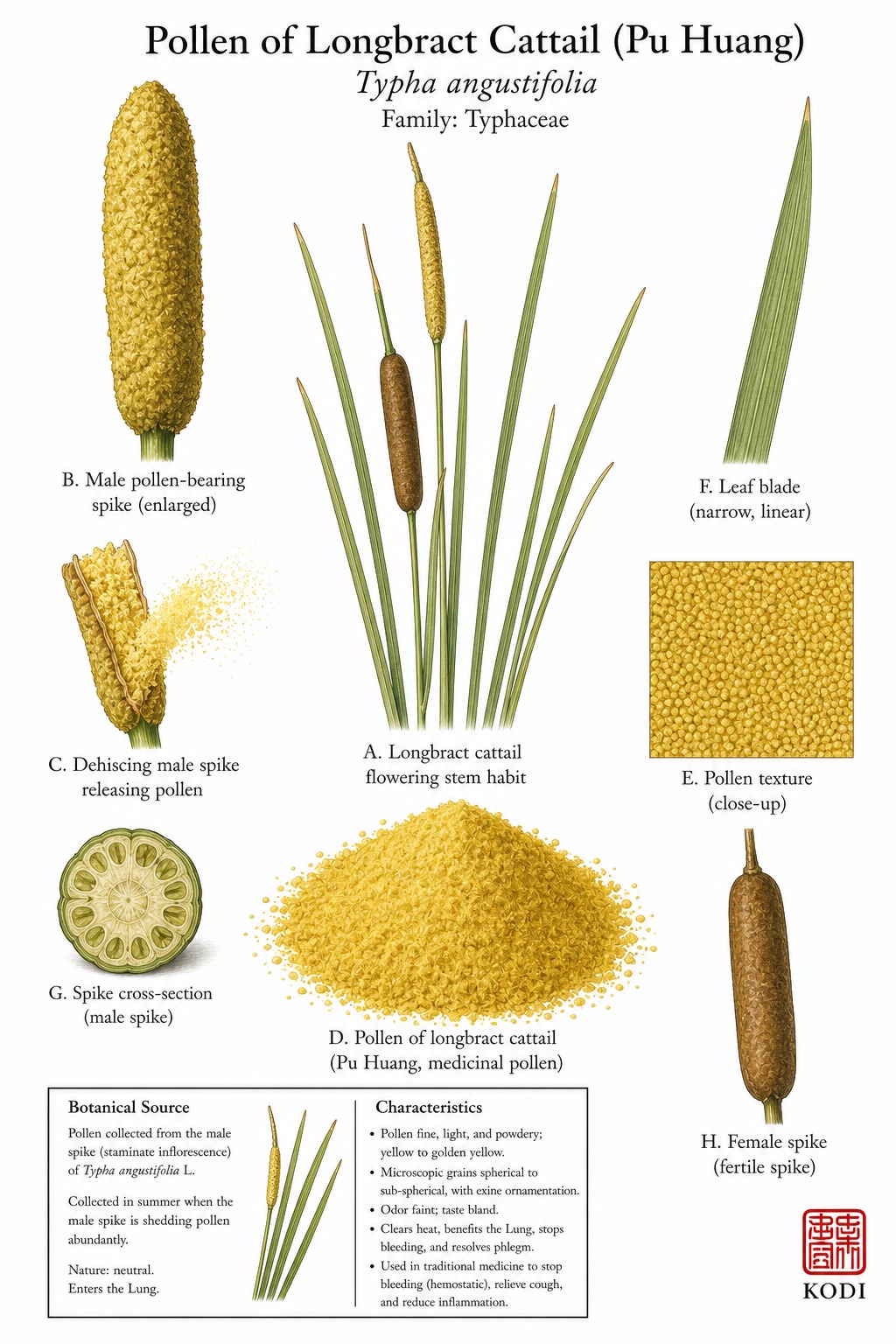
Known in TCM as Pu Huang (蒲黄), this sweet, neutral herb enters the Liver and Pericardium. Traditionally, it stops bleeding while also preventing blood stasis, used for uterine bleeding, hematuria, traumatic bleeding, and other blood-heat or stasis-associated bleeding patterns, most often applied for abnormal uterine bleeding, hematuria, and traumatic injury. Modern research has identified Flavonoids among its active constituents.
Part used: Pollen
Also Known As
Latin: Pollen Typhae | Pinyin: Pu Huang | Chinese: 蒲黄
TCM Properties
- Taste
- sweet
- Temperature
- neutral
- Channels
- Liver, Pericardium
Traditional Use
Primary Actions
- Stops bleeding while also preventing blood stasis, used for uterine bleeding, hematuria, traumatic bleeding, and other blood-heat or stasis-associated bleeding patterns.
- Invigorates blood and relieves pain, especially for dysmenorrhea, postpartum abdominal pain, traumatic pain, and chest pain from blood stasis.
- Promotes urination and unblocks painful urinary dribbling, particularly when blood and heat obstruct the urinary tract.
Secondary Actions
- RAW-VS-CHARRED NOTE: raw Pu Huang moves blood more strongly, while the charred sibling Pu Huang Tan is more purely hemostatic.
- This record should stay distinct from prepared-pollen-of-longbract-cattail.json when that processed sibling is drafted.
Classic Formulas
- Shi Xiao San, where Pu Huang pairs with Wu Ling Zhi to move blood and relieve severe fixed pain.
Classical References
- Traditional sources describe Pu Huang as sweet and neutral, entering the blood aspect to stop bleeding and move blood without creating further stasis.
- Its dual ability to stop bleeding and move blood is the main reason it occupies a special place among hemostatic herbs.
Modern Research
Active Compounds
- Flavonoids including isorhamnetin-related constituents
- Fatty-acid and sterol fractions
- Anti-nociceptive and anti-inflammatory pollen constituents
Studied Effects
- Experimental work supported the hemostatic activity of Pollen Typhae used both externally and orally, aligning with the herb's central traditional role (PMID 21934490).
- Ethanolic extract of Puhuang modulated lipopolysaccharide-induced inflammatory responses through iNOS and COX-2 pathways in macrophages, supporting anti-inflammatory research interest (PMID 34939379).
- Effect-directed fractionation identified anti-nociceptive constituents from Typha pollen, which is relevant to Pu Huang's blood-stasis pain indications (PMID 30580603).
- A review of carbonized Typhae Pollen summarized how processing changes chemistry and pharmacology, directly reinforcing the need to keep raw Pu Huang distinct from Pu Huang Tan (PMID 33388428).
PubMed References
- Experimental study on the hemostatc activity of Pollen Typhae: a traditional folk medicine used by external and oral application. (2011)
- Ethanolic extract of Puhuang (Pollen Typhae) modulates lipopolysaccharide-induced inflammatory response through inducible nitric oxide synthase / cyclooxygenase-2 signaling in RAW 264.7 macrophage. (2021)
- Identification of anti-nociceptive constituents from the pollen of Typha angustifolia L. using effect-directed fractionation. (2020)
- Effects of carbonized process on quality control, chemical composition and pharmacology of Typhae Pollen: A review. (2021)
Safety & Interactions
Contraindications
- Pregnancy unless specifically prescribed
- Bleeding from severe deficiency without stasis or heat
Cautions
- Raw and charred forms are not interchangeable. The wrong form can shift the clinical effect away from the intended hemostatic or blood-moving goal.
- Because raw Pu Huang moves blood, self-treatment in pregnancy or unexplained bleeding is not appropriate.
Conditions
- Abnormal Uterine Bleeding Traditional ★★★★☆ JSON
- Hematuria Traditional ★★★☆☆ JSON
- Traumatic Injury Traditional ★★★☆☆ JSON
- Dysmenorrhea Traditional ★★★☆☆ JSON
- Chest Pain Traditional ★★☆☆☆ JSON
Frequently Asked Questions
What is Cattail Pollen used for?
Cattail Pollen is traditionally used to Stops bleeding while also preventing blood stasis, used for uterine bleeding, hematuria, traumatic bleeding, and other blood-heat or stasis-associated bleeding patterns., Invigorates blood and relieves pain, especially for dysmenorrhea, postpartum abdominal pain, traumatic pain, and chest pain from blood stasis., Promotes urination and unblocks painful urinary dribbling, particularly when blood and heat obstruct the urinary tract.. Research has investigated its effects on: Experimental work supported the hemostatic activity of Pollen Typhae used both externally and orally, aligning with the herb's central traditional role (PMID 21934490).; Ethanolic extract of Puhuang modulated lipopolysaccharide-induced inflammatory responses through iNOS and COX-2 pathways in macrophages, supporting anti-inflammatory research interest (PMID 34939379)..
What are other names for Cattail Pollen?
Cattail Pollen is also known as Typha pollen, Pollen of longbract cattail. In TCM: 蒲黄 (Pu Huang); Pollen Typhae.
Is Cattail Pollen safe during pregnancy?
Cattail Pollen is not recommended during pregnancy. Because raw Pu Huang moves blood, self-treatment in pregnancy or unexplained bleeding is not appropriate.
What are the contraindications for Cattail Pollen?
Cattail Pollen should not be used in: Pregnancy unless specifically prescribed; Bleeding from severe deficiency without stasis or heat. Consult a qualified healthcare provider before use.