Raw Japanese Pagodatree Pod
- Chinese
- 生槐角
- Pinyin
- Sheng Huai Jiao
- Latin
- Fructus Sophorae Crudus
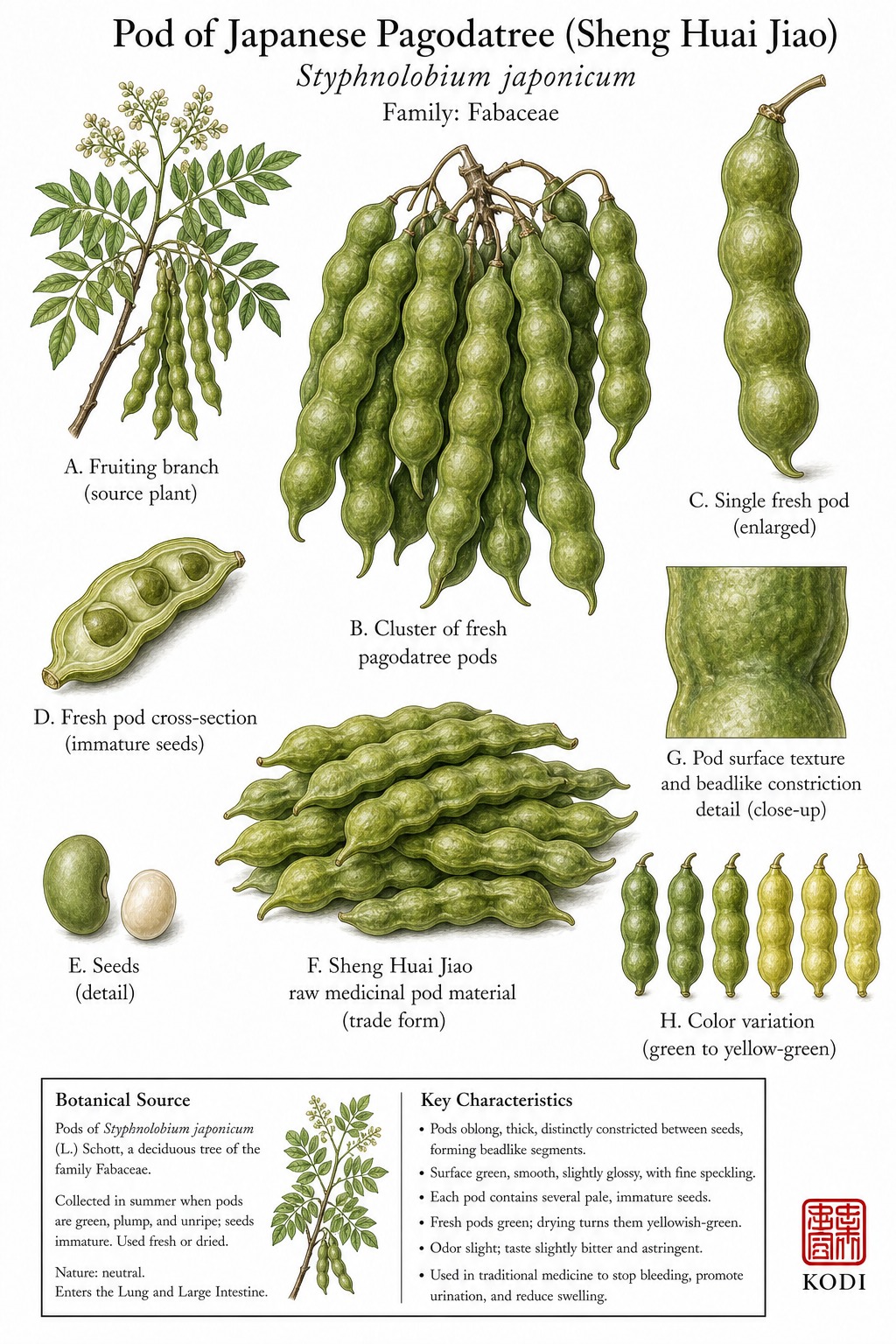
Known in TCM as Sheng Huai Jiao (生槐角), this bitter, slightly cold herb enters the Large Intestine and Liver. Traditionally, it cools the blood and stops bleeding in the raw fruit form, especially for hemorrhoidal or lower-intestinal bleeding with heat and dryness, most often applied for hemorrhoids, constipation, and hematuria. Modern research has identified Sophoricoside among its active constituents.
Part used: Fruit
Also Known As
Latin: Fructus Sophorae Crudus | Pinyin: Sheng Huai Jiao | Chinese: 生槐角
TCM Properties
- Taste
- bitter
- Temperature
- slightly cold
- Channels
- Large Intestine, Liver
Traditional Use
Primary Actions
- Cools the blood and stops bleeding in the raw fruit form, especially for hemorrhoidal or lower-intestinal bleeding with heat and dryness.
- Moistens the intestines and supports bowel movement when bleeding is aggravated by dry stools or constipation.
- Clears heat downward through the intestinal tract while also addressing heat stirring the blood.
Secondary Actions
- This record is the raw-form lane of Huai Jiao. Keep it distinct from general Huai Jiao references when processing or preparation specifically matters.
- The raw form is traditionally understood as more directly cooling and moistening than charred or otherwise modified hemostatic preparations.
Classic Formulas
- Huai Jiao Wan, which depends on the fruit lane of Sophora for chronic hemorrhoids and intestinal bleeding patterns.
Classical References
- Sheng Huai Jiao preserves the base fruit identity of Huai Jiao while making the raw-state distinction explicit.
- Traditional use remains focused on lower-tract bleeding, heat, and bowel dryness.
Modern Research
Active Compounds
- Sophoricoside
- Flavonol tetraglycosides
- Genistein-related glycosides
- Other Styphnolobium japonicum fruit flavonoids
Studied Effects
- The broader Fructus Sophorae literature summarizes traditional uses, chemistry, and pharmacology for Sophora japonica fruit materials, which applies directly to raw Huai Jiao as the unprocessed fruit lane (PMID 27085938).
- Macrophage research reported anti-inflammatory effects of Fructus sophorae through NF-κB and MAPK pathway modulation (PMID 27045671).
- Recent work on sophoricoside from Fructus Sophorae shows continued pharmacologic interest in fruit-derived constituents, even beyond the classic bleeding indications (PMID 39019417).
PubMed References
- Local and traditional uses, phytochemistry, and pharmacology of Sophora japonica L.: A review. (2016)
- Fructus sophorae attenuates secretion of proinflammatory mediators and cytokines through the modulation of NF-κB and MAPK signaling pathways in LPS-stimulated RAW 264.7 macrophages. (2016)
- Sophoricoside, a genistein glycoside from Fructus Sophorae, promotes hair growth via activation of M4 muscarinic AChR in dermal papilla cells. (2024)
Safety & Interactions
Contraindications
- Cold deficiency bleeding without heat
- Loose stools from marked Spleen deficiency
Cautions
- Raw-form records can be clinically important because processing changes hemostatic emphasis.
- Persistent bleeding should be medically assessed.
Conditions
- Hemorrhoids Traditional ★★★★☆ JSON
- Constipation Traditional ★★☆☆☆ JSON
- Hematuria Traditional ★★☆☆☆ JSON
- Abnormal Uterine Bleeding Traditional ★★☆☆☆ JSON
Frequently Asked Questions
What is Raw Japanese Pagodatree Pod used for?
Raw Japanese Pagodatree Pod is traditionally used to Cools the blood and stops bleeding in the raw fruit form, especially for hemorrhoidal or lower-intestinal bleeding with heat and dryness., Moistens the intestines and supports bowel movement when bleeding is aggravated by dry stools or constipation., Clears heat downward through the intestinal tract while also addressing heat stirring the blood.. Research has investigated its effects on: The broader Fructus Sophorae literature summarizes traditional uses, chemistry, and pharmacology for Sophora japonica fruit materials, which applies directly to raw Huai Jiao as the unprocessed fruit lane (PMID 27085938).; Macrophage research reported anti-inflammatory effects of Fructus sophorae through NF-κB and MAPK pathway modulation (PMID 27045671)..
What are other names for Raw Japanese Pagodatree Pod?
Raw Japanese Pagodatree Pod is also known as Raw Huai Jiao, Raw sophora fruit. In TCM: 生槐角 (Sheng Huai Jiao); Fructus Sophorae Crudus.
Is Raw Japanese Pagodatree Pod safe during pregnancy?
The safety of Raw Japanese Pagodatree Pod during pregnancy has not been established. Consult a qualified healthcare provider before use.
What are the contraindications for Raw Japanese Pagodatree Pod?
Raw Japanese Pagodatree Pod should not be used in: Cold deficiency bleeding without heat; Loose stools from marked Spleen deficiency. Consult a qualified healthcare provider before use.