Japanese Pagodatree Pod
- Chinese
- 槐角
- Pinyin
- Huai Jiao
- Latin
- Fructus Sophorae
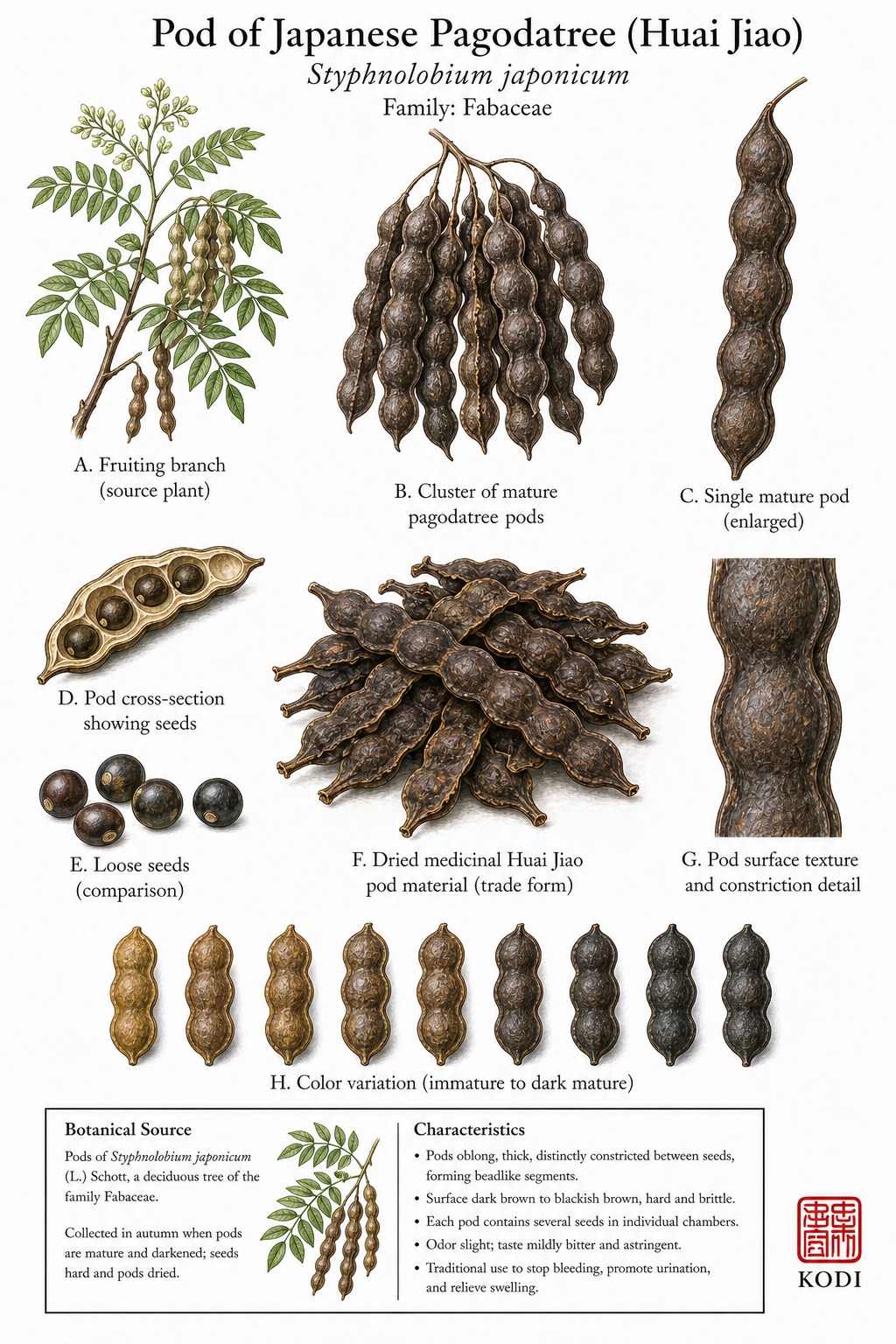
Known in TCM as Huai Jiao (槐角), this bitter, slightly cold herb enters the Large Intestine and Liver. Traditionally, it cools the blood and stops bleeding, especially chronic hemorrhoidal bleeding and lower-intestinal bleeding with heat signs, most often applied for hemorrhoids, constipation, and hematuria. Modern research has identified Sophoricoside among its active constituents.
Part used: Fruit
Also Known As
Latin: Fructus Sophorae | Pinyin: Huai Jiao | Chinese: 槐角
TCM Properties
- Taste
- bitter
- Temperature
- slightly cold
- Channels
- Large Intestine, Liver
Traditional Use
Primary Actions
- Cools the blood and stops bleeding, especially chronic hemorrhoidal bleeding and lower-intestinal bleeding with heat signs.
- Moistens the intestines and helps relieve constipation when bowel dryness accompanies intestinal heat and hemorrhoids.
- Clears Liver and intestinal heat that rises upward or irritates the vessels, extending its traditional use to headache and some heat-type bleeding presentations.
Secondary Actions
- Huai Jiao is the fruit or pod lane of the Sophora japonica medicine, distinct from Huai Hua, the flower-bud lane, though both share a cooling-hemostatic family resemblance.
- Compared with Huai Hua, Huai Jiao is classically a bit more downward and moistening.
Classic Formulas
- Huai Jiao Wan, the signature formula for chronic hemorrhoids and intestinal bleeding with heat and constipation.
Classical References
- Traditional sources describe Huai Jiao as bitter and slightly cold, entering the Large Intestine to cool blood, stop bleeding, and moisten the bowels.
- Its classical identity is strongest in hemorrhoidal and lower-intestinal bleeding.
Modern Research
Active Compounds
- Sophoricoside
- Flavonol tetraglycosides
- Genistein-related glycosides
- Other flavonoid and isoflavonoid constituents of Styphnolobium japonicum fruit
Studied Effects
- A major review summarized the local uses, phytochemistry, and pharmacology of Sophora japonica, including the medicinal fruits sold as Fructus Sophorae (PMID 27085938).
- Experimental work showed Fructus sophorae attenuated proinflammatory mediators and cytokines through NF-κB and MAPK pathway modulation in macrophages (PMID 27045671).
- An animal study reported protective effects of Fructus sophorae extract in collagen-induced arthritis, reflecting continuing anti-inflammatory interest in the fruit material (PMID 28123483).
- Phytochemical authentication work identified flavonol tetraglycosides from Styphnolobium japonicum fruits and helped distinguish Fructus Sophorae from the flower-bud drug (PMID 19447452).
PubMed References
- Local and traditional uses, phytochemistry, and pharmacology of Sophora japonica L.: A review. (2016)
- Fructus sophorae attenuates secretion of proinflammatory mediators and cytokines through the modulation of NF-κB and MAPK signaling pathways in LPS-stimulated RAW 264.7 macrophages. (2016)
- Protective effects of Fructus sophorae extract on collagen-induced arthritis in BALB/c mice. (2017)
- Flavonol tetraglycosides from fruits of Styphnolobium japonicum (Leguminosae) and the authentication of Fructus Sophorae and Flos Sophorae. (2009)
Safety & Interactions
Contraindications
- Cold deficiency bleeding without heat
- Loose stools from Spleen deficiency if used in larger amounts
Cautions
- Serious rectal bleeding or unexplained blood loss needs medical evaluation.
- The fruit and flower-bud Sophora drugs should not be collapsed into a single record without preserving their distinct traditional emphasis.
Conditions
- Hemorrhoids Traditional ★★★★☆ JSON
- Constipation Traditional ★★☆☆☆ JSON
- Hematuria Traditional ★★☆☆☆ JSON
- Abnormal Uterine Bleeding Traditional ★★☆☆☆ JSON
Frequently Asked Questions
What is Japanese Pagodatree Pod used for?
Japanese Pagodatree Pod is traditionally used to Cools the blood and stops bleeding, especially chronic hemorrhoidal bleeding and lower-intestinal bleeding with heat signs., Moistens the intestines and helps relieve constipation when bowel dryness accompanies intestinal heat and hemorrhoids., Clears Liver and intestinal heat that rises upward or irritates the vessels, extending its traditional use to headache and some heat-type bleeding presentations.. Research has investigated its effects on: A major review summarized the local uses, phytochemistry, and pharmacology of Sophora japonica, including the medicinal fruits sold as Fructus Sophorae (PMID 27085938).; Experimental work showed Fructus sophorae attenuated proinflammatory mediators and cytokines through NF-κB and MAPK pathway modulation in macrophages (PMID 27045671)..
What are other names for Japanese Pagodatree Pod?
Japanese Pagodatree Pod is also known as Sophora fruit, Pagoda tree pod. In TCM: 槐角 (Huai Jiao); Fructus Sophorae.
Is Japanese Pagodatree Pod safe during pregnancy?
The safety of Japanese Pagodatree Pod during pregnancy has not been established. Consult a qualified healthcare provider before use.
What are the contraindications for Japanese Pagodatree Pod?
Japanese Pagodatree Pod should not be used in: Cold deficiency bleeding without heat; Loose stools from Spleen deficiency if used in larger amounts. Consult a qualified healthcare provider before use.