Plum Flower
- Chinese
- 梅花
- Pinyin
- Mei Hua
- Latin
- Flos Mume
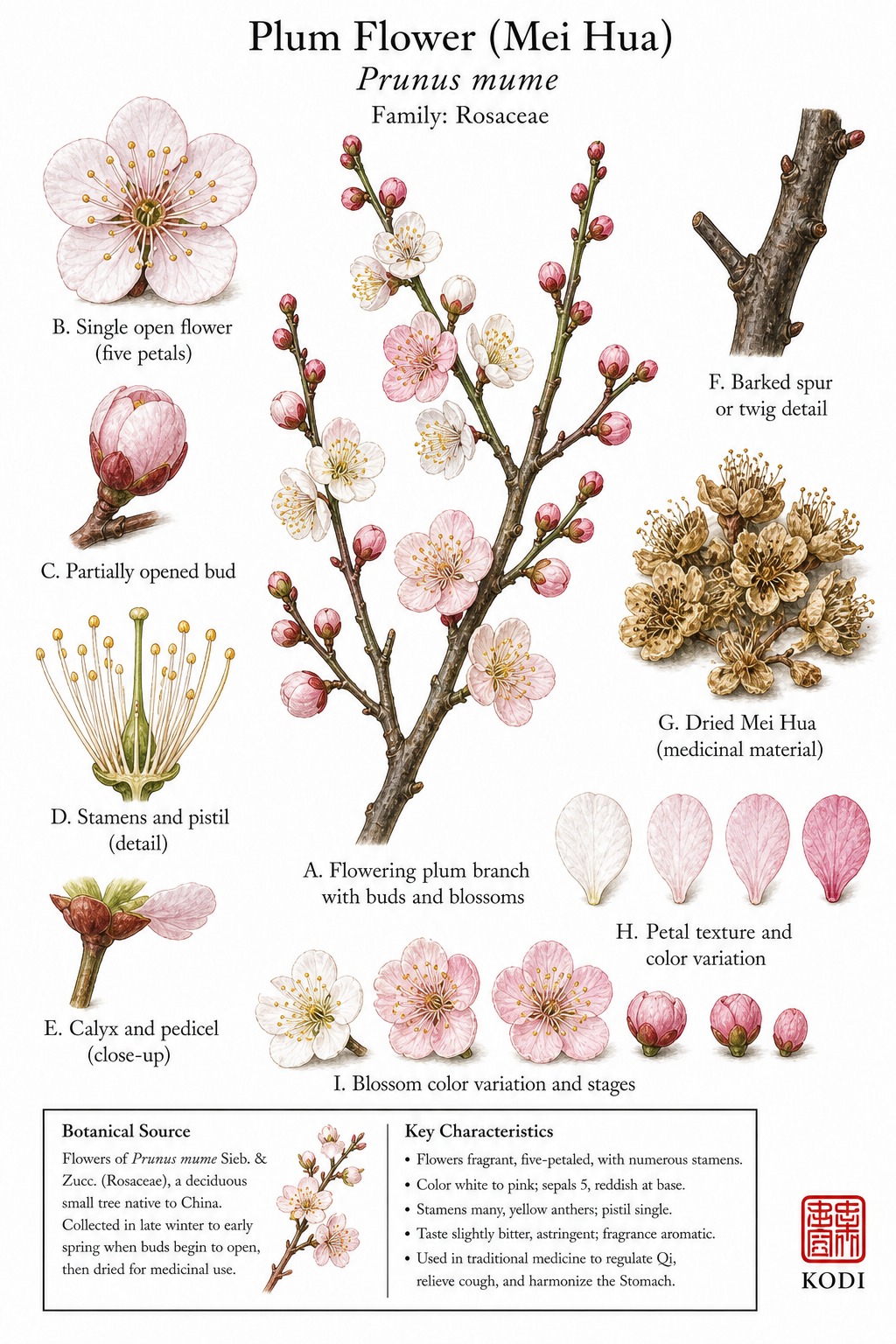
Known in TCM as Mei Hua (梅花), this sour and slightly bitter, neutral herb enters the Liver and Stomach. Traditionally, it soothes the Liver and regulates Qi in gentle fashion, especially for emotional constraint, chest or epigastric tightness, and discomfort from Liver-Stomach disharmony, most often applied for liver qi stagnation, poor appetite, and abdominal pain. Modern research has identified Radical-scavenging among its active constituents.
Part used: Flower
Also Known As
Latin: Flos Mume | Pinyin: Mei Hua | Chinese: 梅花
TCM Properties
- Taste
- sour, slightly bitter
- Temperature
- neutral
- Channels
- Liver, Stomach
Traditional Use
Primary Actions
- Soothes the Liver and regulates Qi in gentle fashion, especially for emotional constraint, chest or epigastric tightness, and discomfort from Liver-Stomach disharmony.
- Harmonizes the Stomach and improves appetite when constrained Qi leads to poor intake, nausea, or vague upper-abdominal discomfort.
- Resolves phlegm and dissipates nodules in milder constrained patterns, including the traditional plum-pit style sense of blockage and some small phlegm-Qi accumulations.
Secondary Actions
- Mei Hua moves Qi more gently than stronger acrid regulators, so it is often chosen when the patient is sensitive, depleted, or has prolonged stagnation.
- The medicinal is usually the flower bud, not the fruit lane associated with Wu Mei.
Classical References
- Traditional use emphasizes soothing the Liver, harmonizing the middle, easing depressed Qi, and resolving constrained phlegm.
- Its aromatic flower nature explains why it is chosen for gentle rather than forceful movement.
Modern Research
Active Compounds
- Radical-scavenging phenolic constituents
- Acylated sucroses from Prunus mume flower buds
- Volatile aromatic constituents including benzyl-alcohol-related compounds
Studied Effects
- Phytochemical work identified radical-scavenging constituents from Prunus mume flowers, supporting antioxidant interest in Mei Hua (PMID 12673002).
- Further flower-bud research identified acylated sucroses and aldose-reductase inhibitory activity, extending the metabolic and functional profile of Prunus mume floral medicine (PMID 23546004).
- Animal work reported vascular relaxation and blood-pressure-lowering effects of Prunus mume, supporting wider cardiovascular pharmacology interest around this medicinal species (PMID 36671646).
PubMed References
- Medicinal flowers. VIII. Radical scavenging constituents from the flowers of Prunus mume: structure of prunose III. (2003)
- Medicinal flowers. XXXVIII. structures of acylated sucroses and inhibitory effects of constituents on aldose reducatase from the flower buds of Prunus mume. (2013)
- Vascular Relaxation and Blood Pressure Lowering Effects of Prunus mume in Rats. (2023)
Safety & Interactions
Contraindications
- Marked Qi deficiency without stagnation
Cautions
- Mei Hua is gentle, but abdominal pain, dysphagia, or breast masses should not be self-treated without evaluation.
Conditions
- Liver Qi Stagnation Traditional ★★★★☆ JSON
- Poor Appetite Traditional ★★☆☆☆ JSON
- Abdominal Pain Traditional ★★☆☆☆ JSON
- Menstrual Irregularities Traditional ★★☆☆☆ JSON
Frequently Asked Questions
What is Plum Flower used for?
Plum Flower is traditionally used to Soothes the Liver and regulates Qi in gentle fashion, especially for emotional constraint, chest or epigastric tightness, and discomfort from Liver-Stomach disharmony., Harmonizes the Stomach and improves appetite when constrained Qi leads to poor intake, nausea, or vague upper-abdominal discomfort., Resolves phlegm and dissipates nodules in milder constrained patterns, including the traditional plum-pit style sense of blockage and some small phlegm-Qi accumulations.. Research has investigated its effects on: Phytochemical work identified radical-scavenging constituents from Prunus mume flowers, supporting antioxidant interest in Mei Hua (PMID 12673002).; Further flower-bud research identified acylated sucroses and aldose-reductase inhibitory activity, extending the metabolic and functional profile of Prunus mume floral medicine (PMID 23546004)..
What are other names for Plum Flower?
Plum Flower is also known as Mume flower, Plum blossom. In TCM: 梅花 (Mei Hua); Flos Mume.
Is Plum Flower safe during pregnancy?
The safety of Plum Flower during pregnancy has not been established. Consult a qualified healthcare provider before use.
What are the contraindications for Plum Flower?
Plum Flower should not be used in: Marked Qi deficiency without stagnation. Consult a qualified healthcare provider before use.