Pine Tar
- Chinese
- 松馏油
- Pinyin
- Song Liu You
- Latin
- Pix Pini
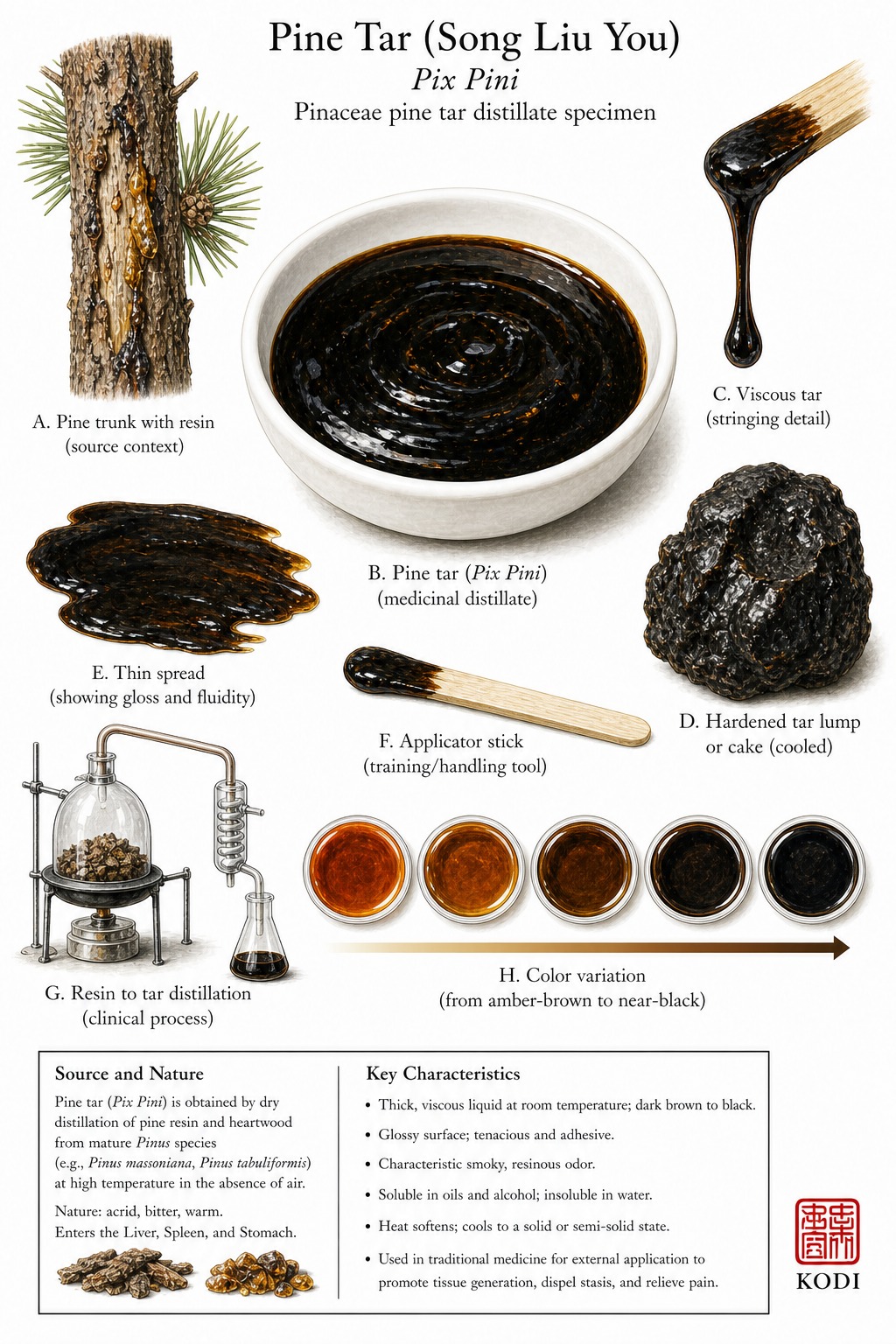
Known in TCM as Song Liu You (松馏油), this pungent and bitter, warm herb enters the Lung, Stomach, Liver, and Heart. Traditionally, it used externally to kill parasites, reduce itching, and dry damp skin lesions such as chronic eczema, scabies, and thickened scaly eruptions, most often applied for eczema, psoriasis, and scabies. Modern research has identified Phenolic among its active constituents.
Also Known As
Latin: Pix Pini | Pinyin: Song Liu You | Chinese: 松馏油
TCM Properties
- Taste
- pungent, bitter
- Temperature
- warm
- Channels
- Lung, Stomach, Liver, Heart
Traditional Use
Primary Actions
- Used externally to kill parasites, reduce itching, and dry damp skin lesions such as chronic eczema, scabies, and thickened scaly eruptions.
- Acts as a resinous skin stimulant and antiseptic-style topical medicine for stubborn, chronic, or lichenified lesions rather than delicate acute inflamed skin.
- Softens scale and roughened tissue, which helps explain its long historical use for dry itchy dermatoses with flaking and thickening.
Secondary Actions
- Song Liu You is mainly an external medicinal. The traditional record is far more dermatologic than internal.
- Because it is a processed tar rather than a simple crude plant part, source quality and formulation matter more than they do for many ordinary herbs.
Classical References
- Traditional listings classify pine tar as a warm, pungent-bitter external medicine for chronic itchy skin disease and parasite-related lesions.
- Its use centers on topical application rather than decoction-style internal prescribing.
Modern Research
Active Compounds
- Phenolic tar constituents
- Resin acids and related pine pyrolysis fractions
- Topical antipruritic and keratolytic fractions discussed in dermatology literature
Studied Effects
- A dermatology review summarized the long history, chemical properties, and continued clinical use of topical pine tar for common skin conditions including eczema and psoriasis (PMID 26790564).
- A randomized crossover trial found pine-tar baths reduced disease severity in moderate-to-severe childhood eczema, giving modern clinical support to the longstanding topical use (PMID 32066302).
- Case literature also documents allergic contact dermatitis from pine tar, which is important because this medicine is applied directly to compromised skin (PMID 10945763).
PubMed References
Safety & Interactions
Contraindications
- Known pine-tar allergy or prior allergic contact dermatitis
- Open, acutely inflamed, or heavily eroded skin unless professionally directed
Cautions
- This is chiefly an external medicine and can irritate sensitive skin.
- Patch testing or cautious first use matters because allergic contact dermatitis is documented in the literature.
Conditions
Frequently Asked Questions
What is Pine Tar used for?
Pine Tar is traditionally used to Used externally to kill parasites, reduce itching, and dry damp skin lesions such as chronic eczema, scabies, and thickened scaly eruptions., Acts as a resinous skin stimulant and antiseptic-style topical medicine for stubborn, chronic, or lichenified lesions rather than delicate acute inflamed skin., Softens scale and roughened tissue, which helps explain its long historical use for dry itchy dermatoses with flaking and thickening.. Research has investigated its effects on: A dermatology review summarized the long history, chemical properties, and continued clinical use of topical pine tar for common skin conditions including eczema and psoriasis (PMID 26790564).; A randomized crossover trial found pine-tar baths reduced disease severity in moderate-to-severe childhood eczema, giving modern clinical support to the longstanding topical use (PMID 32066302)..
What are other names for Pine Tar?
Pine Tar is also known as Pine pitch tar. In TCM: 松馏油 (Song Liu You); Pix Pini.
Is Pine Tar safe during pregnancy?
The safety of Pine Tar during pregnancy has not been established. Consult a qualified healthcare provider before use.
What are the contraindications for Pine Tar?
Pine Tar should not be used in: Known pine-tar allergy or prior allergic contact dermatitis; Open, acutely inflamed, or heavily eroded skin unless professionally directed. Consult a qualified healthcare provider before use.