Pine Pollen
- Chinese
- 松花粉
- Pinyin
- Song Hua Fen
- Latin
- Pollen Pini
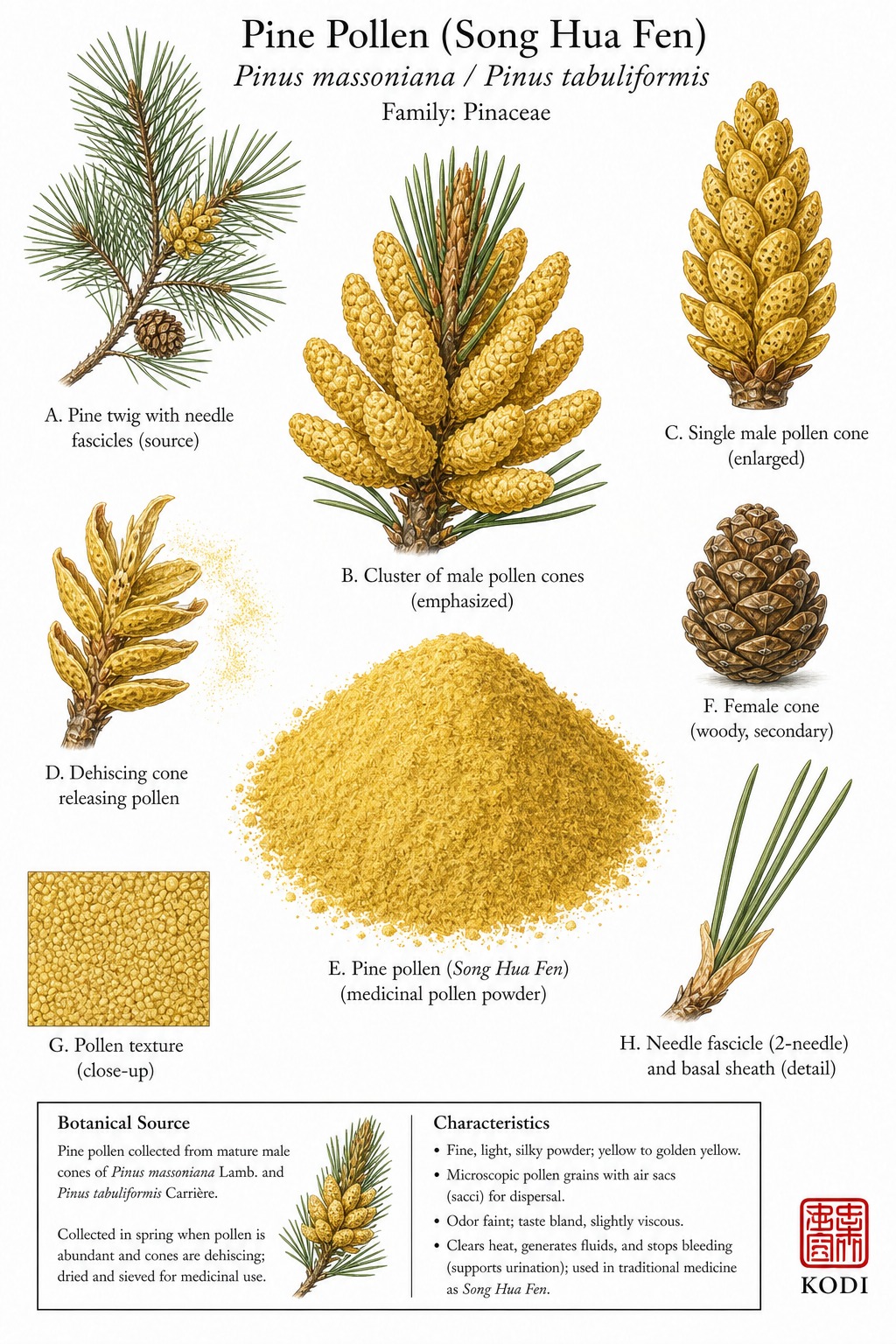
Known in TCM as Song Hua Fen (松花粉), this sweet, warm herb enters the Liver and Spleen. Traditionally, it astringes and dries damp seepage when used externally for weeping eczema, moist sores, and itchy skin eruptions, most often applied for eczema, scabies, and oral ulcers. Modern research has identified Pine among its active constituents.
Part used: Pollen
Also Known As
Latin: Pollen Pini | Pinyin: Song Hua Fen | Chinese: 松花粉
TCM Properties
- Taste
- sweet
- Temperature
- warm
- Channels
- Liver, Spleen
Traditional Use
Primary Actions
- Astringes and dries damp seepage when used externally for weeping eczema, moist sores, and itchy skin eruptions.
- Promotes tissue recovery on the skin surface, so it has a long folk and materia medica history as a dusting powder for raw, irritated, or weeping lesions.
- Used internally or externally for oral ulceration and mouth sores when dampness, heat, or local irritation damages the tissues.
Secondary Actions
- Compared with many skin herbs, pine pollen is relatively mild and often used as a topical support rather than as a strong internal toxin-clearing agent.
- Modern commercial use sometimes markets it as a supplement, but the traditional profile centers more on drying, astringing, and tissue support.
Classical References
- Traditional use emphasizes external application for moist or oozing lesions and internal or topical use for oral ulceration.
- Its powder form is part of the reason it became associated with drying and covering compromised tissue surfaces.
Modern Research
Active Compounds
- Pine pollen polysaccharides
- Flavonoids and phenolic antioxidants
- Protein, amino acid, and lipid fractions studied in functional-food research
Studied Effects
- A 2024 review summarized extraction methods, structure-activity relationships, and bioactivities of pine pollen polysaccharides, reflecting strong current interest in anti-inflammatory and functional-food applications (PMID 39396591).
- A bibliometric review mapped the modern pharmacologic and clinical literature on pine pollen, showing continued research interest across inflammation, nutrition, and chronic-disease support topics (PMID 34327226).
- Experimental work found antioxidant and hepatoprotective activity in polysaccharides from Pinus massoniana pollen, supporting broader biologic plausibility beyond the traditional topical uses (PMID 29385683).
PubMed References
- Extraction, structural-activity relationships, bioactivities, and application prospects of pine pollen polysaccharides as ingredients for functional products: A review. (2024)
- The Potential Effects and Use of Chinese Herbal Medicine Pine Pollen (Pinus pollen): A Bibliometric Analysis of Pharmacological and Clinical Studies. (2020)
- Preliminary Characterization, Antioxidant and Hepatoprotective Activities of Polysaccharides from Taishan Pinus massoniana Pollen. (2018)
Safety & Interactions
Contraindications
- Known pine pollen hypersensitivity or severe seasonal pollen allergy
Cautions
- Allergic reactions are the main practical concern, especially with inhaled powders or concentrated supplement use.
- Traditional external use on irritated skin is different from ingesting concentrated modern pollen products.
Conditions
- Eczema Traditional ★★★☆☆ JSON
- Scabies Traditional ★★☆☆☆ JSON
- Oral Ulcers Traditional ★★★☆☆ JSON
- Mouth Sores Traditional ★★★☆☆ JSON
Frequently Asked Questions
What is Pine Pollen used for?
Pine Pollen is traditionally used to Astringes and dries damp seepage when used externally for weeping eczema, moist sores, and itchy skin eruptions., Promotes tissue recovery on the skin surface, so it has a long folk and materia medica history as a dusting powder for raw, irritated, or weeping lesions., Used internally or externally for oral ulceration and mouth sores when dampness, heat, or local irritation damages the tissues.. Research has investigated its effects on: A 2024 review summarized extraction methods, structure-activity relationships, and bioactivities of pine pollen polysaccharides, reflecting strong current interest in anti-inflammatory and functional-food applications (PMID 39396591).; A bibliometric review mapped the modern pharmacologic and clinical literature on pine pollen, showing continued research interest across inflammation, nutrition, and chronic-disease support topics (PMID 34327226)..
What are other names for Pine Pollen?
Pine Pollen is also known as Song Huang, Pinus pollen. In TCM: 松花粉 (Song Hua Fen); Pollen Pini.
Is Pine Pollen safe during pregnancy?
The safety of Pine Pollen during pregnancy has not been established. Consult a qualified healthcare provider before use.
What are the contraindications for Pine Pollen?
Pine Pollen should not be used in: Known pine pollen hypersensitivity or severe seasonal pollen allergy. Consult a qualified healthcare provider before use.