Piper Wallichii Stem
- Chinese
- 石南藤
- Pinyin
- Shi Nan Teng
- Latin
- Caulis Piperis Wallichii
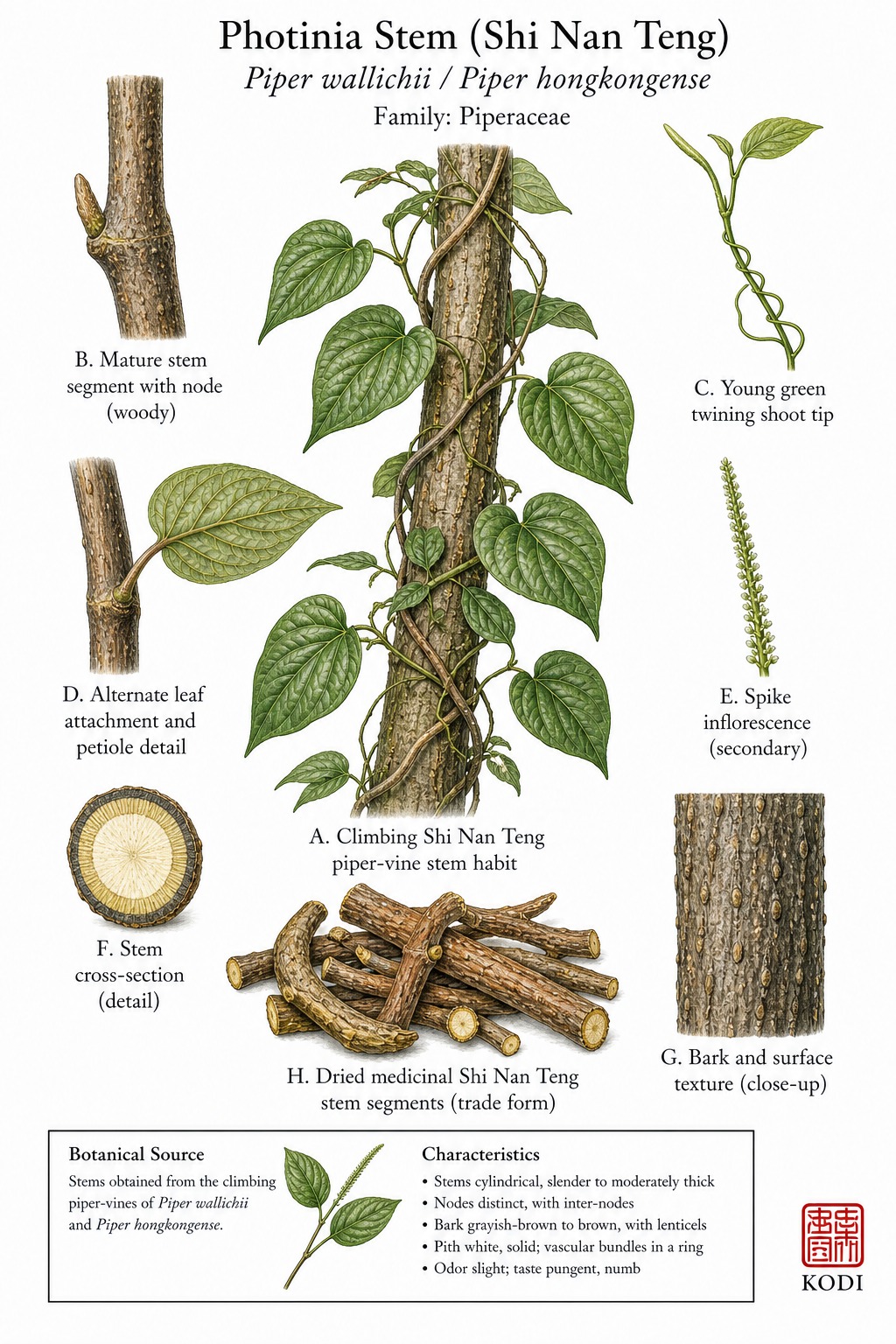
Known in TCM as Shi Nan Teng (石南藤), this acrid and bitter, warm herb enters the Liver and Kidney. Traditionally, it dispels wind-damp and unblocks the channels, making it a traditional choice for chronic painful obstruction with stiff joints, numbness, or difficulty flexing and extending the limbs, most often applied for joint pain, low back pain, and rheumatism. Modern research has identified Amide among its active constituents.
Part used: Stem
Also Known As
Latin: Caulis Piperis Wallichii | Pinyin: Shi Nan Teng | Chinese: 石南藤
TCM Properties
- Taste
- acrid, bitter
- Temperature
- warm
- Channels
- Liver, Kidney
Traditional Use
Primary Actions
- Dispels wind-damp and unblocks the channels, making it a traditional choice for chronic painful obstruction with stiff joints, numbness, or difficulty flexing and extending the limbs.
- Invigorates blood and relaxes the sinews, especially when long-standing bi syndrome combines with traumatic pain, weakness of the low back and knees, or residual aching after injury.
- Strengthens tendons and bones in chronic cold-damp patterns where pain and weakness travel together, particularly in older or constitutionally depleted patients.
Secondary Actions
- This record corrects an import error. Shi Nan Teng in the TCM tradition is Piper wallichii stem, not the distinct leaf medicine Shi Nan Ye from Photinia.
- Its clinical lane is closer to mild wind-damp-dispelling vine herbs than to cooling leaf herbs, so the old stub name and Latin field were materially misleading.
Classical References
- IDENTITY NOTE: the imported English and Latin fields pointed toward Photinia, but standard materia medica sources identify Shi Nan Teng as Caulis Piperis Wallichii.
- Traditional usage emphasizes wind-damp painful obstruction, channel blockage, and weakness or soreness of the lower back and sinews.
- The herb is commonly paired with other channel-unblocking medicinals when pain is chronic rather than acute.
Modern Research
Active Compounds
- Amide and alkaloid constituents reported from Piper wallichii stems and leaves
- Phenolic and antibacterial secondary metabolites isolated from aerial parts
- Extract-level anti-inflammatory fractions studied in bowel-inflammation models
Studied Effects
- An ethanol extract of Piper wallichii reduced inflammatory injury in DSS-induced ulcerative colitis mice through TLR4/NF-κB/COX-2 pathway modulation, supporting anti-inflammatory research interest in the authenticated species of Shi Nan Teng (PMID 36806346).
- Stem and leaf constituent work identified antibacterial compounds from Piper wallichii, giving modern support to the herb's traditional use in damp and toxic obstruction patterns (PMID 34085561).
- Earlier phytochemical work focused on bioactive constituents of Piper wallichii, helping confirm that the medicinal record belongs to the Piper species rather than to Photinia material (PMID 22734410).
PubMed References
- Ethanol extract of Piper wallichii ameliorates DSS-induced ulcerative colitis in mice: Involvement of TLR4/NF-κB/COX-2 signaling pathway. (2023)
- Chemical constituents and antibacterial activity from the stems and leaves of Piper wallichii. (2022)
- [Study on the bioactive constituents of Piper wallichii]. (2012)
Safety & Interactions
Contraindications
- Heat signs without wind-damp obstruction
- Marked Yin deficiency with dryness unless balanced by other herbs
Cautions
- Because authenticated Shi Nan Teng is often confused with unrelated materials in trade and imports, source verification matters.
- Use should stay pattern-based rather than self-prescribed for chronic joint pain with unclear cause.
Conditions
- Joint Pain Traditional ★★★★☆ JSON
- Low Back Pain Traditional ★★★★☆ JSON
- Rheumatism Traditional ★★★★☆ JSON
- Rheumatoid Arthritis Traditional ★★☆☆☆ JSON
Frequently Asked Questions
What is Piper Wallichii Stem used for?
Piper Wallichii Stem is traditionally used to Dispels wind-damp and unblocks the channels, making it a traditional choice for chronic painful obstruction with stiff joints, numbness, or difficulty flexing and extending the limbs., Invigorates blood and relaxes the sinews, especially when long-standing bi syndrome combines with traumatic pain, weakness of the low back and knees, or residual aching after injury., Strengthens tendons and bones in chronic cold-damp patterns where pain and weakness travel together, particularly in older or constitutionally depleted patients.. Research has investigated its effects on: An ethanol extract of Piper wallichii reduced inflammatory injury in DSS-induced ulcerative colitis mice through TLR4/NF-κB/COX-2 pathway modulation, supporting anti-inflammatory research interest in the authenticated species of Shi Nan Teng (PMID 36806346).; Stem and leaf constituent work identified antibacterial compounds from Piper wallichii, giving modern support to the herb's traditional use in damp and toxic obstruction patterns (PMID 34085561)..
What are other names for Piper Wallichii Stem?
Piper Wallichii Stem is also known as Wallich pepper stem, Piper wallichii stem. In TCM: 石南藤 (Shi Nan Teng); Caulis Piperis Wallichii.
Is Piper Wallichii Stem safe during pregnancy?
The safety of Piper Wallichii Stem during pregnancy has not been established. Consult a qualified healthcare provider before use.
What are the contraindications for Piper Wallichii Stem?
Piper Wallichii Stem should not be used in: Heat signs without wind-damp obstruction; Marked Yin deficiency with dryness unless balanced by other herbs. Consult a qualified healthcare provider before use.