Perilla Stem
- Chinese
- 紫苏梗
- Pinyin
- Zi Su Geng
- Latin
- Caulis Perillae
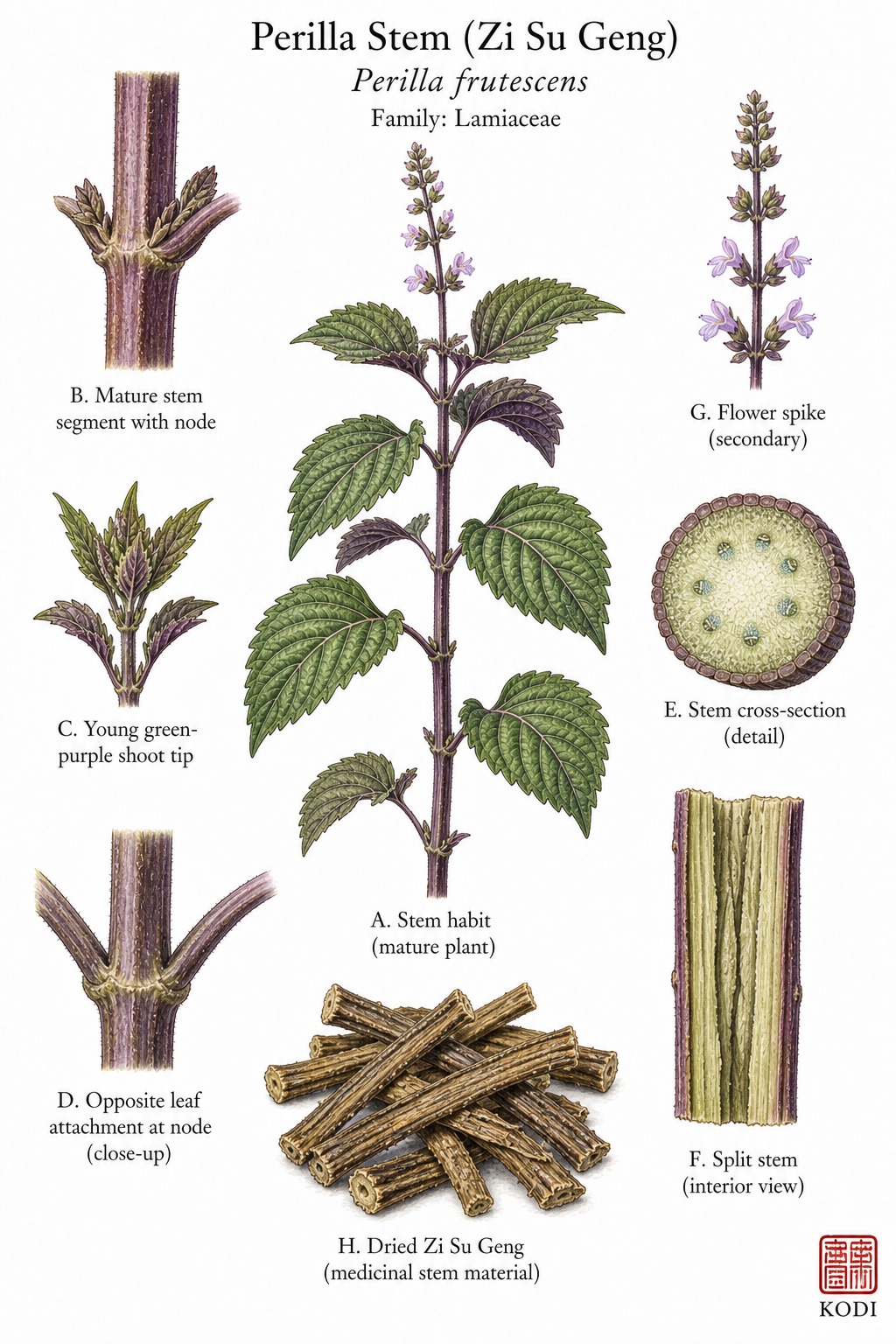
Known in TCM as Zi Su Geng (紫苏梗), this acrid, warm herb enters the Lung, Spleen, and Stomach. Traditionally, it promotes Qi movement and relieves fullness, especially for chest or epigastric constraint with nausea, belching, or poor appetite, most often applied for nausea, nausea pregnancy, and abdominal distension. Modern research has identified Rosmarinic among its active constituents.
Part used: Stem
Also Known As
Latin: Caulis Perillae | Pinyin: Zi Su Geng | Chinese: 紫苏梗
TCM Properties
- Taste
- acrid
- Temperature
- warm
- Channels
- Lung, Spleen, Stomach
Traditional Use
Primary Actions
- Promotes Qi movement and relieves fullness, especially for chest or epigastric constraint with nausea, belching, or poor appetite.
- Harmonizes the middle and stops vomiting when stomach Qi is constrained rather than blazing with heat.
- Calms the fetus and eases pregnancy-related nausea or abdominal discomfort in traditional use.
Secondary Actions
- Compared with the leaf, the stem is less exterior-releasing and more centered on Qi movement and pregnancy-compatible harmonizing use.
- Compared with the seed, it is lighter and less focused on cough or bowel moistening.
Classical References
- Traditional Chinese materia medica describes Zi Su Geng as a warm acrid stem that regulates Qi, relieves pain, harmonizes the middle, and calms the fetus.
- Its identity is especially useful when digestive and pregnancy-related indications are more prominent than surface symptoms.
Modern Research
Active Compounds
- Rosmarinic acid-related phenolics
- Flavonoids
- Aromatic stem-and-leaf constituents
Studied Effects
- Review literature on Perilla frutescens clinical applications consistently includes stem use within the broader digestive, anti-inflammatory, and respiratory value of the plant family, while noting that stem-specific modern data remain limited (PMID 36978975).
- A broad modern review also emphasizes that leaves, stems, and seeds are all medicinal parts with overlapping but distinct roles, which supports keeping Zi Su Geng separate from the leaf monographs (PMID 37538863).
PubMed References
Safety & Interactions
Contraindications
- Warmth-aggravated heat patterns without stagnation
Cautions
- Modern stem-specific pharmacology is much thinner than the traditional literature, so claims should stay conservative.
- Preparation strength matters ... concentrated extracts are not interchangeable with ordinary stem decoction.
Conditions
- Nausea Traditional ★★★☆☆ JSON
- Nausea Pregnancy Traditional ★★☆☆☆ JSON
- Abdominal Distension Traditional ★★☆☆☆ JSON
- Poor Appetite Traditional ★☆☆☆☆ JSON
Frequently Asked Questions
What is Perilla Stem used for?
Perilla Stem is traditionally used to Promotes Qi movement and relieves fullness, especially for chest or epigastric constraint with nausea, belching, or poor appetite., Harmonizes the middle and stops vomiting when stomach Qi is constrained rather than blazing with heat., Calms the fetus and eases pregnancy-related nausea or abdominal discomfort in traditional use.. Research has investigated its effects on: Review literature on Perilla frutescens clinical applications consistently includes stem use within the broader digestive, anti-inflammatory, and respiratory value of the plant family, while noting that stem-specific modern data remain limited (PMID 36978975).; A broad modern review also emphasizes that leaves, stems, and seeds are all medicinal parts with overlapping but distinct roles, which supports keeping Zi Su Geng separate from the leaf monographs (PMID 37538863)..
What are other names for Perilla Stem?
Perilla Stem is also known as Perilla frutescens stem, Su Geng. In TCM: 紫苏梗 (Zi Su Geng); Caulis Perillae.
Is Perilla Stem safe during pregnancy?
The safety of Perilla Stem during pregnancy has not been established. Consult a qualified healthcare provider before use.
What are the contraindications for Perilla Stem?
Perilla Stem should not be used in: Warmth-aggravated heat patterns without stagnation. Consult a qualified healthcare provider before use.