Perilla Leaf (Su Ye)
- Chinese
- 苏叶
- Pinyin
- Su Ye
- Latin
- Folium Perillae
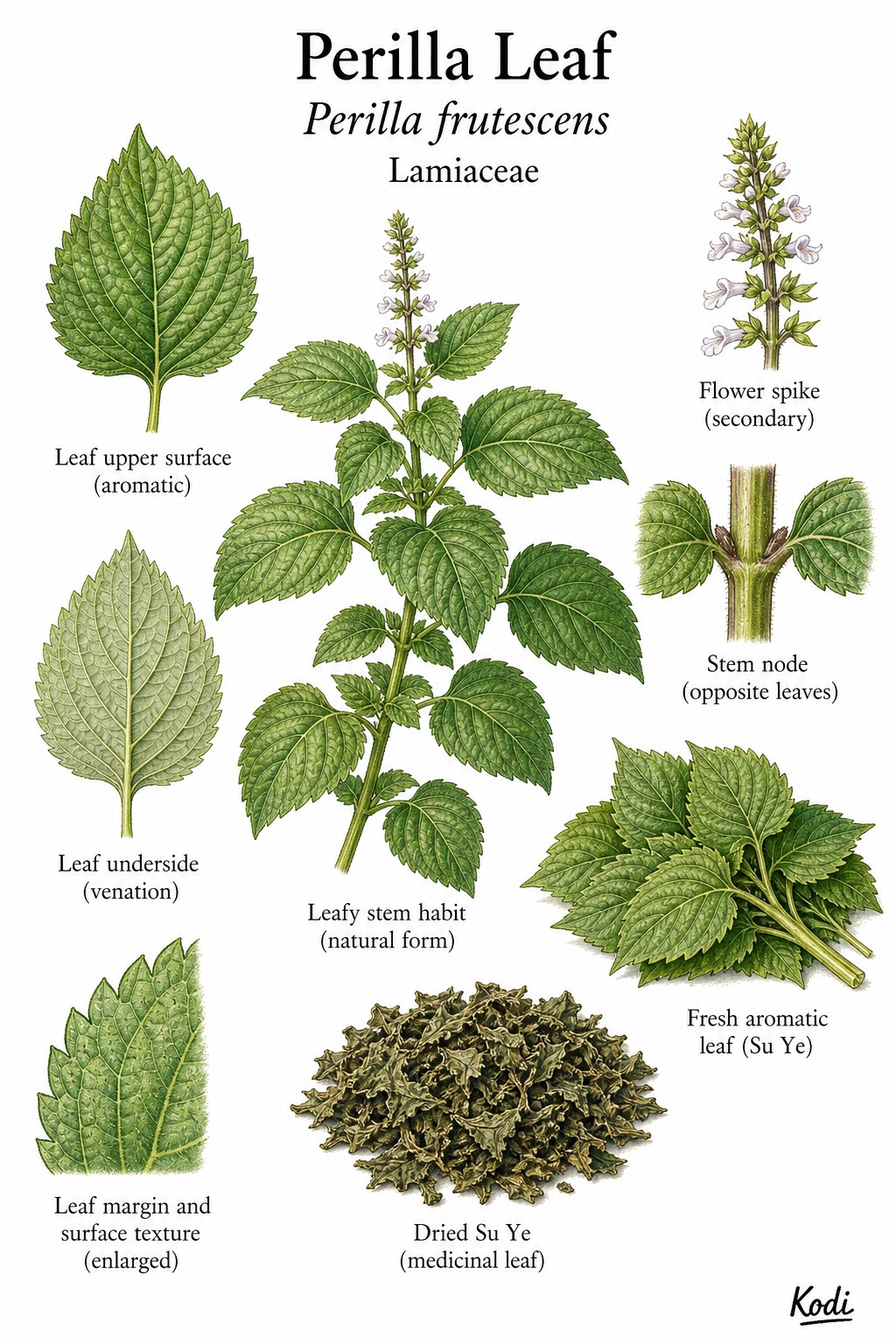
Known in TCM as Su Ye (苏叶), this acrid, warm herb enters the Lung and Spleen. Traditionally, it releases the exterior and scatters wind-cold, especially when chills, headache, mild cough, and digestive discomfort occur together, most often applied for common cold, nausea, and poor appetite. Modern research has identified Rosmarinic among its active constituents.
Part used: Leaf
Also Known As
Latin: Folium Perillae | Pinyin: Su Ye | Chinese: 苏叶
TCM Properties
- Taste
- acrid
- Temperature
- warm
- Channels
- Lung, Spleen
Traditional Use
Primary Actions
- Releases the exterior and scatters wind-cold, especially when chills, headache, mild cough, and digestive discomfort occur together.
- Moves Qi and harmonizes the middle for nausea, poor appetite, fullness, or fish and seafood-induced stomach upset.
- Calms a restless fetus and eases pregnancy-related nausea in traditional use when stagnation and queasiness dominate.
Secondary Actions
- This `Su Ye` record represents the same medicinal leaf tradition as `Zi Su Ye`, differing mainly in naming emphasis rather than in plant identity.
- Perilla leaf is gentler and more aromatic than the seed and more exterior-opening than the stem.
Classical References
- Traditional Chinese materia medica places Su Ye among the warm acrid exterior-releasing herbs that also regulate Qi and harmonize the middle.
- Its food-poisoning and pregnancy-related digestive uses are part of the classic identity of the leaf record.
Modern Research
Active Compounds
- Rosmarinic acid
- Luteolin
- Perillaldehyde
- Leaf essential-oil fractions
Studied Effects
- A clinical-practice review summarized anti-inflammatory, antiallergic, gastrointestinal, and respiratory relevance across Perilla frutescens preparations, including leaf use (PMID 36978975).
- Human and experimental work on rosmarinic-acid-enriched perilla extract showed suppression of allergic inflammatory responses, supporting the leaf's traditional respiratory and irritative-pattern uses (PMID 14988517).
- A broad review of Perilla frutescens continues to describe the leaves as the main medicinal surface-releasing and aromatic-digestive part of the plant (PMID 37538863).
PubMed References
- Applications of Perilla frutescens Extracts in Clinical Practice (2023)
- Extract of Perilla frutescens enriched for rosmarinic acid, a polyphenolic phytochemical, suppresses allergic immunoglobulin responses and inflammation (2004)
- Perilla frutescens: A traditional medicine and food homologous plant (2023)
Safety & Interactions
Contraindications
- Warmth-aggravated exterior heat without wind-cold
- Marked Yin-deficiency dryness without stagnation
Cautions
- Perilla leaf is usually gentle, but concentrated extracts are not interchangeable with ordinary culinary leaf use.
- Allergy to perilla or related aromatic plants should prompt caution.
Conditions
- Common Cold Traditional ★★★☆☆ JSON
- Nausea Traditional ★★☆☆☆ JSON
- Poor Appetite Traditional ★★☆☆☆ JSON
- Nausea Pregnancy Traditional ★★☆☆☆ JSON
Frequently Asked Questions
What is Perilla Leaf (Su Ye) used for?
Perilla Leaf (Su Ye) is traditionally used to Releases the exterior and scatters wind-cold, especially when chills, headache, mild cough, and digestive discomfort occur together., Moves Qi and harmonizes the middle for nausea, poor appetite, fullness, or fish and seafood-induced stomach upset., Calms a restless fetus and eases pregnancy-related nausea in traditional use when stagnation and queasiness dominate.. Research has investigated its effects on: A clinical-practice review summarized anti-inflammatory, antiallergic, gastrointestinal, and respiratory relevance across Perilla frutescens preparations, including leaf use (PMID 36978975).; Human and experimental work on rosmarinic-acid-enriched perilla extract showed suppression of allergic inflammatory responses, supporting the leaf's traditional respiratory and irritative-pattern uses (PMID 14988517)..
What are other names for Perilla Leaf (Su Ye)?
Perilla Leaf (Su Ye) is also known as Perilla frutescens leaf, Zi Su Ye (alias). In TCM: 苏叶 (Su Ye); Folium Perillae.
Is Perilla Leaf (Su Ye) safe during pregnancy?
The safety of Perilla Leaf (Su Ye) during pregnancy has not been established. Consult a qualified healthcare provider before use.
What are the contraindications for Perilla Leaf (Su Ye)?
Perilla Leaf (Su Ye) should not be used in: Warmth-aggravated exterior heat without wind-cold; Marked Yin-deficiency dryness without stagnation. Consult a qualified healthcare provider before use.