Perilla Seed
- Chinese
- 紫苏子
- Pinyin
- Zi Su Zi
- Latin
- Fructus Perillae
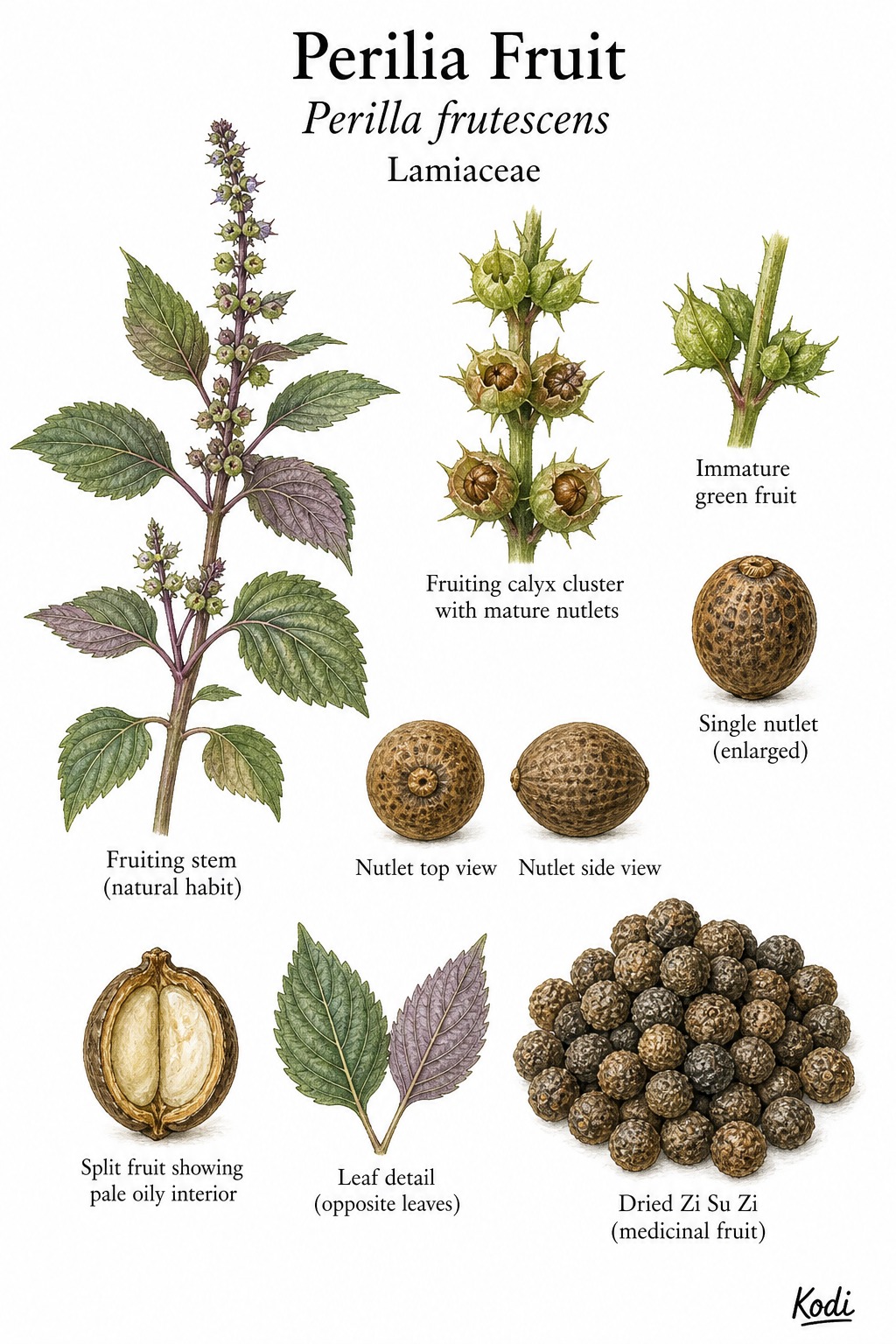
Known in TCM as Zi Su Zi (紫苏子), this acrid, warm herb enters the Lung and Large Intestine. Traditionally, it descends Lung Qi and stops cough and wheezing, especially for cold-phlegm or deficient downward movement with abundant sputum, most often applied for cough, wheezing, and asthma. Modern research has identified Alpha-linolenic among its active constituents.
Part used: Fruit
Also Known As
Latin: Fructus Perillae | Pinyin: Zi Su Zi | Chinese: 紫苏子
TCM Properties
- Taste
- acrid
- Temperature
- warm
- Channels
- Lung, Large Intestine
Traditional Use
Primary Actions
- Descends Lung Qi and stops cough and wheezing, especially for cold-phlegm or deficient downward movement with abundant sputum.
- Moistens the intestines and unblocks the bowels for constipation caused by dryness or Qi stagnation.
- Helps direct obstructed Qi downward when phlegm and rebellious movement affect both the chest and the bowels.
Secondary Actions
- Zi Su Zi is the seed-level sibling of the perilla leaf and stem records and should stay distinct because the seed is heavier, more downward-directing, and more bowel-moistening.
- Its fixed oil matters clinically, but this is still the whole seed record rather than a purified oil preparation.
Classical References
- Traditional Chinese materia medica consistently describes Zi Su Zi as warm and acrid, entering the Lung and Large Intestine to descend Qi, stop wheezing, and moisten the intestines.
- The seed is the strongest downward-directing member of the perilla family.
Modern Research
Active Compounds
- Alpha-linolenic acid-rich fixed oil
- Rosmarinic acid-related phenolics
- Flavonoids
Studied Effects
- General perilla reviews continue to support anti-inflammatory, antiallergic, and respiratory-relevant activity across the plant, including its seeds (PMID 37538863).
- A focused review of perilla seed oil highlighted antioxidant, anti-inflammatory, and cardiovascular-protective effects connected to the seed's high alpha-linolenic acid content (PMID 39598647).
PubMed References
Safety & Interactions
Contraindications
- Dry cough or heat wheezing without cold-phlegm
- Loose stool from pronounced Spleen deficiency
Cautions
- The seed is oily and moistening, so overuse may aggravate loose stool in weak digestive patterns.
- Nut or seed allergy history should prompt caution with concentrated perilla-seed products.
Conditions
Frequently Asked Questions
What is Perilla Seed used for?
Perilla Seed is traditionally used to Descends Lung Qi and stops cough and wheezing, especially for cold-phlegm or deficient downward movement with abundant sputum., Moistens the intestines and unblocks the bowels for constipation caused by dryness or Qi stagnation., Helps direct obstructed Qi downward when phlegm and rebellious movement affect both the chest and the bowels.. Research has investigated its effects on: General perilla reviews continue to support anti-inflammatory, antiallergic, and respiratory-relevant activity across the plant, including its seeds (PMID 37538863).; A focused review of perilla seed oil highlighted antioxidant, anti-inflammatory, and cardiovascular-protective effects connected to the seed's high alpha-linolenic acid content (PMID 39598647)..
What are other names for Perilla Seed?
Perilla Seed is also known as Perilla Fruit, Perilla frutescens seed, Su Zi. In TCM: 紫苏子 (Zi Su Zi); Fructus Perillae.
Is Perilla Seed safe during pregnancy?
The safety of Perilla Seed during pregnancy has not been established. Consult a qualified healthcare provider before use.
What are the contraindications for Perilla Seed?
Perilla Seed should not be used in: Dry cough or heat wheezing without cold-phlegm; Loose stool from pronounced Spleen deficiency. Consult a qualified healthcare provider before use.