Areca Peel
- Chinese
- 大腹皮
- Pinyin
- Da Fu Pi
- Latin
- Pericarpium Arecae
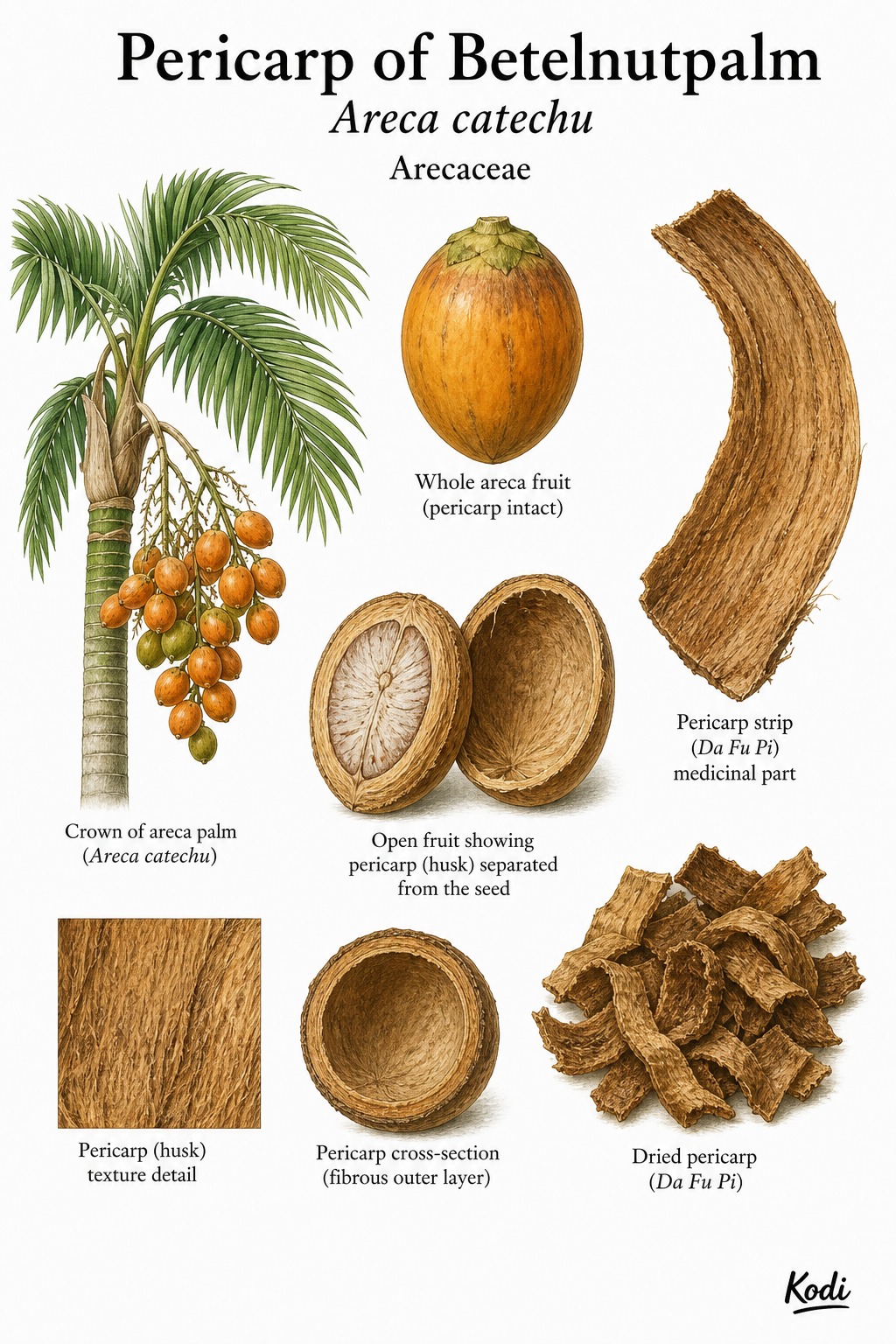
Known in TCM as Da Fu Pi (大腹皮), this acrid, slightly warm herb enters the Spleen, Small Intestine, and Large Intestine. Traditionally, it promotes Qi movement and relieves abdominal distension, especially when dampness and stagnation cause a swollen, uncomfortable abdomen, most often applied for edema, abdominal distension, and poor appetite. Modern research has identified Arecoline-related among its active constituents.
Part used: Peel
Also Known As
Latin: Pericarpium Arecae | Pinyin: Da Fu Pi | Chinese: 大腹皮
TCM Properties
- Taste
- acrid
- Temperature
- slightly warm
- Channels
- Spleen, Small Intestine, Large Intestine
Traditional Use
Primary Actions
- Promotes Qi movement and relieves abdominal distension, especially when dampness and stagnation cause a swollen, uncomfortable abdomen.
- Promotes urination and reduces edema, particularly when water retention and Qi stagnation appear together.
- Supports the middle burner in heavy, full, sluggish digestive patterns rather than in sharp hot or drying presentations.
Secondary Actions
- Da Fu Pi is the peel of areca, not the stronger seed medicine Bing Lang, so its action is broader and gentler on edema and distension.
- The peel record should not inherit all of the harsher stimulant identity of the nut itself.
Classical References
- Traditional East Asian materia medica consistently uses Da Fu Pi for abdominal distension, edema, and difficult urination where Qi stagnation and retained fluid overlap.
- Its identity as areca pericarp explains why it moves more gently and promotes urination more clearly than the better-known areca seed.
Modern Research
Active Compounds
- Arecoline-related alkaloids in low amounts
- Polyphenols
- Fiber-rich peel constituents
Studied Effects
- A recent physiologic study found Arecae pericarpium extract and arecoline increased lower-esophageal-sphincter contractions through muscarinic mechanisms, supporting its traditional Qi-moving effect in the upper digestive tract (PMID 34736444).
- Cell-based research also reported anti-neuroinflammatory effects from Arecae pericarpium extract, suggesting broader bioactivity even though direct clinical evidence remains sparse (PMID 38275670).
PubMed References
Safety & Interactions
Contraindications
- Pregnancy without practitioner guidance
- Marked Qi deficiency without stagnation
- Dryness or Yin depletion without damp retention
Cautions
- Areca-derived materials should not be treated casually because stimulant alkaloids and long-term areca toxicology remain relevant context even when the peel is gentler than the nut.
- Digestive stimulation may aggravate sensitive stomachs or reflux-prone patients.
- The modern literature is much thinner than for major mainstream herbs.
Conditions
- Edema Traditional ★★★☆☆ JSON
- Abdominal Distension Traditional ★★★☆☆ JSON
- Poor Appetite Traditional ★☆☆☆☆ JSON
- Nausea Traditional ★☆☆☆☆ JSON
Frequently Asked Questions
What is Areca Peel used for?
Areca Peel is traditionally used to Promotes Qi movement and relieves abdominal distension, especially when dampness and stagnation cause a swollen, uncomfortable abdomen., Promotes urination and reduces edema, particularly when water retention and Qi stagnation appear together., Supports the middle burner in heavy, full, sluggish digestive patterns rather than in sharp hot or drying presentations.. Research has investigated its effects on: A recent physiologic study found Arecae pericarpium extract and arecoline increased lower-esophageal-sphincter contractions through muscarinic mechanisms, supporting its traditional Qi-moving effect in the upper digestive tract (PMID 34736444).; Cell-based research also reported anti-neuroinflammatory effects from Arecae pericarpium extract, suggesting broader bioactivity even though direct clinical evidence remains sparse (PMID 38275670)..
What are other names for Areca Peel?
Areca Peel is also known as Areca catechu pericarp, Betel Nut Pericarp, Arecae Pericarpium. In TCM: 大腹皮 (Da Fu Pi); Pericarpium Arecae.
Is Areca Peel safe during pregnancy?
The safety of Areca Peel during pregnancy has not been established. Consult a qualified healthcare provider before use.
What are the contraindications for Areca Peel?
Areca Peel should not be used in: Pregnancy without practitioner guidance; Marked Qi deficiency without stagnation; Dryness or Yin depletion without damp retention. Consult a qualified healthcare provider before use.