Peking Spurge Root
- Chinese
- 大戟
- Pinyin
- Da Ji
- Latin
- Radix Euphorbiae Pekinensis
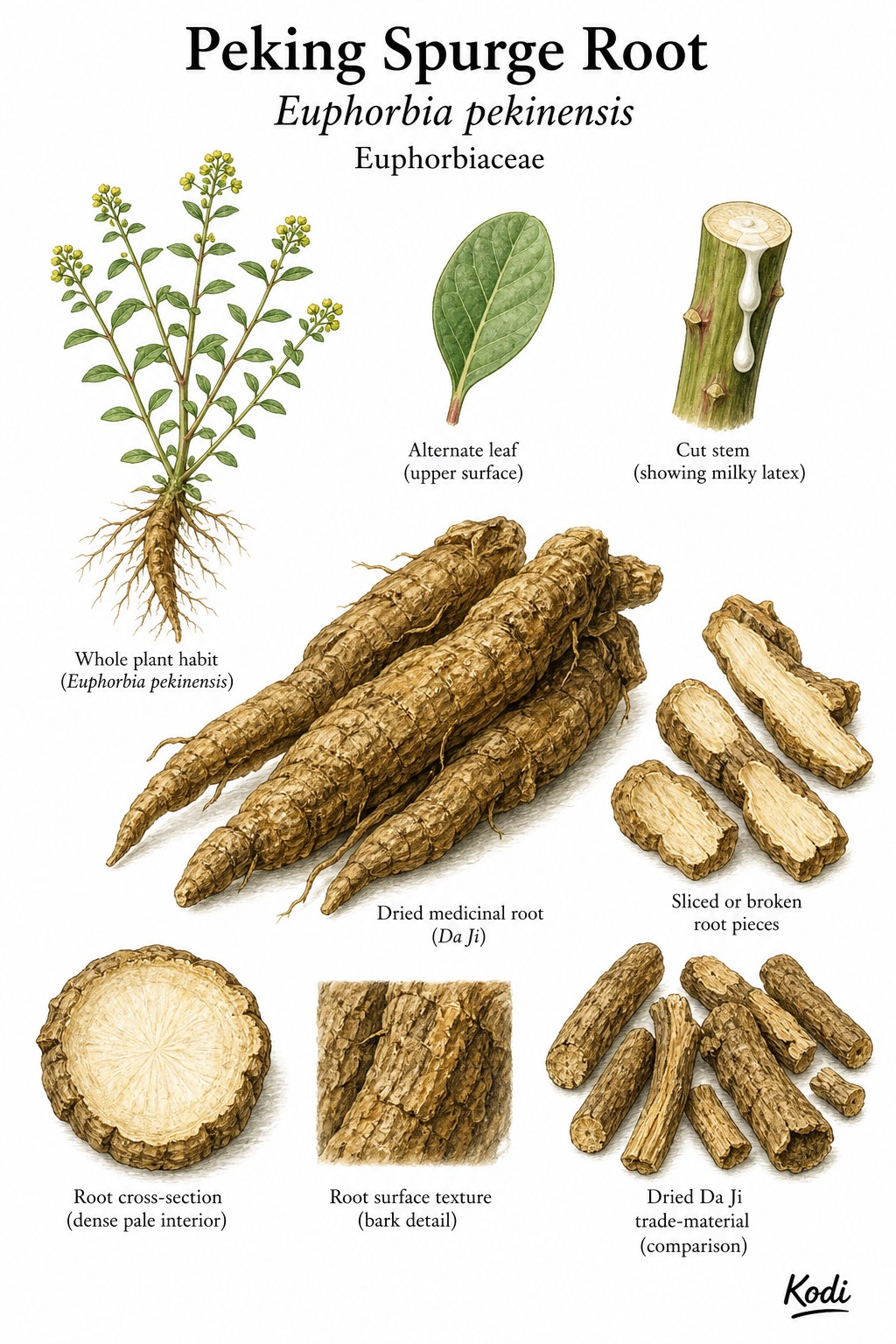
Known in TCM as Da Ji (大戟), this bitter and acrid, cold herb enters the Spleen, Kidney, and Large Intestine. Traditionally, it drastically purges water and expels Phlegm-fluid retention; used for severe edema, ascites, and pleural effusion, most often applied for edema and carbuncle. Modern research has identified Casbane-type among its active constituents.
Part used: Root
Also Known As
Latin: Radix Euphorbiae Pekinensis | Pinyin: Da Ji | Chinese: 大戟
TCM Properties
- Taste
- bitter, acrid
- Temperature
- cold
- Channels
- Spleen, Kidney, Large Intestine
Traditional Use
Primary Actions
- Drastically purges water and expels Phlegm-fluid retention; used for severe edema, ascites, and pleural effusion
- Reduces swelling and disperses nodules for carbuncles and toxic swellings when applied topically
Secondary Actions
- Trade name variant of Jing Da Ji; Da Ji and Jing Da Ji refer to the same Radix Euphorbiae Pekinensis. Note this is distinct from the unrelated herb Da Ji (大蓟, Cirsium japonicum / Japanese Thistle), a mild Blood-cooling hemostatic that shares the same English romanization but different Chinese characters and a completely different action profile
Classic Formulas
- Shi Zao Tang (Ten Jujube Decoction)
Classical References
- Shang Han Lun and Jin Gui Yao Lue (Zhang Zhongjing, c. 200 CE) include Da Ji in Shi Zao Tang for severe fluid retention
Modern Research
Active Compounds
- Casbane-type diterpenoids (pekinenal, pekinenin C)
- Ingenol-type diterpenoids
Studied Effects
- Diterpenoid compounds induce apoptosis via mitochondrial and death-receptor pathways in intestinal epithelial cells, explaining the herb's intestinal toxicity
- Laxative effects are attributable to diterpenoid-induced alterations of aquaporins in the colon
PubMed References
Safety & Interactions
Contraindications
- Pregnancy (traditionally recognized as an abortifacient)
- Breastfeeding
- Weak or frail patients
Cautions
- Extremely toxic; irritates the gastrointestinal tract and skin
- Vinegar processing reduces toxicity and is standard before use
- Do not combine with Gan Cao (Licorice); animal studies show this combination increases toxicity
- Do not confuse with the unrelated hemostatic herb also romanized as "Da Ji" (大蓟, Cirsium japonicum)
Drug Interactions
- Contraindicated in combination with Gan Cao (Glycyrrhiza uralensis / Licorice)
Conditions
Frequently Asked Questions
What is Peking Spurge Root used for?
Peking Spurge Root is traditionally used to Drastically purges water and expels Phlegm-fluid retention; used for severe edema, ascites, and pleural effusion, Reduces swelling and disperses nodules for carbuncles and toxic swellings when applied topically. Research has investigated its effects on: Diterpenoid compounds induce apoptosis via mitochondrial and death-receptor pathways in intestinal epithelial cells, explaining the herb's intestinal toxicity; Laxative effects are attributable to diterpenoid-induced alterations of aquaporins in the colon.
What are other names for Peking Spurge Root?
Peking Spurge Root is also known as Euphorbia pekinensis, Jing Da Ji (synonym). In TCM: 大戟 (Da Ji); Radix Euphorbiae Pekinensis.
Is Peking Spurge Root safe during pregnancy?
Peking Spurge Root is not recommended during pregnancy.
What are the contraindications for Peking Spurge Root?
Peking Spurge Root should not be used in: Pregnancy (traditionally recognized as an abortifacient); Breastfeeding; Weak or frail patients. Consult a qualified healthcare provider before use.
Does Peking Spurge Root interact with any medications?
Peking Spurge Root may interact with: Contraindicated in combination with Gan Cao (Glycyrrhiza uralensis / Licorice). Always inform your healthcare provider of any herbal supplements you are taking.