Peach Kernel
- Chinese
- 桃仁
- Pinyin
- Tao Ren
- Latin
- Semen Persicae
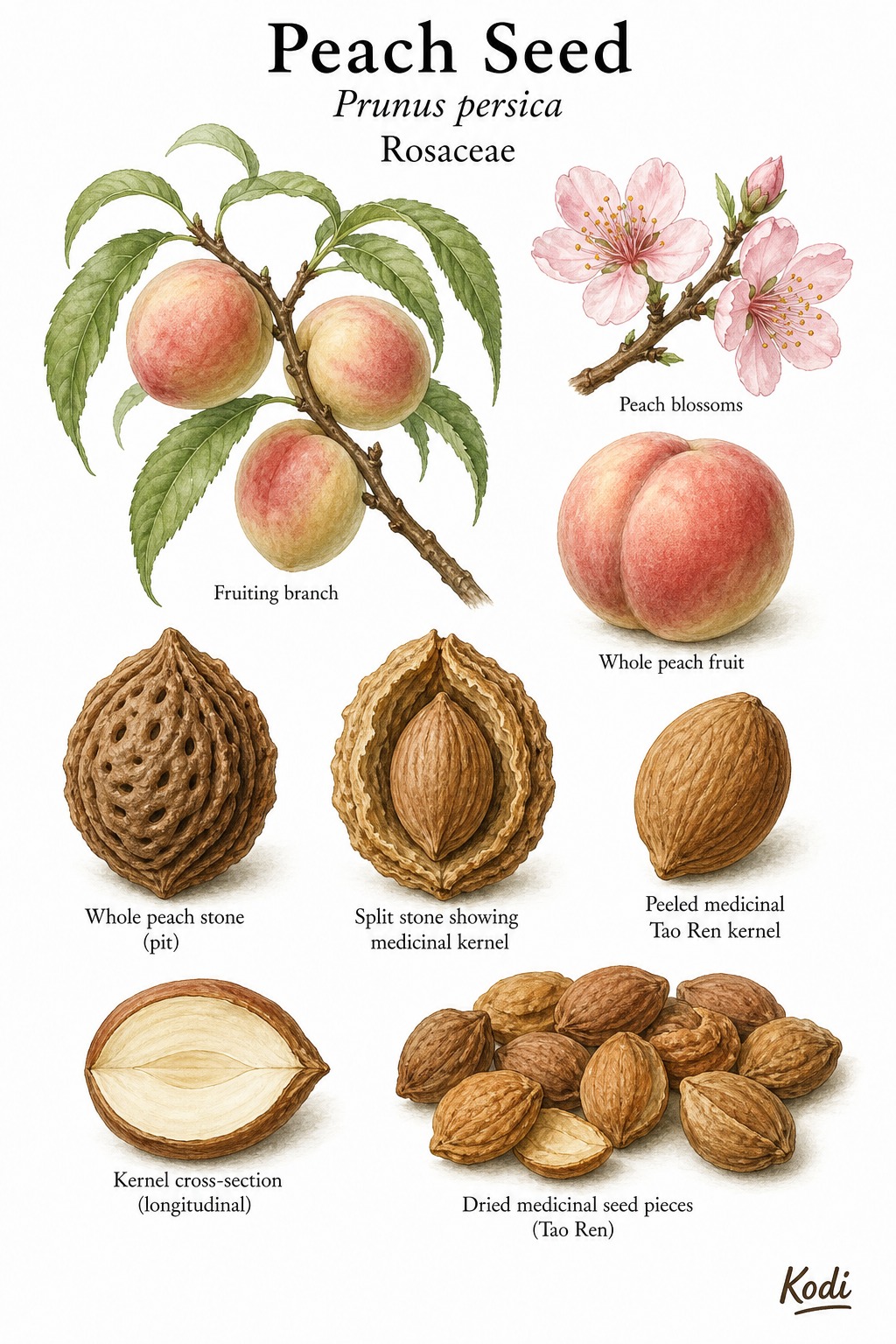
Known in TCM as Tao Ren (桃仁), this bitter and sweet, neutral herb enters the Heart, Liver, and Large Intestine. Traditionally, it invigorates Blood and dispels Blood stasis; treats amenorrhea, dysmenorrhea, and postpartum abdominal pain from Blood stasis, most often applied for dysmenorrhea, amenorrhea, and constipation. Modern research has identified Amygdalin among its active constituents.
Part used: Seed
Also Known As
Latin: Semen Persicae | Pinyin: Tao Ren | Chinese: 桃仁
TCM Properties
- Taste
- bitter, sweet
- Temperature
- neutral
- Channels
- Heart, Liver, Large Intestine
Traditional Use
Primary Actions
- Invigorates Blood and dispels Blood stasis; treats amenorrhea, dysmenorrhea, and postpartum abdominal pain from Blood stasis
- Moistens the Intestines and relaxes the bowels for dry-pattern constipation
- Unblocks the channels and collaterals for pain, bruising, and swelling from traumatic injury
Secondary Actions
- Also used to stop cough and relieve dyspnea in certain Blood-stasis-related respiratory patterns
Classic Formulas
- Tao He Cheng Qi Tang (Peach Kernel Decoction to Order the Qi)
- Tao Hong Si Wu Tang (Peach Kernel and Safflower Four Substance Decoction)
Classical References
- Shang Han Lun (Treatise on Cold Damage, Zhang Zhongjing, c. 200 CE) includes Tao He Cheng Qi Tang for lower abdominal Blood stasis with Heat
Modern Research
Active Compounds
- Amygdalin
- Prunasin
- Fatty oils
Studied Effects
- Antiplatelet aggregation and antithrombotic effects documented, supporting traditional Blood-invigorating use
- Anti-fibrotic effects relevant to hepatic and pulmonary fibrosis reported in preclinical research
- Amygdalin content requires careful dosing; ancient and modern literature review confirms toxicity risk if overused or improperly processed
PubMed References
Safety & Interactions
Contraindications
- Pregnancy, due to Blood-invigorating action
- Diarrhea from Spleen deficiency
Cautions
- Contains amygdalin, which metabolizes toward cyanide-related compounds; do not exceed standard pharmacopoeia dosing
- Mild toxicity documented in classical and modern sources when overused
Drug Interactions
- Theoretical additive bleeding risk with anticoagulant or antiplatelet medications
Conditions
- Dysmenorrhea Traditional ★★★☆☆ JSON
- Amenorrhea Traditional ★★★☆☆ JSON
- Constipation Traditional ★★☆☆☆ JSON
- Traumatic Injury Traditional ★★☆☆☆ JSON
Frequently Asked Questions
What is Peach Kernel used for?
Peach Kernel is traditionally used to Invigorates Blood and dispels Blood stasis; treats amenorrhea, dysmenorrhea, and postpartum abdominal pain from Blood stasis, Moistens the Intestines and relaxes the bowels for dry-pattern constipation, Unblocks the channels and collaterals for pain, bruising, and swelling from traumatic injury. Research has investigated its effects on: Antiplatelet aggregation and antithrombotic effects documented, supporting traditional Blood-invigorating use; Anti-fibrotic effects relevant to hepatic and pulmonary fibrosis reported in preclinical research.
What are other names for Peach Kernel?
Peach Kernel is also known as Prunus persica seed, Peach Seed, Persica. In TCM: 桃仁 (Tao Ren); Semen Persicae.
Is Peach Kernel safe during pregnancy?
Peach Kernel is not recommended during pregnancy.
What are the contraindications for Peach Kernel?
Peach Kernel should not be used in: Pregnancy, due to Blood-invigorating action; Diarrhea from Spleen deficiency. Consult a qualified healthcare provider before use.
Does Peach Kernel interact with any medications?
Peach Kernel may interact with: Theoretical additive bleeding risk with anticoagulant or antiplatelet medications. Always inform your healthcare provider of any herbal supplements you are taking.