Papermulberry Fruit
- Chinese
- 楮实
- Pinyin
- Chu Shi
- Latin
- Fructus Broussonetiae
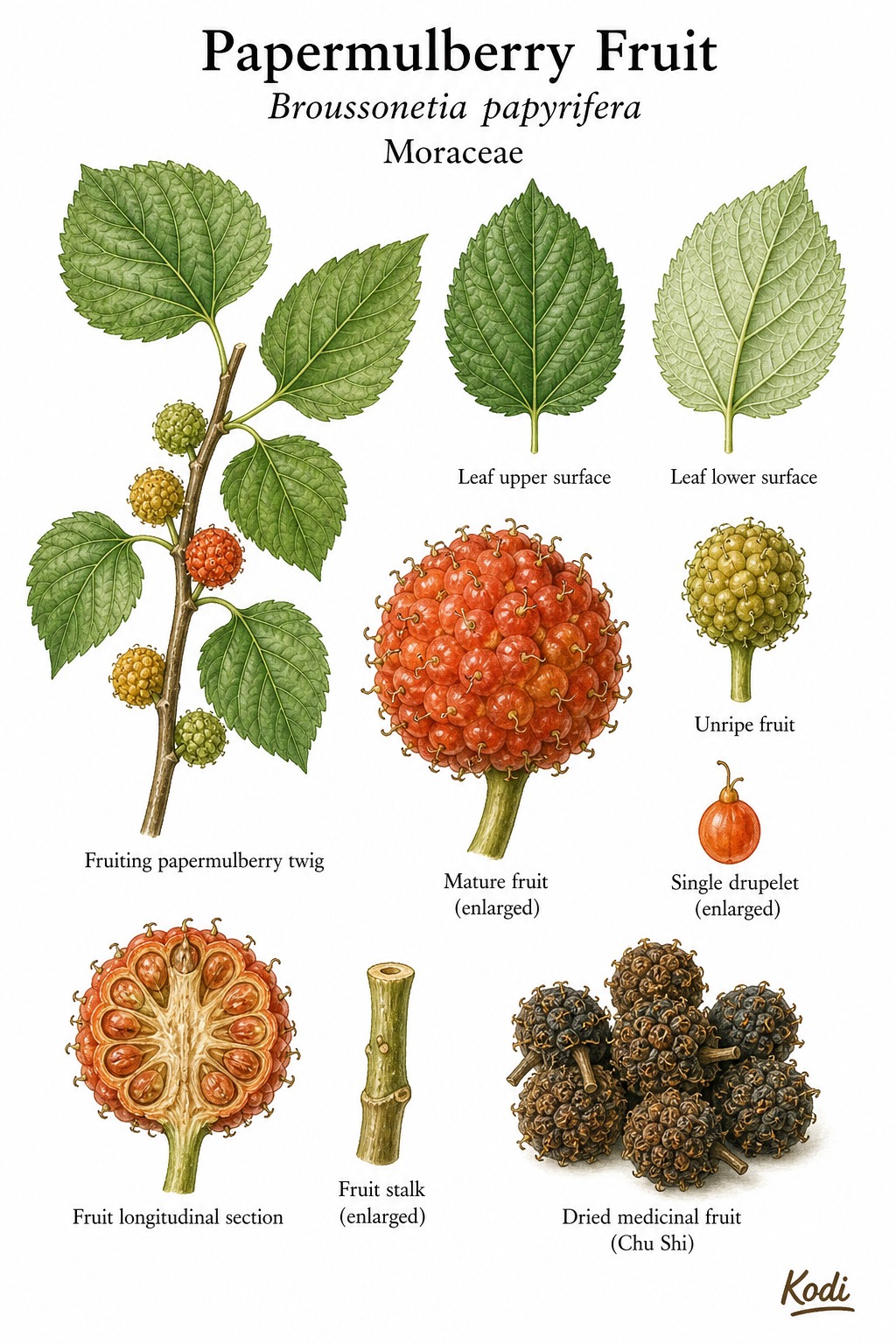
Known in TCM as Chu Shi (楮实), this sweet, cold herb enters the Liver and Kidney. Traditionally, it nourishes Kidney and Liver Yin and augments Kidney Qi; treats weak lower back and knees, dizziness, and blurred vision from Kidney-Liver deficiency, most often applied for dizziness, blurred vision, and edema. Modern research has identified Flavonoids among its active constituents.
Part used: Fruit
Also Known As
Latin: Fructus Broussonetiae | Pinyin: Chu Shi | Chinese: 楮实
TCM Properties
- Taste
- sweet
- Temperature
- cold
- Channels
- Liver, Kidney
Traditional Use
Primary Actions
- Nourishes Kidney and Liver Yin and augments Kidney Qi; treats weak lower back and knees, dizziness, and blurred vision from Kidney-Liver deficiency
- Clears the Liver and brightens the eyes for visual obstruction
- Promotes urination and reduces edema
Secondary Actions
- Also indicated for bone-steaming tidal fever and night sweats from Yin deficiency
Classical References
- Documented in later Chinese materia medica as a Yin-tonifying fruit with a secondary diuretic action
Modern Research
Active Compounds
- Flavonoids
- Phenolic acids
- Polysaccharides
Studied Effects
- Antioxidant activity demonstrated in fruit extracts
- Traditional Kidney-Liver Yin-nourishing use lacks dedicated modern clinical trial support
PubMed References
Safety & Interactions
Contraindications
- Spleen-Stomach Deficiency Cold
Conditions
- Dizziness Traditional ★★☆☆☆ JSON
- Blurred Vision Traditional ★★☆☆☆ JSON
- Edema Traditional ★★☆☆☆ JSON
- Night Sweats Traditional ★☆☆☆☆ JSON
Frequently Asked Questions
What is Papermulberry Fruit used for?
Papermulberry Fruit is traditionally used to Nourishes Kidney and Liver Yin and augments Kidney Qi; treats weak lower back and knees, dizziness, and blurred vision from Kidney-Liver deficiency, Clears the Liver and brightens the eyes for visual obstruction, Promotes urination and reduces edema. Research has investigated its effects on: Antioxidant activity demonstrated in fruit extracts; Traditional Kidney-Liver Yin-nourishing use lacks dedicated modern clinical trial support.
What are other names for Papermulberry Fruit?
Papermulberry Fruit is also known as Broussonetia papyrifera, Chu Shi Zi. In TCM: 楮实 (Chu Shi); Fructus Broussonetiae.
Is Papermulberry Fruit safe during pregnancy?
The safety of Papermulberry Fruit during pregnancy has not been established. Consult a qualified healthcare provider before use.
What are the contraindications for Papermulberry Fruit?
Papermulberry Fruit should not be used in: Spleen-Stomach Deficiency Cold. Consult a qualified healthcare provider before use.