Paniculate Swallowwort Root
- Chinese
- 徐长卿
- Pinyin
- Xu Chang Qing
- Latin
- Radix Cynanchi Paniculati
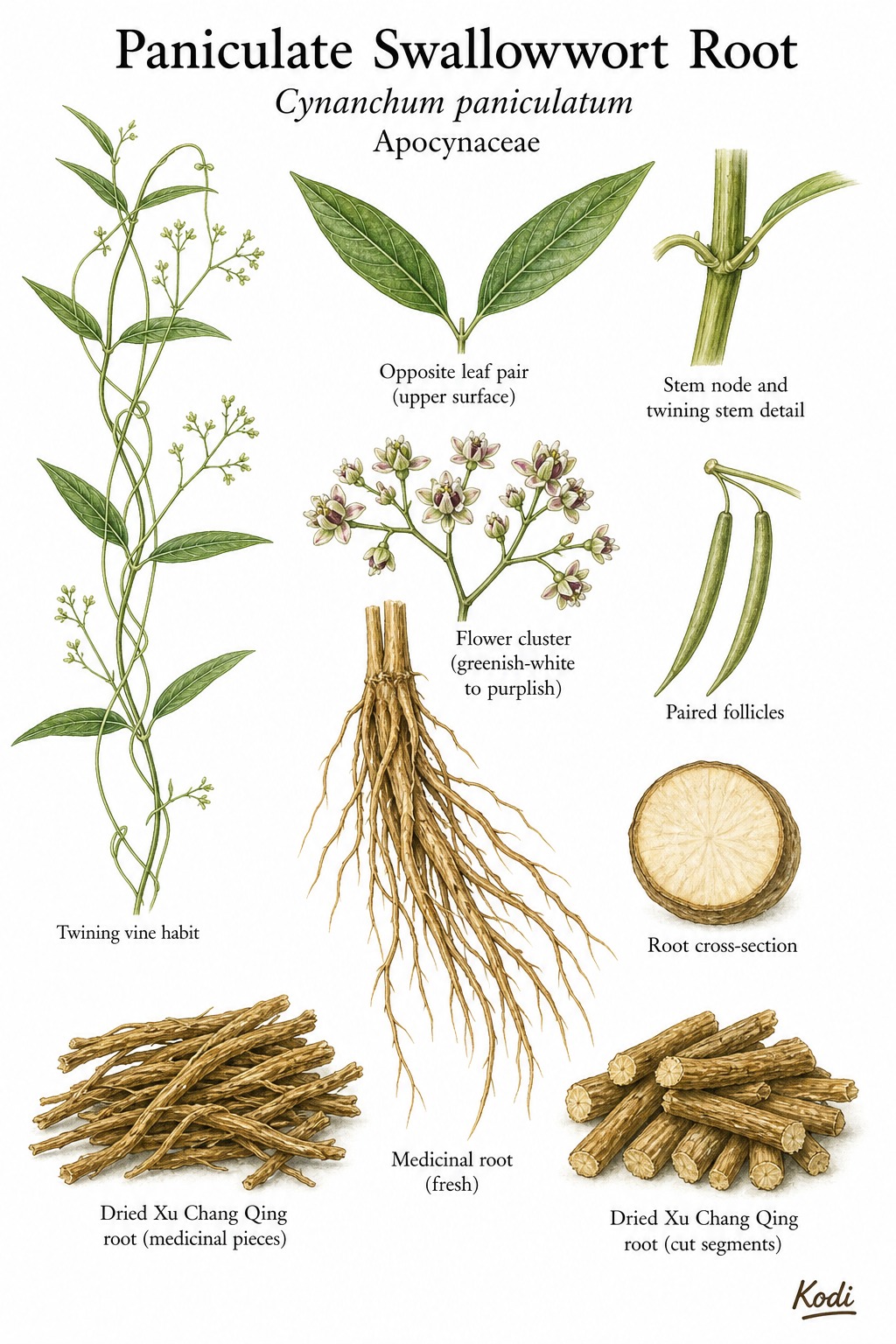
Known in TCM as Xu Chang Qing (徐长卿), this acrid, warm herb enters the Stomach and Liver. Traditionally, it dispels Wind and relieves pain; treats Wind-Damp Bi syndrome with joint pain, and traumatic injury pain, most often applied for joint pain, eczema, and snakebite. Modern research has identified Paeonol among its active constituents.
Part used: Root
Also Known As
Latin: Radix Cynanchi Paniculati | Pinyin: Xu Chang Qing | Chinese: 徐长卿
TCM Properties
- Taste
- acrid
- Temperature
- warm
- Channels
- Stomach, Liver
Traditional Use
Primary Actions
- Dispels Wind and relieves pain; treats Wind-Damp Bi syndrome with joint pain, and traumatic injury pain
- Invigorates Blood and stops itching; used for skin itching including eczema and for snakebite
Secondary Actions
- Also indicated for toothache, abdominal pain, and chest pain from Qi and Blood stagnation
Classical References
- Documented in later Chinese materia medica as a Wind-dispelling, pain-relieving root with a secondary detoxifying, anti-itch application
Modern Research
Active Compounds
- Paeonol
- Isopoiol
- Xuchangqing glycosides A, B, C
- Trace alkaloids
Studied Effects
- Paeonol and related constituents modulate multiple inflammatory pathways, supporting traditional pain-relieving and anti-itch use
- Network pharmacology studies have examined its mechanism in treating venomous snakebite
- Anti-inflammatory activity relevant to Wind-Damp Bi syndrome documented across preclinical research
PubMed References
Safety & Interactions
Contraindications
- Pregnancy
Cautions
- Qi and Blood deficiency without Wind-Damp or stasis
Conditions
Frequently Asked Questions
What is Paniculate Swallowwort Root used for?
Paniculate Swallowwort Root is traditionally used to Dispels Wind and relieves pain; treats Wind-Damp Bi syndrome with joint pain, and traumatic injury pain, Invigorates Blood and stops itching; used for skin itching including eczema and for snakebite. Research has investigated its effects on: Paeonol and related constituents modulate multiple inflammatory pathways, supporting traditional pain-relieving and anti-itch use; Network pharmacology studies have examined its mechanism in treating venomous snakebite.
What are other names for Paniculate Swallowwort Root?
Paniculate Swallowwort Root is also known as Cynanchum paniculatum. In TCM: 徐长卿 (Xu Chang Qing); Radix Cynanchi Paniculati.
Is Paniculate Swallowwort Root safe during pregnancy?
Paniculate Swallowwort Root is not recommended during pregnancy.
What are the contraindications for Paniculate Swallowwort Root?
Paniculate Swallowwort Root should not be used in: Pregnancy. Consult a qualified healthcare provider before use.