Paniculate Bolbostemma
- Chinese
- 土贝母
- Pinyin
- Tu Bei Mu
- Latin
- Rhizoma Bolbostemmae
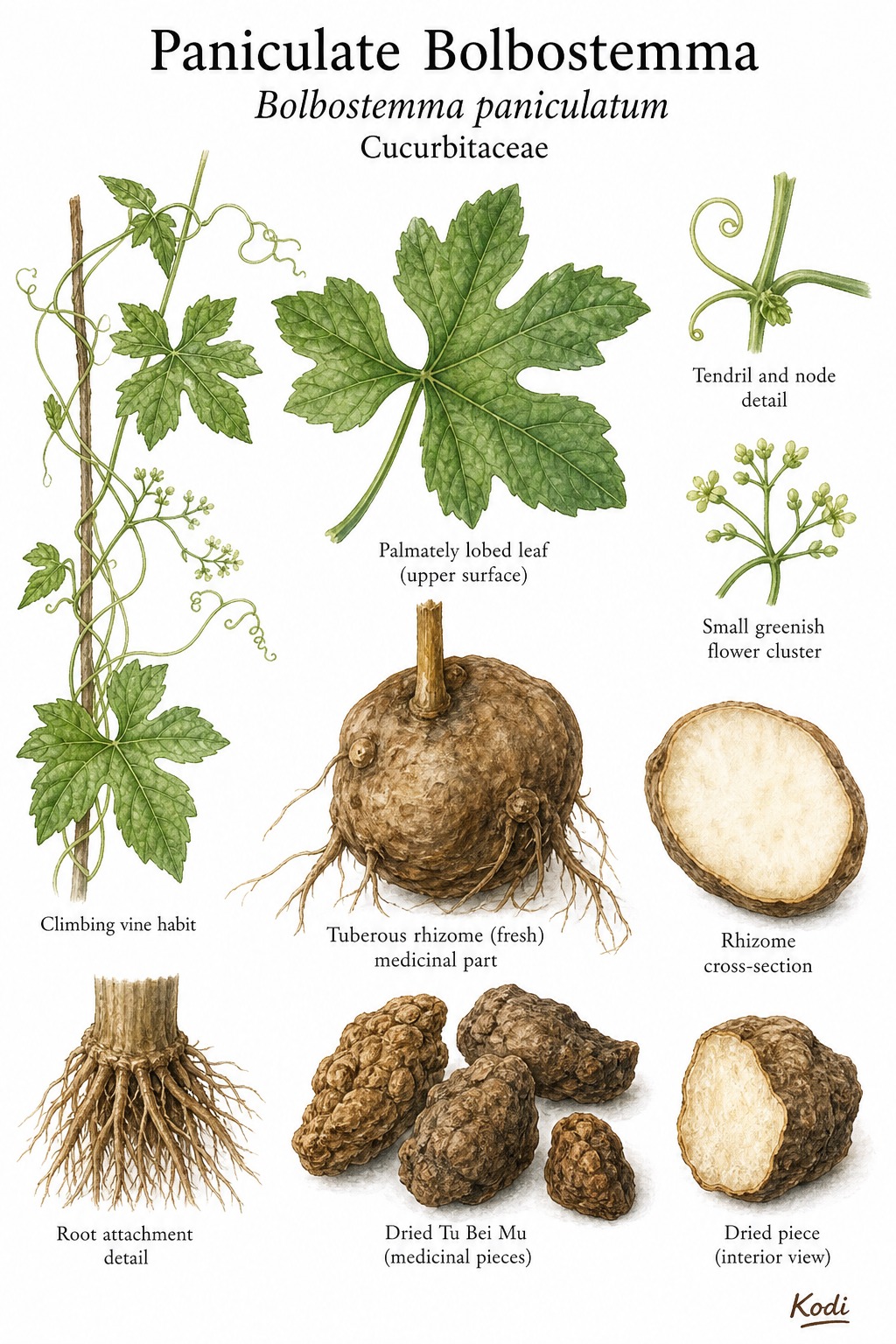
Known in TCM as Tu Bei Mu (土贝母), this bitter, cold herb enters the Lung and Stomach. Traditionally, it clears Heat and resolves toxicity; disperses swelling and dissipates nodules for breast abscess, breast carbuncle, and mammary gland hyperplasia, most often applied for breast abscess, carbuncle, and lymphadenitis. Modern research has identified Tubeimosides among its active constituents.
Part used: Rhizome
Also Known As
Latin: Rhizoma Bolbostemmae | Pinyin: Tu Bei Mu | Chinese: 土贝母
TCM Properties
- Taste
- bitter
- Temperature
- cold
- Channels
- Lung, Stomach
Traditional Use
Primary Actions
- Clears Heat and resolves toxicity; disperses swelling and dissipates nodules for breast abscess, breast carbuncle, and mammary gland hyperplasia
- Documented since the Qing dynasty (Supplement to the Compendium of Materia Medica, Zhao Xuemin) specifically for toxin-dispersing, swelling-reducing action
Secondary Actions
- Applied both internally and topically for suppurative skin and glandular conditions
Classical References
- Ben Cao Gang Mu Shi Yi (Supplement to the Compendium of Materia Medica, Zhao Xuemin, Qing Dynasty) documents Tu Bei Mu for breast abscess and carbuncle swelling
Modern Research
Active Compounds
- Tubeimosides I-IV (oleanane-type triterpenoid saponins)
Studied Effects
- Tubeimosides show cytotoxic, antitumor, and antiviral activity in preclinical studies
- Systems pharmacology analysis identifies multiple mechanisms relevant to hepatocellular carcinoma treatment
- Extracts inhibit cell proliferation and induce apoptosis and autophagy across multiple cancer cell lines in vitro
PubMed References
Safety & Interactions
Contraindications
- Spleen-Stomach Deficiency Cold
Cautions
- Cold and bitter; not for prolonged use in deficiency-type patterns
Conditions
- Breast Abscess Traditional ★★★☆☆ JSON
- Carbuncle Traditional ★★☆☆☆ JSON
- Lymphadenitis Traditional ★★☆☆☆ JSON
- Cancer Research ★☆☆☆☆ JSON
Frequently Asked Questions
What is Paniculate Bolbostemma used for?
Paniculate Bolbostemma is traditionally used to Clears Heat and resolves toxicity; disperses swelling and dissipates nodules for breast abscess, breast carbuncle, and mammary gland hyperplasia, Documented since the Qing dynasty (Supplement to the Compendium of Materia Medica, Zhao Xuemin) specifically for toxin-dispersing, swelling-reducing action. Research has investigated its effects on: Tubeimosides show cytotoxic, antitumor, and antiviral activity in preclinical studies; Systems pharmacology analysis identifies multiple mechanisms relevant to hepatocellular carcinoma treatment.
What are other names for Paniculate Bolbostemma?
Paniculate Bolbostemma is also known as Bolbostemma paniculatum. In TCM: 土贝母 (Tu Bei Mu); Rhizoma Bolbostemmae.
Is Paniculate Bolbostemma safe during pregnancy?
The safety of Paniculate Bolbostemma during pregnancy has not been established. Consult a qualified healthcare provider before use.
What are the contraindications for Paniculate Bolbostemma?
Paniculate Bolbostemma should not be used in: Spleen-Stomach Deficiency Cold. Consult a qualified healthcare provider before use.