Oyster Shell
- Chinese
- 牡蛎
- Pinyin
- Mu Li
- Latin
- Concha Ostreae
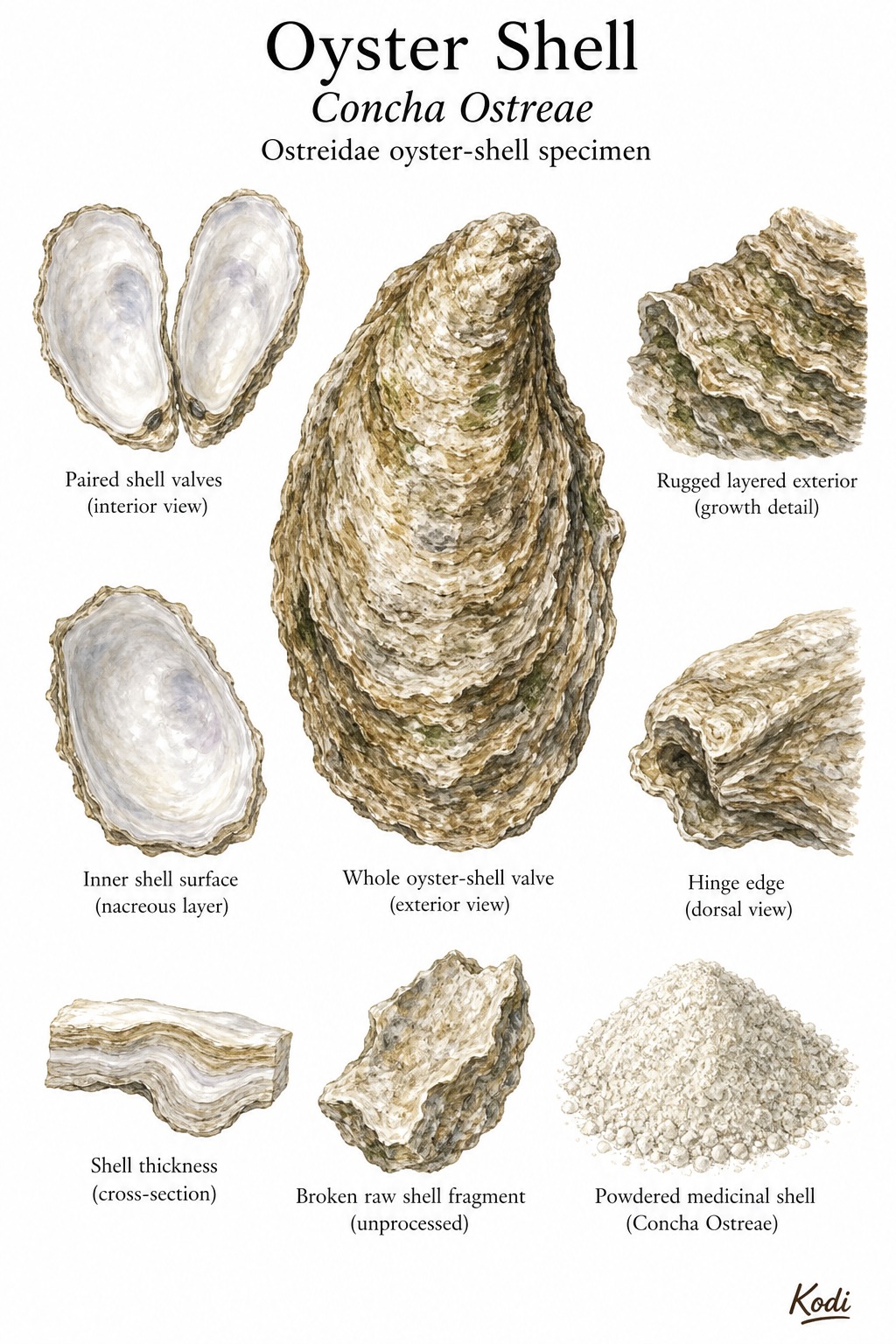
Known in TCM as Mu Li (牡蛎), this salty and astringent, slightly cold herb enters the Liver and Kidney. Traditionally, it pacifies the Liver and subdues Yang; treats dizziness, tinnitus, headache, and irritability from Liver Yang rising, most often applied for dizziness, tinnitus, and spontaneous sweating. Modern research has identified Calcium among its active constituents.
Part used: Shell
Also Known As
Latin: Concha Ostreae | Pinyin: Mu Li | Chinese: 牡蛎
TCM Properties
- Taste
- salty, astringent
- Temperature
- slightly cold
- Channels
- Liver, Kidney
Traditional Use
Primary Actions
- Pacifies the Liver and subdues Yang; treats dizziness, tinnitus, headache, and irritability from Liver Yang rising
- Softens hardness and dissipates nodulation; used for scrofula, goiter, and abdominal masses
- Astringes and stops discharge; treats spontaneous sweating, night sweats, spermatorrhea, and abnormal uterine bleeding from unstable Essence
Secondary Actions
- Calcined (Duan) form used specifically for its astringent action; raw (Sheng) form preferred for Liver Yang subduing and nodule-softening
Classic Formulas
- Gui Zhi Jia Long Gu Mu Li Tang (Cinnamon Twig Decoction Plus Dragon Bone and Oyster Shell)
Classical References
- Shang Han Lun (Treatise on Cold Damage, Zhang Zhongjing, c. 200 CE) pairs Mu Li with Long Gu (Dragon Bone) for anchoring floating Yang and calming the Spirit
Modern Research
Active Compounds
- Calcium carbonate
- Trace minerals (zinc, magnesium)
- Conchiolin protein
Studied Effects
- Calcium carbonate content supports traditional acid-neutralizing use for peptic complaints
- Shell-derived compounds studied for bone-supportive and mineral-supplementation potential, similar to related mollusk shell materials (Zhen Zhu Mu)
Safety & Interactions
Cautions
- Must be smashed and decocted first due to its mineral density
- Spleen-Stomach Deficiency Cold
Conditions
- Dizziness Traditional ★★★☆☆ JSON
- Tinnitus Traditional ★★☆☆☆ JSON
- Spontaneous Sweating Traditional ★★☆☆☆ JSON
- Insomnia Traditional ★★☆☆☆ JSON
- Acid Reflux Traditional ★☆☆☆☆ JSON
Frequently Asked Questions
What is Oyster Shell used for?
Oyster Shell is traditionally used to Pacifies the Liver and subdues Yang; treats dizziness, tinnitus, headache, and irritability from Liver Yang rising, Softens hardness and dissipates nodulation; used for scrofula, goiter, and abdominal masses, Astringes and stops discharge; treats spontaneous sweating, night sweats, spermatorrhea, and abnormal uterine bleeding from unstable Essence. Research has investigated its effects on: Calcium carbonate content supports traditional acid-neutralizing use for peptic complaints; Shell-derived compounds studied for bone-supportive and mineral-supplementation potential, similar to related mollusk shell materials (Zhen Zhu Mu).
What are other names for Oyster Shell?
Oyster Shell is also known as Ostrea gigas, Ostrea. In TCM: 牡蛎 (Mu Li); Concha Ostreae.
Is Oyster Shell safe during pregnancy?
Oyster Shell is generally considered safe during pregnancy in normal amounts. Therapeutic or concentrated doses should be discussed with a qualified healthcare provider before use.