Orientvine Stem
- Chinese
- 青风藤
- Pinyin
- Qing Feng Teng
- Latin
- Caulis Sinomenii
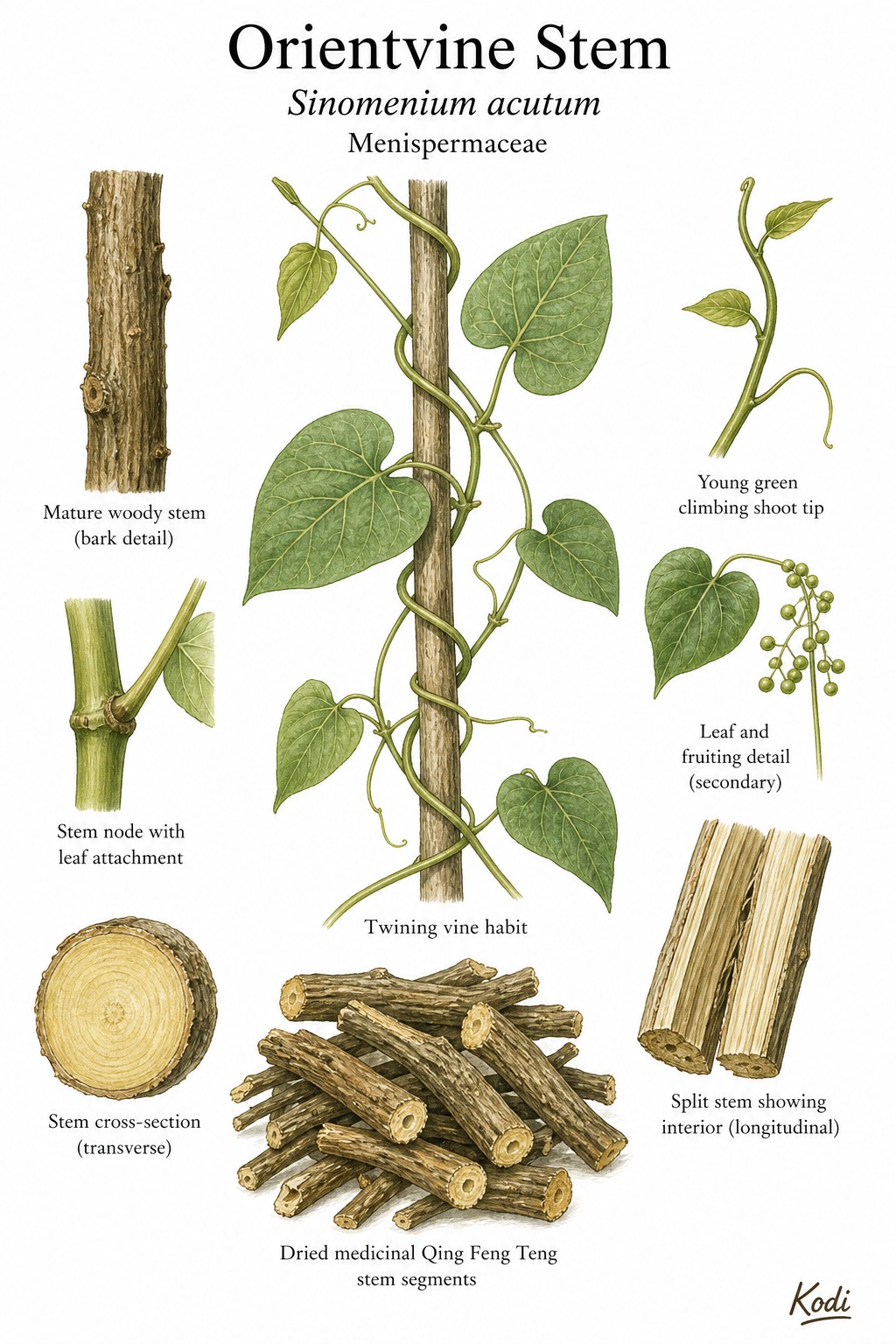
Known in TCM as Qing Feng Teng (青风藤), this bitter and acrid, neutral herb enters the Liver and Spleen. Traditionally, it dispels Wind-Damp and unblocks the channels and collaterals; treats Bi syndrome with joint pain, swelling, stiffness, and restricted movement, most often applied for rheumatoid arthritis, joint pain, and osteoarthritis. Modern research has identified Sinomenine among its active constituents.
Part used: Stem
Also Known As
Latin: Caulis Sinomenii | Pinyin: Qing Feng Teng | Chinese: 青风藤
TCM Properties
- Taste
- bitter, acrid
- Temperature
- neutral
- Channels
- Liver, Spleen
Traditional Use
Primary Actions
- Dispels Wind-Damp and unblocks the channels and collaterals; treats Bi syndrome with joint pain, swelling, stiffness, and restricted movement
- Promotes urination and reduces edema, acting as a mild diuretic for swelling associated with Wind-Damp
Secondary Actions
- Used since the Han dynasty for rheumatic and arthritic pain, including back pain, muscle and tendon soreness, and hemiplegia
Classical References
- Documented since the Han dynasty (202 BCE - 220 CE) as a Wind-Damp-dispelling vine for joint disorders
Modern Research
Active Compounds
- Sinomenine (principal alkaloid)
- Lignans
- Triterpenoid saponins
Studied Effects
- Sinomenine shows anti-inflammatory, immunosuppressive, and analgesic activity in preclinical studies
- The sinomenine-based drug Zhengqing Fengtongning shows efficacy for knee osteoarthritis in randomized controlled trials
- Widely used clinically for rheumatoid arthritis and neuralgia
PubMed References
Safety & Interactions
Contraindications
- Pregnancy
Cautions
- Sinomenine-based preparations have documented allergic reaction risk (skin rash, pruritus) in a subset of patients
- Spleen-Stomach Deficiency Cold
Drug Interactions
- Theoretical additive immunosuppressive effect with immunosuppressant medications
Conditions
- Rheumatoid Arthritis Research ★★★☆☆ JSON
- Joint Pain Traditional ★★★☆☆ JSON
- Osteoarthritis Research ★★☆☆☆ JSON
- Edema Traditional ★☆☆☆☆ JSON
Frequently Asked Questions
What is Orientvine Stem used for?
Orientvine Stem is traditionally used to Dispels Wind-Damp and unblocks the channels and collaterals; treats Bi syndrome with joint pain, swelling, stiffness, and restricted movement, Promotes urination and reduces edema, acting as a mild diuretic for swelling associated with Wind-Damp. Research has investigated its effects on: Sinomenine shows anti-inflammatory, immunosuppressive, and analgesic activity in preclinical studies; The sinomenine-based drug Zhengqing Fengtongning shows efficacy for knee osteoarthritis in randomized controlled trials.
What are other names for Orientvine Stem?
Orientvine Stem is also known as Sinomenium acutum, Chinese Moonseed. In TCM: 青风藤 (Qing Feng Teng); Caulis Sinomenii.
Is Orientvine Stem safe during pregnancy?
Orientvine Stem is not recommended during pregnancy.
What are the contraindications for Orientvine Stem?
Orientvine Stem should not be used in: Pregnancy. Consult a qualified healthcare provider before use.
Does Orientvine Stem interact with any medications?
Orientvine Stem may interact with: Theoretical additive immunosuppressive effect with immunosuppressant medications. Always inform your healthcare provider of any herbal supplements you are taking.