Oriental Stephania Root
- Chinese
- 千金藤
- Pinyin
- Qian Jin Teng
- Latin
- Radix Stephaniae Dielsianae
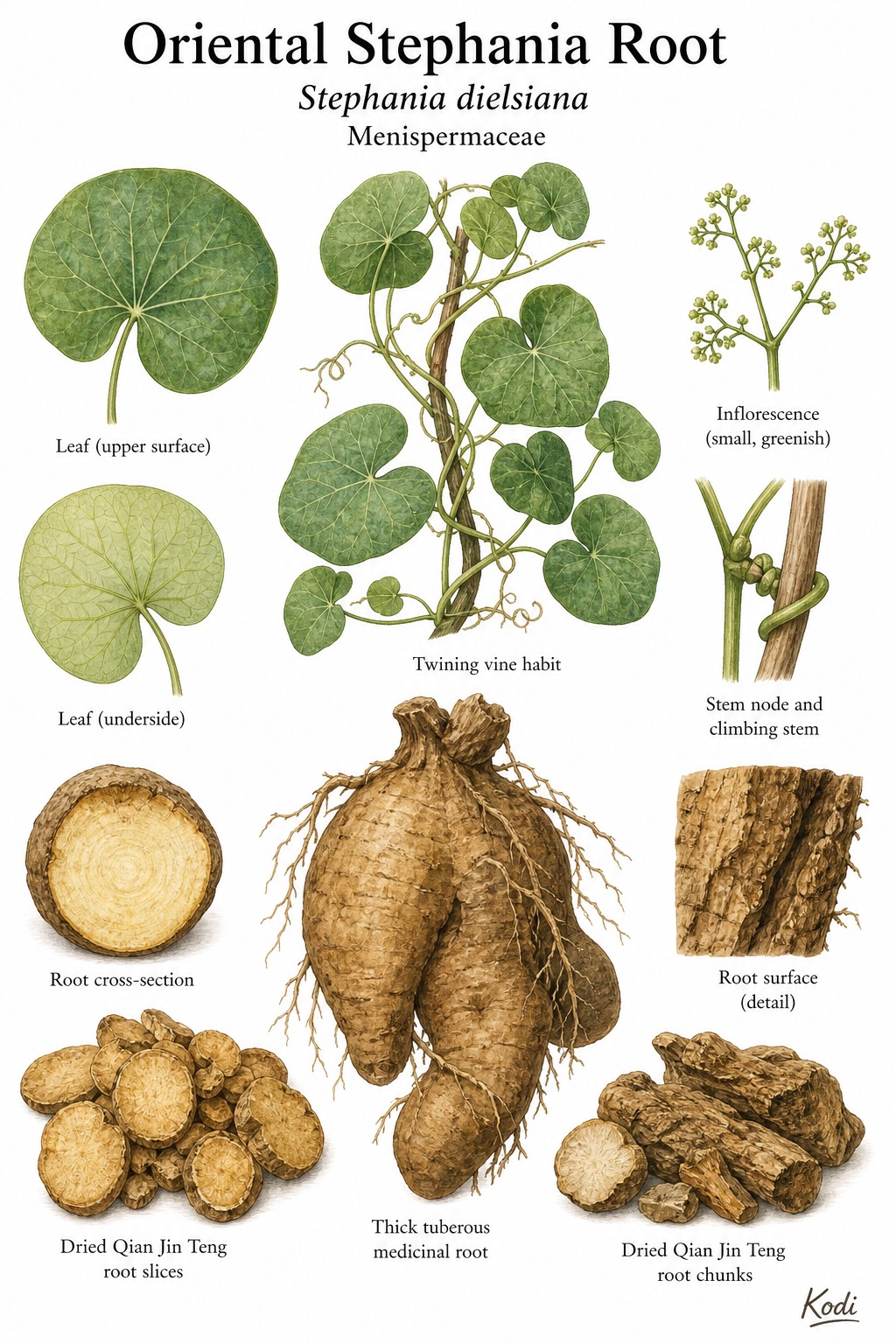
Known in TCM as Qian Jin Teng (千金藤), this bitter, cold herb enters the Liver and Stomach. Traditionally, it clears Heat and resolves toxicity; dispels Wind-Damp and relieves pain, used regionally for sore throat, toothache, and Bi syndrome, most often applied for sore throat, toothache, and traumatic injury. Modern research has identified Isoquinoline among its active constituents.
Part used: Root
Also Known As
Latin: Radix Stephaniae Dielsianae | Pinyin: Qian Jin Teng | Chinese: 千金藤
TCM Properties
- Taste
- bitter
- Temperature
- cold
- Channels
- Liver, Stomach
Traditional Use
Primary Actions
- Clears Heat and resolves toxicity; dispels Wind-Damp and relieves pain, used regionally for sore throat, toothache, and Bi syndrome
- Invigorates Blood and reduces swelling for traumatic injury
Secondary Actions
- A regional folk medicine from southern China (Guangxi, Yunnan); note that the trade name "Jin Bu Huan" has historically been applied inconsistently to multiple unrelated plants, including other Stephania species and Polygala fallax, some botanical sources of which have been linked to case reports of hepatotoxicity
Classical References
- Documented in regional Chinese folk materia medica; distinct from Stephania tetrandra (Fang Ji), which was implicated in the aristolochic acid nephropathy cases and is not the source of this record
Modern Research
Active Compounds
- Isoquinoline alkaloids (aporphine and bisbenzylisoquinoline types)
- Oxostephanine
Studied Effects
- Cytotoxic and anti-plasmodial (antimalarial) activity demonstrated for isolated alkaloids, including oxostephanine, from leaf extracts
- Genus-wide Stephania alkaloid research documents antimicrobial, antioxidant, anti-inflammatory, and analgesic activity
PubMed References
Safety & Interactions
Contraindications
- Pregnancy
- Pre-existing liver or kidney disease
Cautions
- Do not confuse with products sold generically as "Jin Bu Huan," a trade name applied inconsistently to multiple unrelated plants, some linked to documented hepatotoxicity case reports; verify precise botanical identity (Stephania dielsiana specifically) before use
- Also distinct from Stephania tetrandra (Han Fang Ji), a different species implicated in aristolochic acid nephropathy and largely removed from Western herbal commerce
Conditions
- Sore Throat Traditional ★★☆☆☆ JSON
- Toothache Traditional ★★☆☆☆ JSON
- Traumatic Injury Traditional ★☆☆☆☆ JSON
- Joint Pain Traditional ★☆☆☆☆ JSON
Frequently Asked Questions
What is Oriental Stephania Root used for?
Oriental Stephania Root is traditionally used to Clears Heat and resolves toxicity; dispels Wind-Damp and relieves pain, used regionally for sore throat, toothache, and Bi syndrome, Invigorates Blood and reduces swelling for traumatic injury. Research has investigated its effects on: Cytotoxic and anti-plasmodial (antimalarial) activity demonstrated for isolated alkaloids, including oxostephanine, from leaf extracts; Genus-wide Stephania alkaloid research documents antimicrobial, antioxidant, anti-inflammatory, and analgesic activity.
What are other names for Oriental Stephania Root?
Oriental Stephania Root is also known as Stephania dielsiana, Jin Bu Huan (regional trade name). In TCM: 千金藤 (Qian Jin Teng); Radix Stephaniae Dielsianae.
Is Oriental Stephania Root safe during pregnancy?
Oriental Stephania Root is not recommended during pregnancy.
What are the contraindications for Oriental Stephania Root?
Oriental Stephania Root should not be used in: Pregnancy; Pre-existing liver or kidney disease. Consult a qualified healthcare provider before use.