Agarwood (Eaglewood)
- Chinese
- 沉香
- Pinyin
- Chen Xiang
- Latin
- Lignum Aquilariae Resinatum
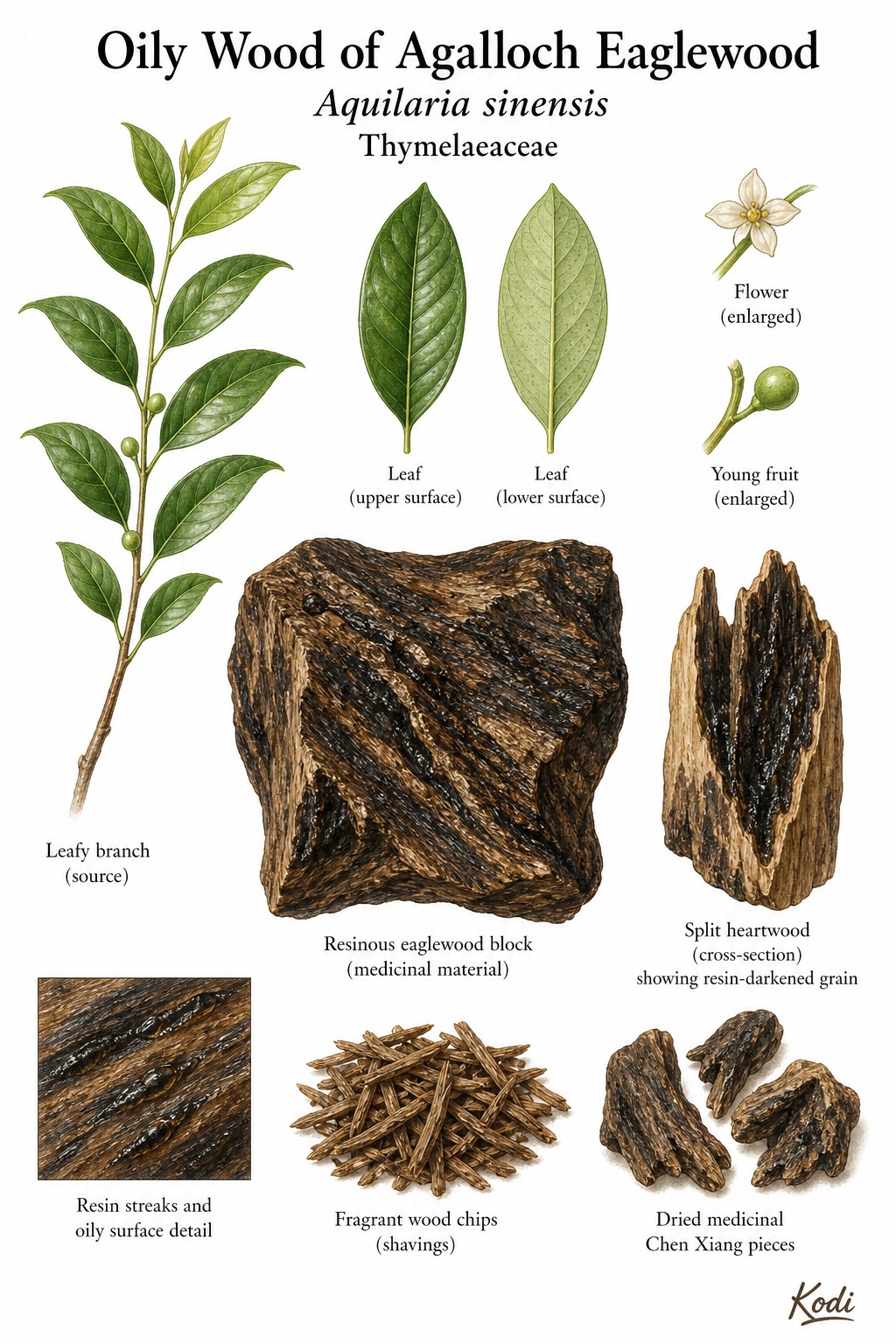
Known in TCM as Chen Xiang (沉香), this acrid and bitter, warm herb enters the Kidney, Spleen, and Stomach. Traditionally, it moves stagnant Qi and relieves pain in the chest and abdomen from Cold and Qi stagnation, most often applied for chest pain, nausea, and wheezing. Modern research has identified Sesquiterpenes among its active constituents.
Part used: Heartwood
Also Known As
Latin: Lignum Aquilariae Resinatum | Pinyin: Chen Xiang | Chinese: 沉香
TCM Properties
- Taste
- acrid, bitter
- Temperature
- warm
- Channels
- Kidney, Spleen, Stomach
Traditional Use
Primary Actions
- Moves stagnant Qi and relieves pain in the chest and abdomen from Cold and Qi stagnation
- Warms the Middle and directs rebellious Qi downward, stopping nausea, vomiting, belching, and hiccup
- Assists the Kidney in grasping Qi; calms wheezing from Kidney deficiency failing to grasp Qi
Secondary Actions
- Resin-infused heartwood formed as a defensive response in Aquilaria trees, historically valued as incense as well as medicine
Classical References
- Documented in later Chinese materia medica as an aromatic, warming, downward-directing wood for combined chest, digestive, and respiratory Qi disorders
Modern Research
Active Compounds
- Sesquiterpenes (agarospirol, jinkoh-eremol)
- 2-(2-phenylethyl)chromones
Studied Effects
- Sesquiterpenoids agarospirol and jinkoh-eremol show sedative and analgesic effects in animal models
- Anti-inflammatory, neuroprotective, gastrointestinal-regulatory, and antimicrobial activity documented across extracts
- Traditionally and pharmacologically valued for CNS-calming and carminative effects
PubMed References
Safety & Interactions
Contraindications
- Qi deficiency without stagnation
- Yin deficiency with Heat signs
Cautions
- Genuine wild agarwood is scarce and expensive, driving a significant market in adulterated or synthetic substitutes; verify authentic sourcing
- Several Aquilaria species are CITES-listed given wild population pressure from harvesting
Conditions
- Chest Pain Traditional ★★☆☆☆ JSON
- Nausea Traditional ★★☆☆☆ JSON
- Wheezing Traditional ★★☆☆☆ JSON
- Abdominal Pain Traditional ★★☆☆☆ JSON
Frequently Asked Questions
What is Agarwood (Eaglewood) used for?
Agarwood (Eaglewood) is traditionally used to Moves stagnant Qi and relieves pain in the chest and abdomen from Cold and Qi stagnation, Warms the Middle and directs rebellious Qi downward, stopping nausea, vomiting, belching, and hiccup, Assists the Kidney in grasping Qi; calms wheezing from Kidney deficiency failing to grasp Qi. Research has investigated its effects on: Sesquiterpenoids agarospirol and jinkoh-eremol show sedative and analgesic effects in animal models; Anti-inflammatory, neuroprotective, gastrointestinal-regulatory, and antimicrobial activity documented across extracts.
What are other names for Agarwood (Eaglewood)?
Agarwood (Eaglewood) is also known as Aquilaria sinensis, Aquilaria agallocha, Aloeswood. In TCM: 沉香 (Chen Xiang); Lignum Aquilariae Resinatum.
Is Agarwood (Eaglewood) safe during pregnancy?
The safety of Agarwood (Eaglewood) during pregnancy has not been established. Consult a qualified healthcare provider before use.
What are the contraindications for Agarwood (Eaglewood)?
Agarwood (Eaglewood) should not be used in: Qi deficiency without stagnation; Yin deficiency with Heat signs. Consult a qualified healthcare provider before use.