Patchouli Oil
- Chinese
- 广藿香油
- Pinyin
- Guang Huo Xiang You
- Latin
- Oleum Pogostemonis
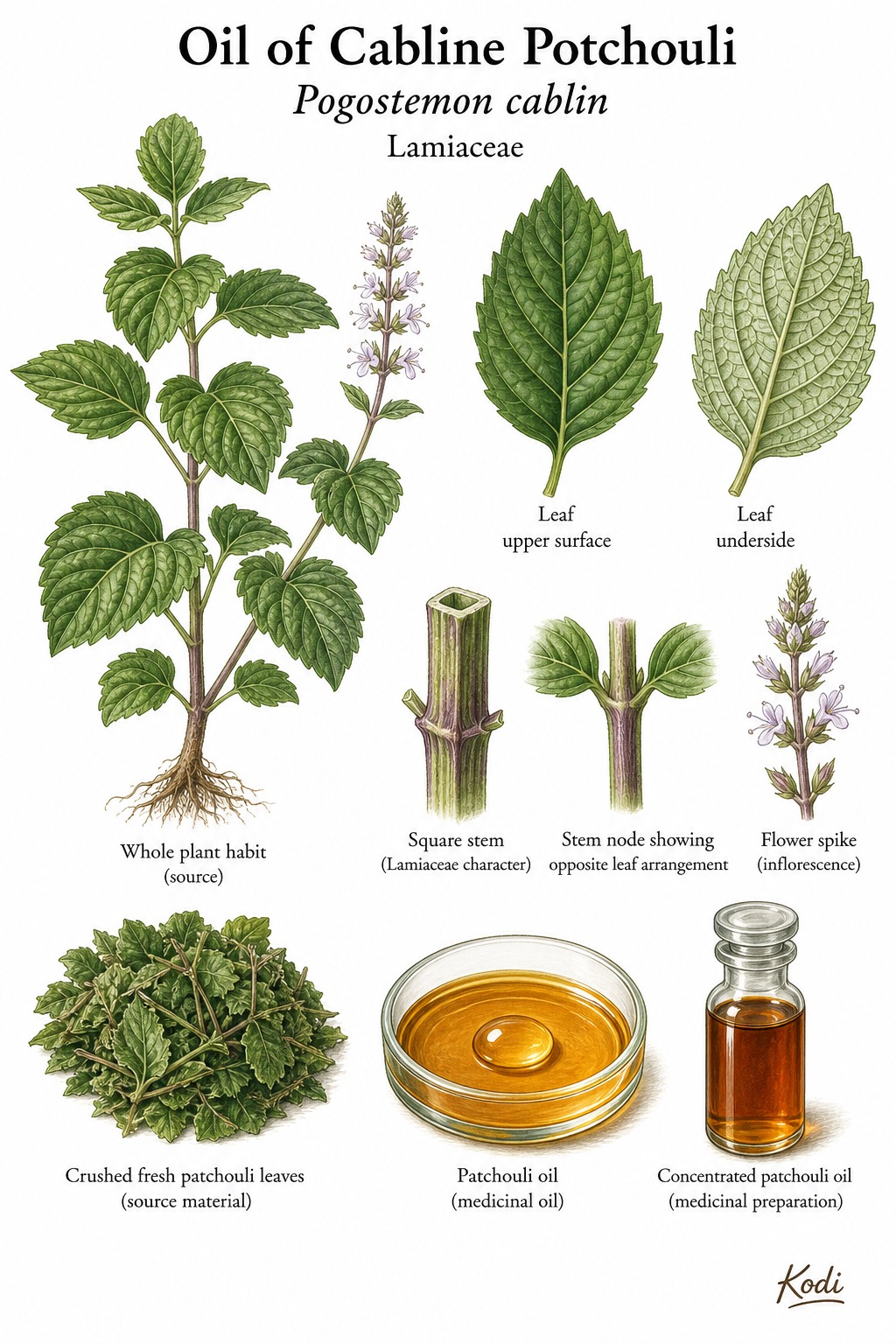
Known in TCM as Guang Huo Xiang You (广藿香油), this acrid, slightly warm herb enters the Lung, Spleen, and Stomach. Traditionally, it aromatically transforms dampness and harmonizes the middle in concentrated form for nausea, vomiting, poor appetite, abdominal fullness, and summer-damp turbidity, most often applied for nausea, diarrhea, and poor appetite. Modern research has identified Patchouli among its active constituents.
Part used: Oil
Also Known As
Latin: Oleum Pogostemonis | Pinyin: Guang Huo Xiang You | Chinese: 广藿香油
TCM Properties
- Taste
- acrid
- Temperature
- slightly warm
- Channels
- Lung, Spleen, Stomach
Traditional Use
Primary Actions
- Aromatically transforms dampness and harmonizes the middle in concentrated form for nausea, vomiting, poor appetite, abdominal fullness, and summer-damp turbidity.
- Releases the exterior and resolves summer-heat dampness when heaviness, headache, and digestive upset appear together.
- Freshens foul turbidity and supports external aromatic use where the volatile fraction is preferred over the bulk herb.
Secondary Actions
- This is the volatile-oil preparation of Guang Huo Xiang, not a separate medicinal species.
- Patchouli oil is much more concentrated than leaf or whole-herb records and should not be dosed as though it were ordinary Guang Huo Xiang.
Classical References
- Traditional handling follows the same core direction as Guang Huo Xiang ... damp transformation, middle harmonization, and summer-damp relief ... but through a more penetrating aromatic fraction.
- The `Guang` prefix remains important because true Pogostemon cablin identity should stay separate from other `Huo Xiang` substitutes.
Modern Research
Active Compounds
- Patchouli alcohol
- Pogostone
- Beta-patchoulene
- Sesquiterpene volatile fractions
Studied Effects
- Review literature continues to position Pogostemon cablin as a major aromatic medicinal with anti-inflammatory, antimicrobial, and gastrointestinal relevance centered on its essential-oil fraction (PMID 36511100).
- Classical antiemetic screening identified patchouli alcohol and related constituents as active antiemetic principles from Pogostemon cablin (PMID 10374246).
- Modern experimental work found Pogostemon cablin granule improved irinotecan-induced intestinal mucositis, supporting the herb's longstanding digestive-protective reputation (PMID 37029820).
PubMed References
Safety & Interactions
Contraindications
- Marked Yin-deficiency dryness
- Undiluted internal essential-oil use
- Known patchouli sensitivity
Cautions
- The concentrated oil is more irritating and pharmacologically sharper than the crude herb or leaf records.
- Digestive benefit data do not justify casual essential-oil ingestion outside practitioner supervision.
- MSK page not found ... drug interaction data not available from Memorial Sloan Kettering integrative medicine database.
Conditions
- Nausea Traditional ★★★☆☆ JSON
- Diarrhea Traditional ★★☆☆☆ JSON
- Poor Appetite Traditional ★★☆☆☆ JSON
- Common Cold Traditional ★☆☆☆☆ JSON
Frequently Asked Questions
What is Patchouli Oil used for?
Patchouli Oil is traditionally used to Aromatically transforms dampness and harmonizes the middle in concentrated form for nausea, vomiting, poor appetite, abdominal fullness, and summer-damp turbidity., Releases the exterior and resolves summer-heat dampness when heaviness, headache, and digestive upset appear together., Freshens foul turbidity and supports external aromatic use where the volatile fraction is preferred over the bulk herb.. Research has investigated its effects on: Review literature continues to position Pogostemon cablin as a major aromatic medicinal with anti-inflammatory, antimicrobial, and gastrointestinal relevance centered on its essential-oil fraction (PMID 36511100).; Classical antiemetic screening identified patchouli alcohol and related constituents as active antiemetic principles from Pogostemon cablin (PMID 10374246)..
What are other names for Patchouli Oil?
Patchouli Oil is also known as Pogostemon cablin oil, Patchouli Essential Oil. In TCM: 广藿香油 (Guang Huo Xiang You); Oleum Pogostemonis.
Is Patchouli Oil safe during pregnancy?
The safety of Patchouli Oil during pregnancy has not been established. Consult a qualified healthcare provider before use.
What are the contraindications for Patchouli Oil?
Patchouli Oil should not be used in: Marked Yin-deficiency dryness; Undiluted internal essential-oil use; Known patchouli sensitivity. Consult a qualified healthcare provider before use.