Rosewood Oil
- Chinese
- 降香油
- Pinyin
- Jiang Xiang You
- Latin
- Oleum Dalbergiae Odoriferae
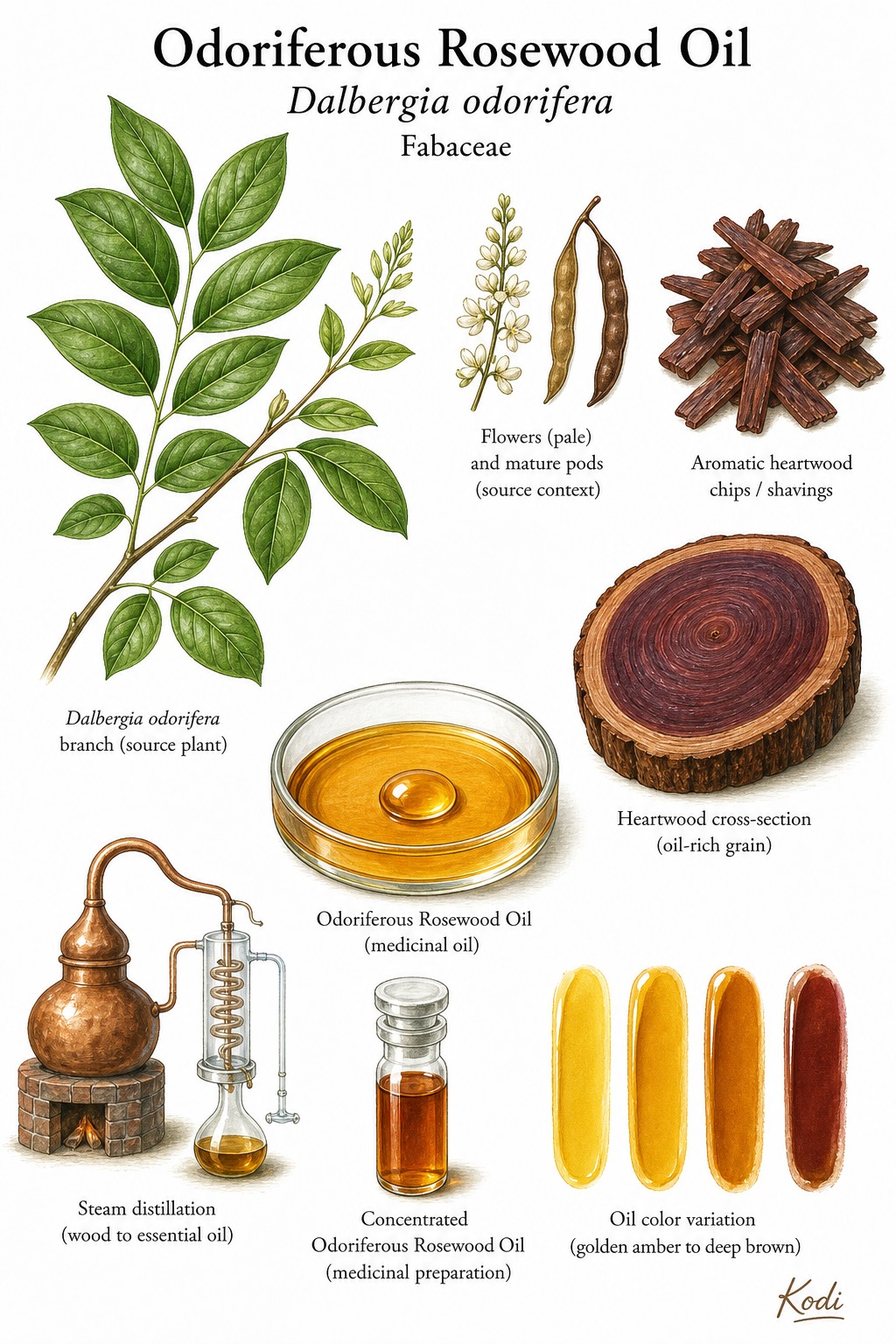
Known in TCM as Jiang Xiang You (降香油), this acrid, warm herb enters the Liver, Spleen, and Heart. Traditionally, it invigorates Blood and moves Qi in concentrated aromatic form for fixed chest, epigastric, or traumatic pain with stasis and obstruction, most often applied for chest pain, blood stasis, and traumatic injury. Modern research has identified Trans-nerolidol among its active constituents.
Part used: Oil
Also Known As
Latin: Oleum Dalbergiae Odoriferae | Pinyin: Jiang Xiang You | Chinese: 降香油
TCM Properties
- Taste
- acrid
- Temperature
- warm
- Channels
- Liver, Spleen, Heart
Traditional Use
Primary Actions
- Invigorates Blood and moves Qi in concentrated aromatic form for fixed chest, epigastric, or traumatic pain with stasis and obstruction.
- Relieves pain and disperses stagnation more quickly than the crude heartwood when a penetrating volatile preparation is desired.
- Supports external use for bruising, cold-stagnation discomfort, or localized painful obstruction where an aromatic Blood-moving oil is preferred.
Secondary Actions
- This is the volatile-oil derivative of Jiang Xiang, not a separate species or a simple perfume material.
- The oil is more immediately penetrating but also more irritating and less forgiving than the heartwood record.
Classical References
- Traditional Chinese references treat Jiang Xiang as a Blood-invigorating, Qi-moving aromatic wood, and the oil inherits that same directional logic in concentrated form.
- The medicinal identity here should stay tied to Dalbergia odorifera heartwood rather than to generic rosewood fragrance use.
Modern Research
Active Compounds
- Trans-nerolidol
- Sesquiterpene-rich volatile oil
- Flavonoid-associated aromatic fractions
Studied Effects
- A major review of Dalbergia odorifera summarized anti-inflammatory, anti-ischemic, antiplatelet, vasorelaxant, and pain-related pharmacology across the medicinal heartwood and its volatile components (PMID 31654799).
- Earlier review work also highlighted essential oils among the key active fractions supporting cardiovascular and Blood-stasis-oriented research interest in this species (PMID 29348771).
- Recent mechanistic work continues to focus on the volatile oil as a cardioprotective and anti-inflammatory fraction, especially in ischemia-related models.
PubMed References
Safety & Interactions
Contraindications
- Pregnancy
- Bleeding without stasis
- Undiluted use on damaged skin or mucosa
Cautions
- As a Blood-moving aromatic oil, this preparation is more concentrated than the crude wood and should be handled cautiously.
- Antiplatelet and circulation-related activity make additive bleeding risk a reasonable concern with anticoagulant or antiplatelet drugs.
- The modern evidence base is largely preclinical.
Drug Interactions
- Theoretical additive bleeding risk with anticoagulant or antiplatelet medications
Conditions
- Chest Pain Traditional ★★★☆☆ JSON
- Blood Stasis Traditional ★★☆☆☆ JSON
- Traumatic Injury Traditional ★★☆☆☆ JSON
- Cardiovascular Disease Research ★☆☆☆☆ JSON
Frequently Asked Questions
What is Rosewood Oil used for?
Rosewood Oil is traditionally used to Invigorates Blood and moves Qi in concentrated aromatic form for fixed chest, epigastric, or traumatic pain with stasis and obstruction., Relieves pain and disperses stagnation more quickly than the crude heartwood when a penetrating volatile preparation is desired., Supports external use for bruising, cold-stagnation discomfort, or localized painful obstruction where an aromatic Blood-moving oil is preferred.. Research has investigated its effects on: A major review of Dalbergia odorifera summarized anti-inflammatory, anti-ischemic, antiplatelet, vasorelaxant, and pain-related pharmacology across the medicinal heartwood and its volatile components (PMID 31654799).; Earlier review work also highlighted essential oils among the key active fractions supporting cardiovascular and Blood-stasis-oriented research interest in this species (PMID 29348771)..
What are other names for Rosewood Oil?
Rosewood Oil is also known as Dalbergia odorifera oil, Jiang Xiang Essential Oil. In TCM: 降香油 (Jiang Xiang You); Oleum Dalbergiae Odoriferae.
Is Rosewood Oil safe during pregnancy?
Rosewood Oil is not recommended during pregnancy.
What are the contraindications for Rosewood Oil?
Rosewood Oil should not be used in: Pregnancy; Bleeding without stasis; Undiluted use on damaged skin or mucosa. Consult a qualified healthcare provider before use.
Does Rosewood Oil interact with any medications?
Rosewood Oil may interact with: Theoretical additive bleeding risk with anticoagulant or antiplatelet medications. Always inform your healthcare provider of any herbal supplements you are taking.