Clove Basil Oil
- Chinese
- 丁香罗勒油
- Pinyin
- Ding Xiang Luo Le You
- Latin
- Oleum Ocimi Gratissimi
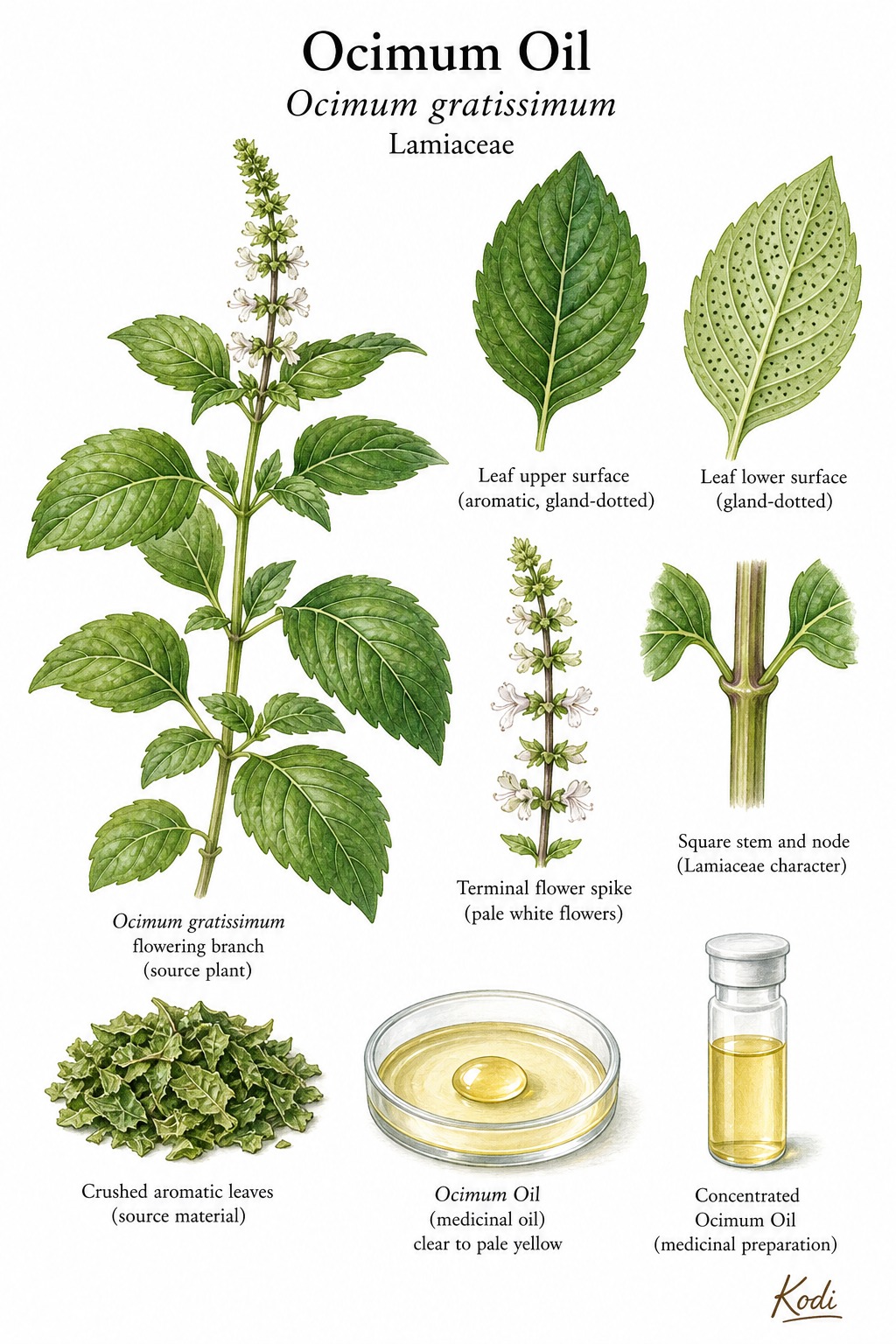
Known in TCM as Ding Xiang Luo Le You (丁香罗勒油), this acrid, warm herb enters the Lung, Spleen, and Stomach. Traditionally, it aromatically transforms dampness and harmonizes the middle when nausea, abdominal discomfort, poor appetite, or summer-damp turbidity call for a sharper volatile preparation, most often applied for indigestion, diarrhea, and abdominal pain. Modern research has identified Eugenol among its active constituents.
Part used: Oil
Also Known As
Latin: Oleum Ocimi Gratissimi | Pinyin: Ding Xiang Luo Le You | Chinese: 丁香罗勒油
TCM Properties
- Taste
- acrid
- Temperature
- warm
- Channels
- Lung, Spleen, Stomach
Traditional Use
Primary Actions
- Aromatically transforms dampness and harmonizes the middle when nausea, abdominal discomfort, poor appetite, or summer-damp turbidity call for a sharper volatile preparation.
- Relieves cold-damp pain and stagnant turbidity, especially in the upper digestive tract where the aromatic fraction acts more quickly than the whole leaf.
- Provides an external aromatic antimicrobial preparation for localized foul, damp, or minor toxic conditions.
Secondary Actions
- This is a concentrated oil record rather than a major standalone classical decoction herb.
- Its logic sits closest to warm aromatic digestives such as clove and patchouli, but the clove-basil identity should stay distinct.
Classical References
- Traditional handling of basil-type aromatic oils emphasizes damp-turbidity, pain, foul stagnation, and external cleansing use rather than broad long-course internal prescribing.
- The `Ding Xiang` prefix reflects the clove-like scent profile of Ocimum gratissimum rather than an identity collapse into actual clove oil.
Modern Research
Active Compounds
- Eugenol
- Thymol
- Myrcene
- 1,8-Cineole
Studied Effects
- A modern review summarized broad anti-inflammatory, antimicrobial, analgesic, and gastrointestinal-relevant activity for Ocimum gratissimum and its essential oil (PMID 34901489).
- Ocimum gratissimum essential oil showed antibacterial activity against gastroenteritis-associated pathogens with evidence of membrane disruption, which fits the oil's long external and digestive reputation (PMID 29578062).
- Experimental work found antihypernociceptive activity from the essential oil and its isolated compounds eugenol and myrcene in neuropathic pain models (PMID 26584457).
PubMed References
- A review on the traditional uses, phytochemistry, and pharmacological activities of clove basil (Ocimum gratissimum L.) (2021)
- Characterization of essential oil from Ocimum gratissimum leaves: Antibacterial and mode of action against selected gastroenteritis pathogens (2018)
- Ocimum gratissimum Essential Oil and Its Isolated Compounds Eugenol and Myrcene Reduce Neuropathic Pain in Mice (2016)
Safety & Interactions
Contraindications
- Undiluted internal essential-oil use
- Marked Yin-deficiency heat
- Known basil or eugenol sensitivity
Cautions
- The essential oil is much stronger and more irritating than culinary or crude-herb basil preparations.
- Eugenol-rich oils may irritate mucosa and can provoke nausea or burning if overdosed.
- MSK page not found ... drug interaction data not available from Memorial Sloan Kettering integrative medicine database.
Conditions
- Indigestion Traditional ★★☆☆☆ JSON
- Diarrhea Traditional ★★☆☆☆ JSON
- Abdominal Pain Traditional ★★☆☆☆ JSON
- Common Cold Traditional ★☆☆☆☆ JSON
Frequently Asked Questions
What is Clove Basil Oil used for?
Clove Basil Oil is traditionally used to Aromatically transforms dampness and harmonizes the middle when nausea, abdominal discomfort, poor appetite, or summer-damp turbidity call for a sharper volatile preparation., Relieves cold-damp pain and stagnant turbidity, especially in the upper digestive tract where the aromatic fraction acts more quickly than the whole leaf., Provides an external aromatic antimicrobial preparation for localized foul, damp, or minor toxic conditions.. Research has investigated its effects on: A modern review summarized broad anti-inflammatory, antimicrobial, analgesic, and gastrointestinal-relevant activity for Ocimum gratissimum and its essential oil (PMID 34901489).; Ocimum gratissimum essential oil showed antibacterial activity against gastroenteritis-associated pathogens with evidence of membrane disruption, which fits the oil's long external and digestive reputation (PMID 29578062)..
What are other names for Clove Basil Oil?
Clove Basil Oil is also known as Ocimum gratissimum oil, Ocimum Oil. In TCM: 丁香罗勒油 (Ding Xiang Luo Le You); Oleum Ocimi Gratissimi.
Is Clove Basil Oil safe during pregnancy?
The safety of Clove Basil Oil during pregnancy has not been established. Consult a qualified healthcare provider before use.
What are the contraindications for Clove Basil Oil?
Clove Basil Oil should not be used in: Undiluted internal essential-oil use; Marked Yin-deficiency heat; Known basil or eugenol sensitivity. Consult a qualified healthcare provider before use.