Nutmeg
- Chinese
- 肉豆蔻
- Pinyin
- Rou Dou Kou
- Latin
- Semen Myristicae
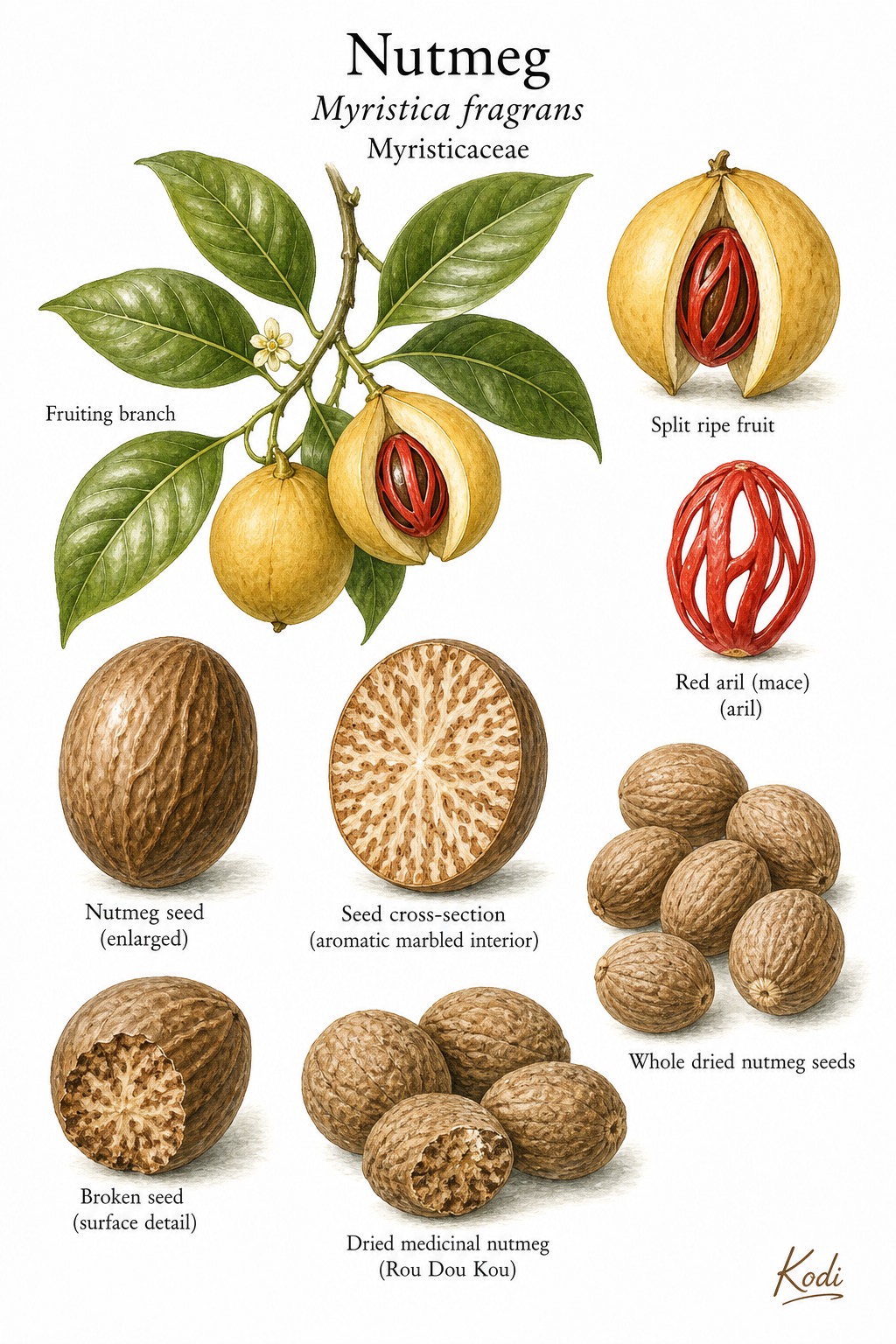
Known in TCM as Rou Dou Kou (肉豆蔻), this acrid, warm herb enters the Spleen, Stomach, and Large Intestine. Traditionally, it binds the Intestines and stops diarrhea; treats chronic, intractable diarrhea or daybreak (five-more) diarrhea from Kidney and Spleen Yang deficiency, most often applied for diarrhea, abdominal distension, and poor appetite. Modern research has identified Myristicin among its active constituents.
Part used: Seed
Also Known As
Latin: Semen Myristicae | Pinyin: Rou Dou Kou | Chinese: 肉豆蔻
TCM Properties
- Taste
- acrid
- Temperature
- warm
- Channels
- Spleen, Stomach, Large Intestine
Traditional Use
Primary Actions
- Binds the Intestines and stops diarrhea; treats chronic, intractable diarrhea or daybreak (five-more) diarrhea from Kidney and Spleen Yang deficiency
- Warms the Middle Burner and moves Qi to relieve epigastric and abdominal pain and distension with poor appetite and vomiting from Cold-Deficiency
Secondary Actions
- Almost always used roasted or otherwise processed to remove excess volatile oil and reduce irritation before internal use
Classic Formulas
- Si Shen Wan (Four Miracle Pill)
Classical References
- Documented in later Chinese materia medica as an imported warming, binding spice-seed for chronic Cold-pattern diarrhea
Modern Research
Active Compounds
- Myristicin
- Elemicin
- Sabinene
- Terpenoids
Studied Effects
- Antioxidant, anti-inflammatory, antidiabetic, antimicrobial, and anticancer activity documented across extracts
- Myristicin is neuroactive at high doses and is responsible for the toxic effects of nutmeg overdose, including gastrointestinal, cardiovascular, and central nervous system symptoms
- Estimated toxic threshold is around 5g of ground nutmeg (roughly 1-2mg/kg myristicin)
PubMed References
Safety & Interactions
Contraindications
- Diarrhea or dysentery due to Heat
- Heat in the Stomach
Cautions
- Culinary-range doses are safe, but doses well above typical spice use (around 5g or more of whole ground nutmeg) can cause myristicin toxicity: hallucinations, tachycardia, and gastrointestinal distress
- Use only the roasted/processed form for internal medicinal use
Conditions
- Diarrhea Traditional ★★★☆☆ JSON
- Abdominal Distension Traditional ★★☆☆☆ JSON
- Poor Appetite Traditional ★★☆☆☆ JSON
- Nausea Traditional ★☆☆☆☆ JSON
Frequently Asked Questions
What is Nutmeg used for?
Nutmeg is traditionally used to Binds the Intestines and stops diarrhea; treats chronic, intractable diarrhea or daybreak (five-more) diarrhea from Kidney and Spleen Yang deficiency, Warms the Middle Burner and moves Qi to relieve epigastric and abdominal pain and distension with poor appetite and vomiting from Cold-Deficiency. Research has investigated its effects on: Antioxidant, anti-inflammatory, antidiabetic, antimicrobial, and anticancer activity documented across extracts; Myristicin is neuroactive at high doses and is responsible for the toxic effects of nutmeg overdose, including gastrointestinal, cardiovascular, and central nervous system symptoms.
What are other names for Nutmeg?
Nutmeg is also known as Myristica fragrans, Myristica. In TCM: 肉豆蔻 (Rou Dou Kou); Semen Myristicae.
Is Nutmeg safe during pregnancy?
The safety of Nutmeg during pregnancy has not been established. Consult a qualified healthcare provider before use.
What are the contraindications for Nutmeg?
Nutmeg should not be used in: Diarrhea or dysentery due to Heat; Heat in the Stomach. Consult a qualified healthcare provider before use.