Node of Lotus Rhizome
- Chinese
- 藕节
- Pinyin
- Ou Jie
- Latin
- Nodus Nelumbinis Rhizomatis
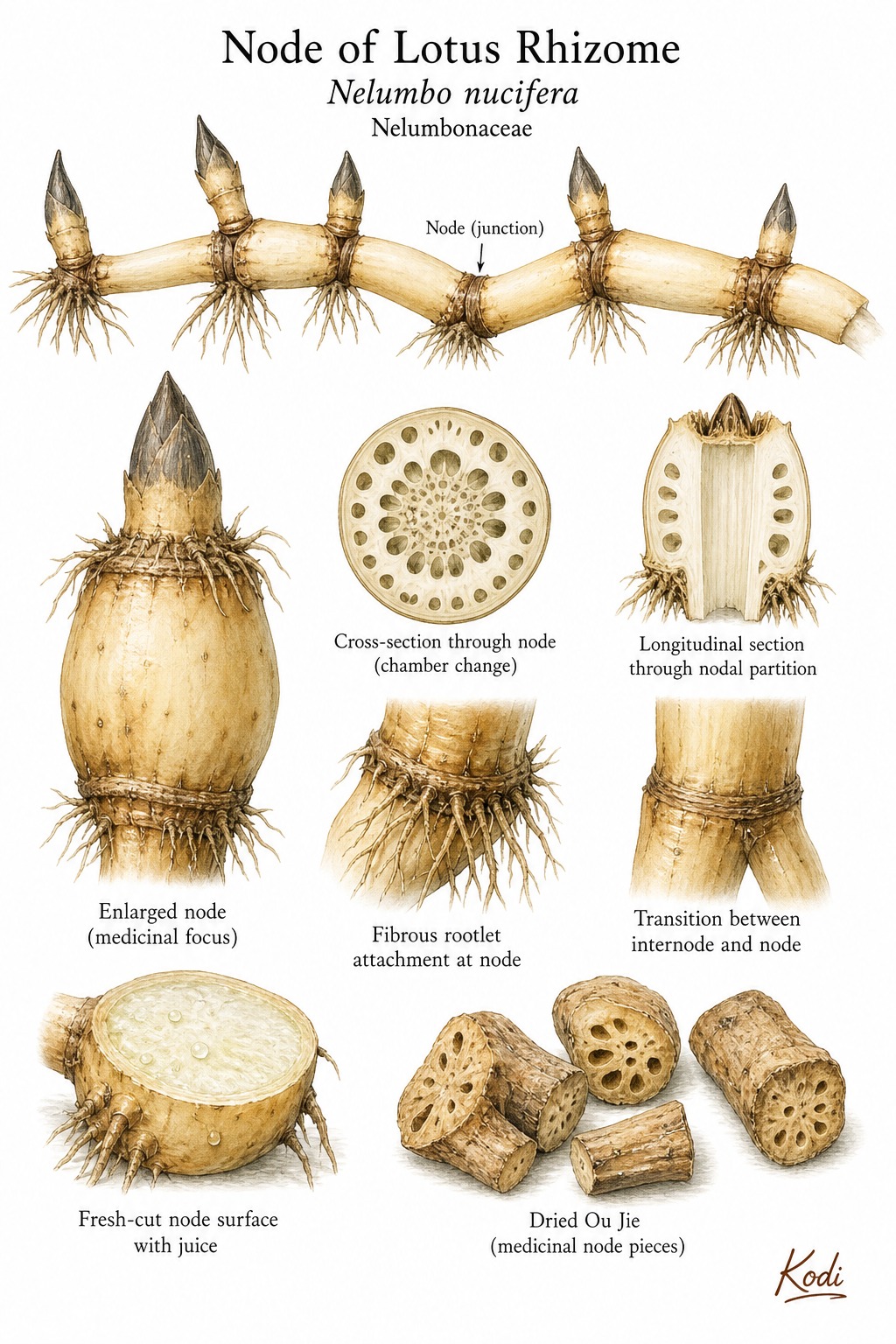
Known in TCM as Ou Jie (藕节), this sweet and astringent, neutral herb enters the Lung, Stomach, and Liver. Traditionally, it stops bleeding and dissolves Blood stasis; used for epistaxis, hemoptysis, hematemesis, hematuria, and abnormal uterine bleeding, especially when Blood stasis coexists with bleeding, most often applied for hemoptysis, hematuria, and abnormal uterine bleeding. Modern research has identified Tannins among its active constituents.
Part used: Node
Also Known As
Latin: Nodus Nelumbinis Rhizomatis | Pinyin: Ou Jie | Chinese: 藕节
TCM Properties
- Taste
- sweet, astringent
- Temperature
- neutral
- Channels
- Lung, Stomach, Liver
Traditional Use
Primary Actions
- Stops bleeding and dissolves Blood stasis; used for epistaxis, hemoptysis, hematemesis, hematuria, and abnormal uterine bleeding, especially when Blood stasis coexists with bleeding
- Its defining characteristic is that it stops bleeding without trapping stasis, distinguishing it from purely astringent hemostatics
Secondary Actions
- Charred form (Ou Jie Tan) used for a stronger hemostatic effect
Classical References
- Distinguished from Ou Zhi (fresh lotus rhizome juice) as the dried node specifically, valued for combining a hemostatic and mild Blood-moving action
Modern Research
Active Compounds
- Tannins
- Flavonoids
- Polysaccharides
Studied Effects
- Shortens blood clotting time in pharmacological studies, supporting traditional hemostatic use
- Dedicated modern clinical research is limited relative to other Nelumbo nucifera plant parts
Conditions
- Hemoptysis Traditional ★★★☆☆ JSON
- Hematuria Traditional ★★☆☆☆ JSON
- Abnormal Uterine Bleeding Traditional ★★☆☆☆ JSON
Frequently Asked Questions
What is Node of Lotus Rhizome used for?
Node of Lotus Rhizome is traditionally used to Stops bleeding and dissolves Blood stasis; used for epistaxis, hemoptysis, hematemesis, hematuria, and abnormal uterine bleeding, especially when Blood stasis coexists with bleeding, Its defining characteristic is that it stops bleeding without trapping stasis, distinguishing it from purely astringent hemostatics. Research has investigated its effects on: Shortens blood clotting time in pharmacological studies, supporting traditional hemostatic use; Dedicated modern clinical research is limited relative to other Nelumbo nucifera plant parts.
What are other names for Node of Lotus Rhizome?
Node of Lotus Rhizome is also known as Nelumbo nucifera rhizome node, Lotus Root Node, Nelumbinis. In TCM: 藕节 (Ou Jie); Nodus Nelumbinis Rhizomatis.
Is Node of Lotus Rhizome safe during pregnancy?
Node of Lotus Rhizome is generally considered safe during pregnancy in normal amounts. Therapeutic or concentrated doses should be discussed with a qualified healthcare provider before use.