Vitex Negundo Oil
- Chinese
- 牡荆油
- Pinyin
- Mu Jing You
- Latin
- Oleum Viticis Negundo
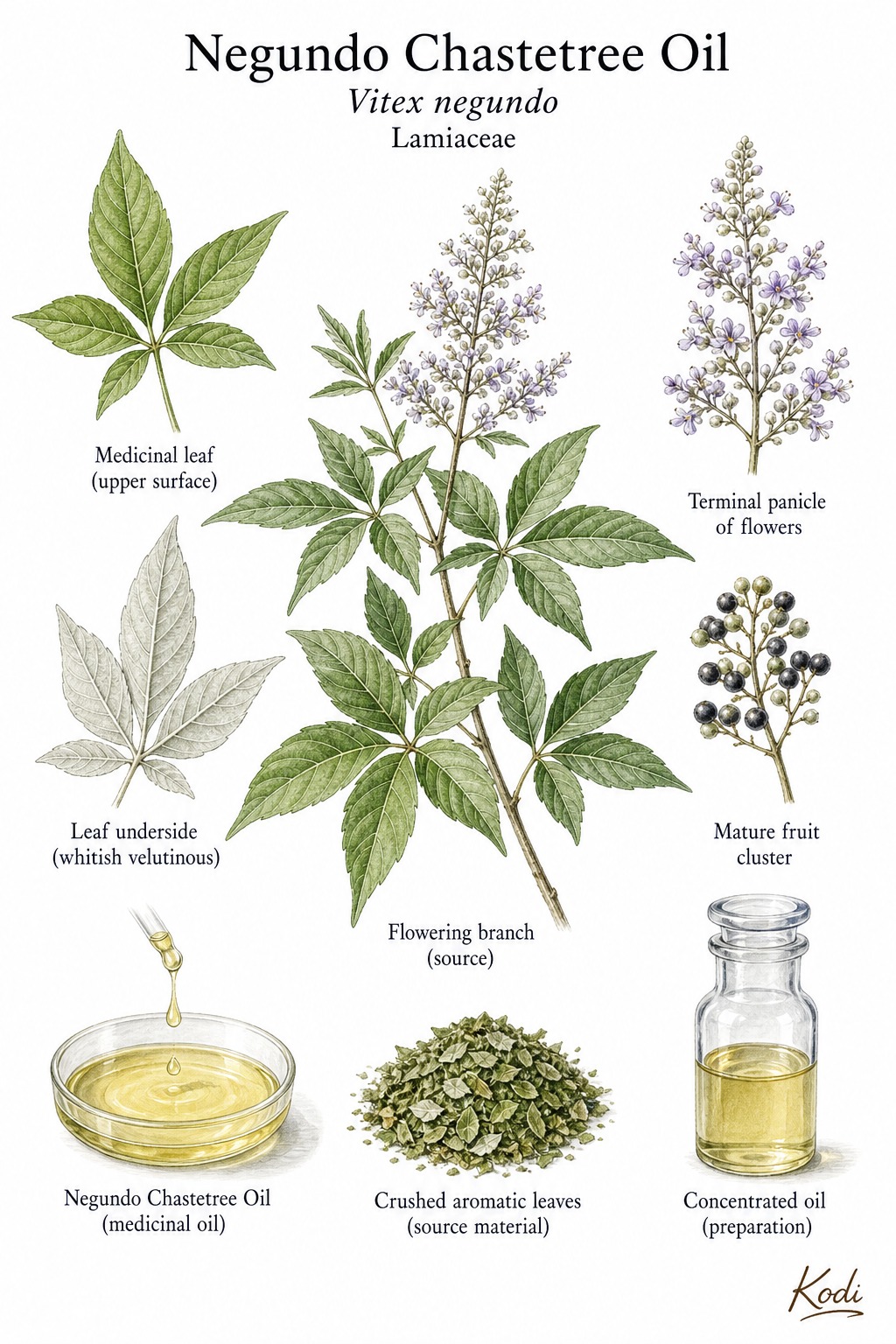
Known in TCM as Mu Jing You (牡荆油), this acrid and bitter, warm herb enters the Lung, Liver, and Stomach. Traditionally, it releases the exterior and transforms dampness in concentrated aromatic form when wind-cold, heaviness, headache, and damp obstruction are more stubborn than ordinary leaf use, most often applied for productive cough, wheezing, and common cold. Modern research has identified 1,8-Cineole among its active constituents.
Part used: Oil
Also Known As
Latin: Oleum Viticis Negundo | Pinyin: Mu Jing You | Chinese: 牡荆油
TCM Properties
- Taste
- acrid, bitter
- Temperature
- warm
- Channels
- Lung, Liver, Stomach
Traditional Use
Primary Actions
- Releases the exterior and transforms dampness in concentrated aromatic form when wind-cold, heaviness, headache, and damp obstruction are more stubborn than ordinary leaf use.
- Transforms phlegm and relieves cough or wheezing, especially when cold-damp obstruction and thick sputum accompany the respiratory picture.
- Dispels wind and reduces painful obstruction for localized cold-damp pain, swelling, or aching that historically drew stronger external-use preparations from the Mu Jing plant.
Secondary Actions
- This record should be read as the volatile-oil preparation related to Mu Jing Ye rather than as a separate classical crude herb.
- Because the oil is more penetrating and more irritating than the leaf, external or tightly supervised internal use is the safer traditional frame.
Classical References
- Traditional usage follows the broader Mu Jing leaf pattern of exterior-releasing, damp-transforming, wheeze-relieving, and toxicity-resolving action, but in a much more concentrated aromatic preparation.
- The oil record is best understood as a preparation-state monograph built on Vitex negundo leaf identity rather than on an entirely separate herb tradition.
Modern Research
Active Compounds
- 1,8-Cineole
- Sabinene
- Beta-caryophyllene
- Terpenoid volatile fractions
Studied Effects
- Vitex negundo leaf oil showed anti-inflammatory activity through COX-2 and cytokine modulation in an experimental paw-edema model, supporting the older pain and swelling uses (PMID 22923950).
- Essential-oil and extract testing found antibacterial activity against common laboratory organisms, supporting the traditional external-use and wound-cleansing logic of the plant's volatile fraction (PMID 20046787).
- Recent review work continues to place Vitex negundo among the stronger traditional anti-inflammatory and pain-oriented aromatic plants, although clinical evidence remains limited (PMID 41650524).
PubMed References
- Vitex negundo inhibits cyclooxygenase-2 inflammatory cytokine-mediated inflammation on carrageenan-induced rat hind paw edema (2012)
- Essential Oil Composition and Antibacterial Studies of Vitex negundo Linn. Extracts (2008)
- Vitex negundo Linn.: A decade of advances in phytochemistry, pharmacology and biotechnological interventions (2024)
Safety & Interactions
Contraindications
- Pregnancy or attempts to conceive
- Marked Yin-deficiency dryness
- Undiluted use on damaged skin or mucosa
Cautions
- This concentrated oil is more irritating than ordinary Mu Jing leaf decoction and should not be treated as interchangeable with the crude herb.
- Leaf-derived Vitex negundo preparations have shown anti-implantation or antiestrogenic activity in animal research, so pregnancy caution should be treated seriously.
- Most modern evidence is preclinical and does not justify casual internal essential-oil use.
Conditions
- Productive Cough Traditional ★★☆☆☆ JSON
- Wheezing Traditional ★★☆☆☆ JSON
- Common Cold Traditional ★★☆☆☆ JSON
- Rheumatism Traditional ★☆☆☆☆ JSON
Frequently Asked Questions
What is Vitex Negundo Oil used for?
Vitex Negundo Oil is traditionally used to Releases the exterior and transforms dampness in concentrated aromatic form when wind-cold, heaviness, headache, and damp obstruction are more stubborn than ordinary leaf use., Transforms phlegm and relieves cough or wheezing, especially when cold-damp obstruction and thick sputum accompany the respiratory picture., Dispels wind and reduces painful obstruction for localized cold-damp pain, swelling, or aching that historically drew stronger external-use preparations from the Mu Jing plant.. Research has investigated its effects on: Vitex negundo leaf oil showed anti-inflammatory activity through COX-2 and cytokine modulation in an experimental paw-edema model, supporting the older pain and swelling uses (PMID 22923950).; Essential-oil and extract testing found antibacterial activity against common laboratory organisms, supporting the traditional external-use and wound-cleansing logic of the plant's volatile fraction (PMID 20046787)..
What are other names for Vitex Negundo Oil?
Vitex Negundo Oil is also known as Vitex negundo leaf oil, Negundo Chastetree Oil. In TCM: 牡荆油 (Mu Jing You); Oleum Viticis Negundo.
Is Vitex Negundo Oil safe during pregnancy?
Vitex Negundo Oil is not recommended during pregnancy. Leaf-derived Vitex negundo preparations have shown anti-implantation or antiestrogenic activity in animal research, so pregnancy caution should be treated seriously.
What are the contraindications for Vitex Negundo Oil?
Vitex Negundo Oil should not be used in: Pregnancy or attempts to conceive; Marked Yin-deficiency dryness; Undiluted use on damaged skin or mucosa. Consult a qualified healthcare provider before use.