Nardostachys Root
- Chinese
- 甘松
- Pinyin
- Gan Song
- Latin
- Radix Seu Rhizoma Nardostachyos
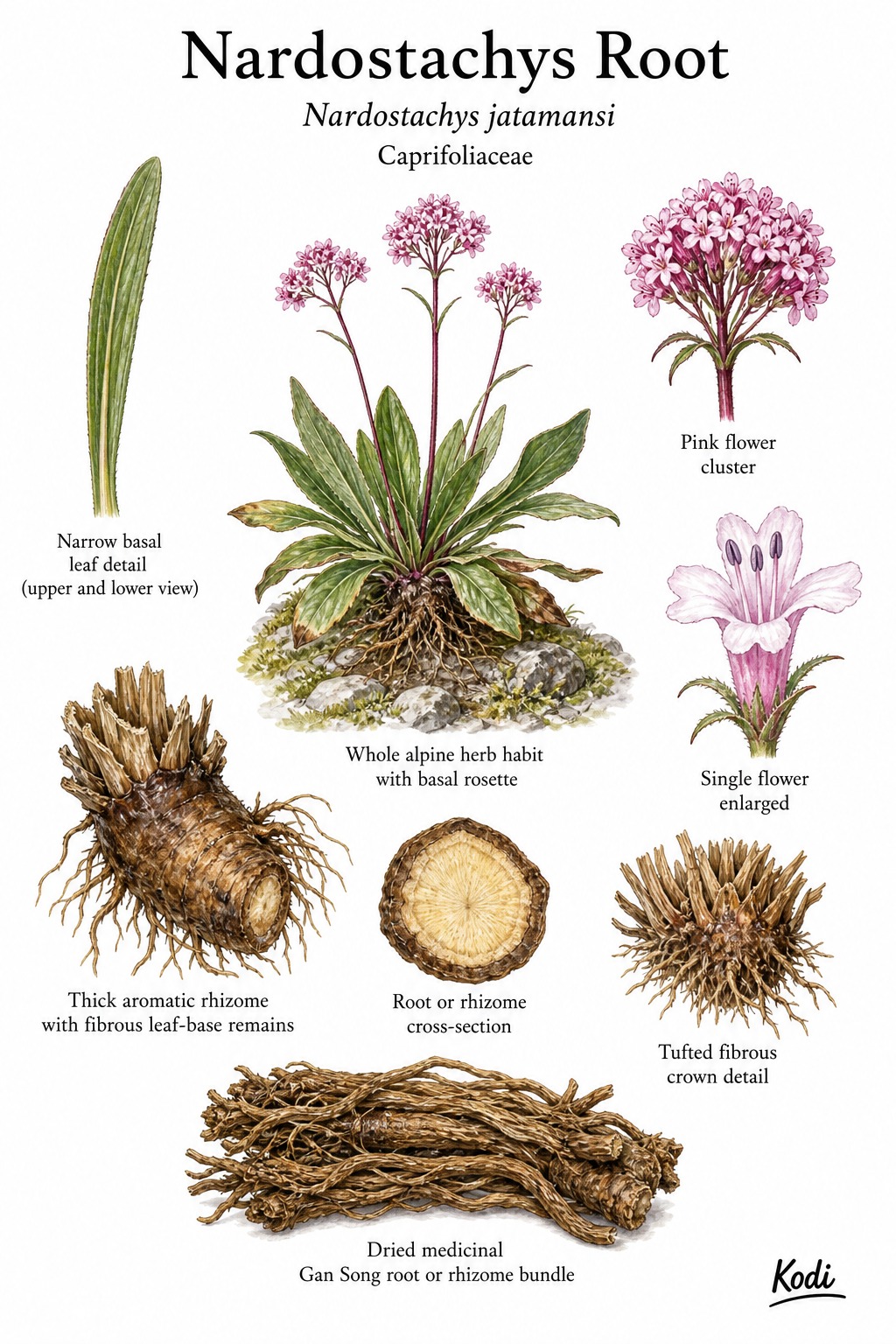
Known in TCM as Gan Song (甘松), this acrid and sweet, warm herb enters the Spleen and Stomach. Traditionally, it promotes Qi circulation and harmonizes the Middle Burner; relieves chest and abdominal distension and pain from Qi stagnation invaded by Cold, most often applied for abdominal distension, poor appetite, and nausea. Modern research has identified Jatamansone among its active constituents.
Part used: Root
Also Known As
Latin: Radix Seu Rhizoma Nardostachyos | Pinyin: Gan Song | Chinese: 甘松
TCM Properties
- Taste
- acrid, sweet
- Temperature
- warm
- Channels
- Spleen, Stomach
Traditional Use
Primary Actions
- Promotes Qi circulation and harmonizes the Middle Burner; relieves chest and abdominal distension and pain from Qi stagnation invaded by Cold
- Opens the appetite and tonifies the Spleen for poor appetite and nausea from Qi stagnation
Secondary Actions
- Used topically, ground into powder, for toothache and to promote hair growth
Classical References
- Documented in later Chinese materia medica for Qi stagnation with chest and abdominal pain, often combined with Mu Xiang (Aucklandia Root) and Xiang Yuan (Citron)
Modern Research
Active Compounds
- Jatamansone (valeranone)
- Calarene
- Valerianol
- Sesquiterpenes
Studied Effects
- Hepatoprotective activity demonstrated against thioacetamide-induced liver damage in animal models
- Tranquilizing, hypotensive, hypolipidemic, and anticonvulsant activity documented in pharmacological studies
- Sedative and hypno-sedative effects support traditional use for restlessness and Qi stagnation
PubMed References
Safety & Interactions
Cautions
- Qi and Blood deficiency without stagnation
Drug Interactions
- Theoretical additive sedative effect with CNS depressant medications given documented tranquilizing activity
Conditions
- Abdominal Distension Traditional ★★★☆☆ JSON
- Poor Appetite Traditional ★★☆☆☆ JSON
- Nausea Traditional ★★☆☆☆ JSON
- Toothache Traditional ★☆☆☆☆ JSON
Frequently Asked Questions
What is Nardostachys Root used for?
Nardostachys Root is traditionally used to Promotes Qi circulation and harmonizes the Middle Burner; relieves chest and abdominal distension and pain from Qi stagnation invaded by Cold, Opens the appetite and tonifies the Spleen for poor appetite and nausea from Qi stagnation. Research has investigated its effects on: Hepatoprotective activity demonstrated against thioacetamide-induced liver damage in animal models; Tranquilizing, hypotensive, hypolipidemic, and anticonvulsant activity documented in pharmacological studies.
What are other names for Nardostachys Root?
Nardostachys Root is also known as Nardostachys jatamansi, Spikenard, Chinese Spikenard. In TCM: 甘松 (Gan Song); Radix Seu Rhizoma Nardostachyos.
Is Nardostachys Root safe during pregnancy?
The safety of Nardostachys Root during pregnancy has not been established. Consult a qualified healthcare provider before use.
Does Nardostachys Root interact with any medications?
Nardostachys Root may interact with: Theoretical additive sedative effect with CNS depressant medications given documented tranquilizing activity. Always inform your healthcare provider of any herbal supplements you are taking.