Nacre (Mother of Pearl)
- Chinese
- 珍珠母
- Pinyin
- Zhen Zhu Mu
- Latin
- Concha Margaritifera
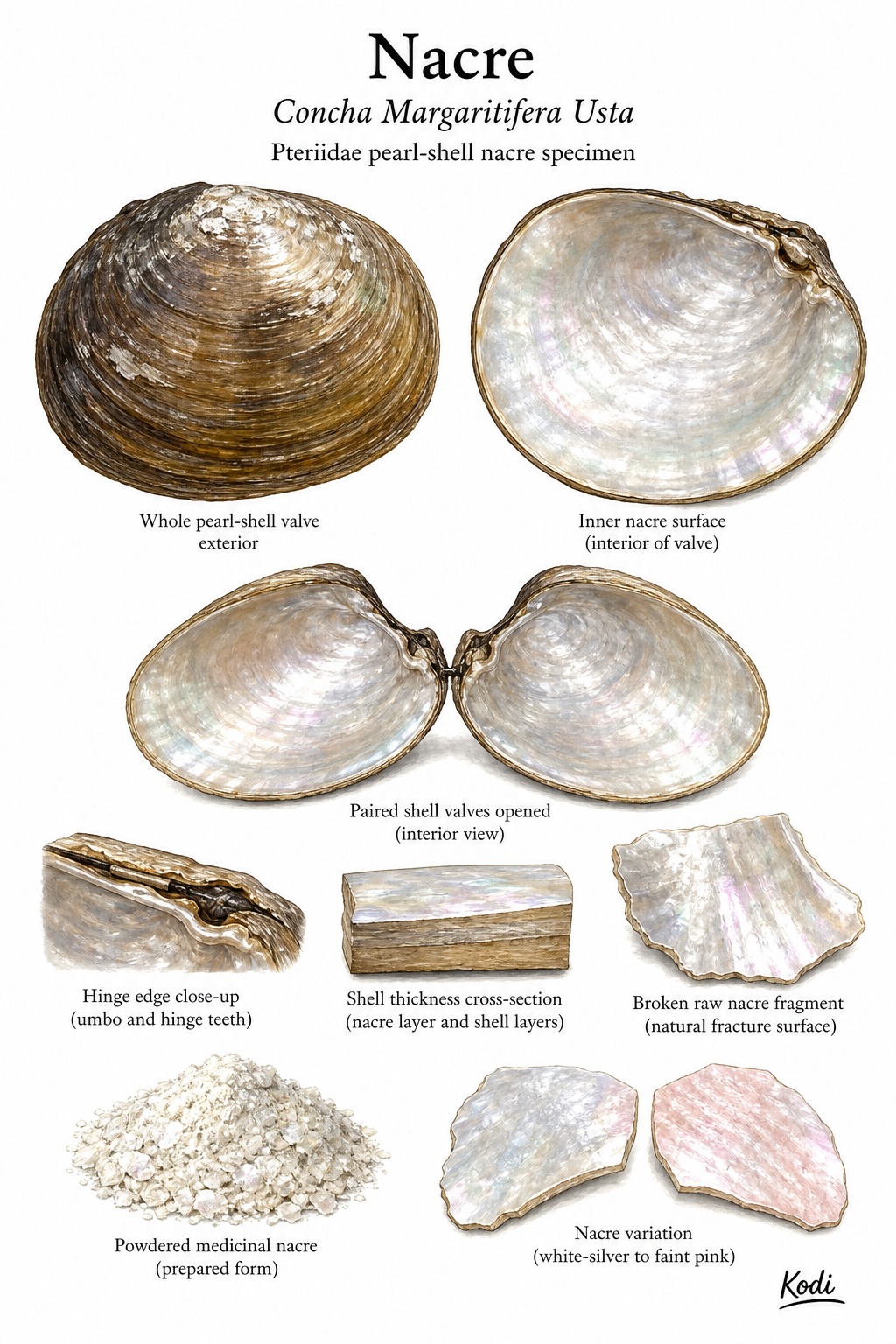
Known in TCM as Zhen Zhu Mu (珍珠母), this sweet and salty, cold herb enters the Heart and Liver. Traditionally, it calms the Liver and subdues Yang; treats dizziness, headache, tinnitus, irritability, and insomnia from Liver Yang rising, most often applied for dizziness, tinnitus, and insomnia. Modern research has identified Calcium among its active constituents.
Part used: Shell
Also Known As
Latin: Concha Margaritifera | Pinyin: Zhen Zhu Mu | Chinese: 珍珠母
TCM Properties
- Taste
- sweet, salty
- Temperature
- cold
- Channels
- Heart, Liver
Traditional Use
Primary Actions
- Calms the Liver and subdues Yang; treats dizziness, headache, tinnitus, irritability, and insomnia from Liver Yang rising
- Settles fright and calms the Spirit; used for palpitations and childhood convulsions
- Clears the Liver and brightens the eyes for visual impairment, blurred vision, and eye redness from Liver Yin deficiency or Yang rising
Secondary Actions
- Neutralizes stomach acid and relieves pain from acid regurgitation and peptic ulcers when calcined and powdered
Classical References
- Documented in later Chinese materia medica as a sinking, settling mineral-shell substance for Liver Yang rising, distinguished from Zhen Zhu (pearl), which more strongly calms the Heart
Modern Research
Active Compounds
- Calcium carbonate (aragonite)
- Conchiolin protein matrix
Studied Effects
- Nacre extract restores mineralization capacity of osteoblasts and stimulates bone formation in preclinical models
- Molecules in nacre inhibit osteoclast cathepsin K activity, reducing bone resorption
- Investigated as a biomaterial for bone graft substitution given its osteoinductive and osteoconductive properties
PubMed References
Safety & Interactions
Contraindications
- Spleen-Stomach Deficiency Cold
Cautions
- Must be smashed and decocted first due to its mineral density
- Source from quality-controlled suppliers given general heavy-metal contamination risk documented across mineral and shell Chinese medicinals
Conditions
- Dizziness Traditional ★★★☆☆ JSON
- Tinnitus Traditional ★★☆☆☆ JSON
- Insomnia Traditional ★★☆☆☆ JSON
- Blurred Vision Traditional ★★☆☆☆ JSON
- Acid Reflux Traditional ★☆☆☆☆ JSON
Frequently Asked Questions
What is Nacre (Mother of Pearl) used for?
Nacre (Mother of Pearl) is traditionally used to Calms the Liver and subdues Yang; treats dizziness, headache, tinnitus, irritability, and insomnia from Liver Yang rising, Settles fright and calms the Spirit; used for palpitations and childhood convulsions, Clears the Liver and brightens the eyes for visual impairment, blurred vision, and eye redness from Liver Yin deficiency or Yang rising. Research has investigated its effects on: Nacre extract restores mineralization capacity of osteoblasts and stimulates bone formation in preclinical models; Molecules in nacre inhibit osteoclast cathepsin K activity, reducing bone resorption.
What are other names for Nacre (Mother of Pearl)?
Nacre (Mother of Pearl) is also known as Mother-of-Pearl Shell, Pteria shell, Margaritifera. In TCM: 珍珠母 (Zhen Zhu Mu); Concha Margaritifera.
Is Nacre (Mother of Pearl) safe during pregnancy?
The safety of Nacre (Mother of Pearl) during pregnancy has not been established. Consult a qualified healthcare provider before use.
What are the contraindications for Nacre (Mother of Pearl)?
Nacre (Mother of Pearl) should not be used in: Spleen-Stomach Deficiency Cold. Consult a qualified healthcare provider before use.