Prepared Myrrh
- Chinese
- 制没药
- Pinyin
- Zhi Mo Yao
- Latin
- Myrrha Praeparata
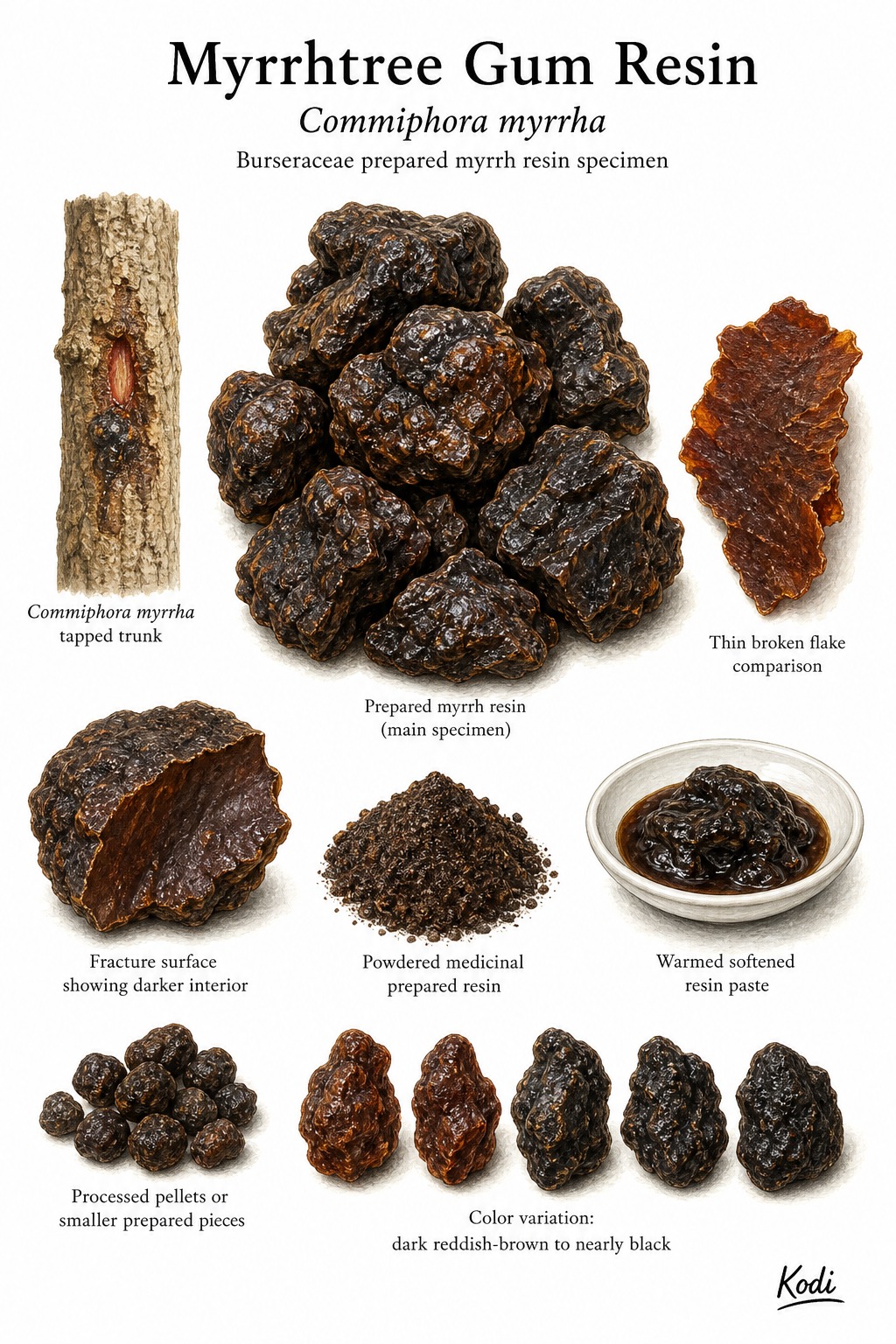
Known in TCM as Zhi Mo Yao (制没药), this bitter, neutral herb enters the Heart, Liver, and Spleen. Traditionally, it the vinegar- or stir-processed form of Mo Yao (Myrrh), carrying forward its Blood-invigorating, stasis-dispelling, and swelling-reducing actions with reduced digestive irritation, most often applied for blood stasis, traumatic injury, and chest pain. Modern research has identified Sesquiterpenes among its active constituents.
Part used: Myrrh resin
Also Known As
Latin: Myrrha Praeparata | Pinyin: Zhi Mo Yao | Chinese: 制没药
TCM Properties
- Taste
- bitter
- Temperature
- neutral
- Channels
- Heart, Liver, Spleen
Traditional Use
Primary Actions
- The vinegar- or stir-processed form of Mo Yao (Myrrh), carrying forward its Blood-invigorating, stasis-dispelling, and swelling-reducing actions with reduced digestive irritation
- Preferred over the raw resin for internal, oral use, particularly in patients with sensitive digestion
Secondary Actions
- Typically paired with prepared Ru Xiang (Frankincense) for the same reasons
Classic Formulas
- Shi Xiao San (Sudden Smile Powder)
Classical References
- Processing (vinegar-frying or stir-frying) is a later pharmacy convention applied to raw Mo Yao specifically to reduce its harsh, stomach-irritating quality while retaining its Blood-invigorating action
Modern Research
Active Compounds
- Sesquiterpenes
- Furanoeudesma-1,3-diene
- Terpenoids and steroids
Studied Effects
- Processing is understood to reduce gastrointestinal irritation from raw resin acids while preserving the anti-inflammatory and analgesic sesquiterpene content documented for Commiphora myrrha
- Dedicated modern studies isolating the processed form specifically are limited; pharmacology is largely extrapolated from raw myrrh research
PubMed References
Safety & Interactions
Contraindications
- Pregnancy, due to Blood-invigorating action
Cautions
- Gentler on digestion than raw Mo Yao, but still cautioned in Spleen-Stomach Deficiency
Conditions
- Blood Stasis Traditional ★★★☆☆ JSON
- Traumatic Injury Traditional ★★★☆☆ JSON
- Chest Pain Traditional ★★☆☆☆ JSON
- Dysmenorrhea Traditional ★★☆☆☆ JSON
Frequently Asked Questions
What is Prepared Myrrh used for?
Prepared Myrrh is traditionally used to The vinegar- or stir-processed form of Mo Yao (Myrrh), carrying forward its Blood-invigorating, stasis-dispelling, and swelling-reducing actions with reduced digestive irritation, Preferred over the raw resin for internal, oral use, particularly in patients with sensitive digestion. Research has investigated its effects on: Processing is understood to reduce gastrointestinal irritation from raw resin acids while preserving the anti-inflammatory and analgesic sesquiterpene content documented for Commiphora myrrha; Dedicated modern studies isolating the processed form specifically are limited; pharmacology is largely extrapolated from raw myrrh research.
What are other names for Prepared Myrrh?
Prepared Myrrh is also known as Processed Myrrh, Commiphora myrrha (processed), Praeparata. In TCM: 制没药 (Zhi Mo Yao); Myrrha Praeparata.
Is Prepared Myrrh safe during pregnancy?
Prepared Myrrh is not recommended during pregnancy.
What are the contraindications for Prepared Myrrh?
Prepared Myrrh should not be used in: Pregnancy, due to Blood-invigorating action. Consult a qualified healthcare provider before use.