Myrrh
- Chinese
- 没药
- Pinyin
- Mo Yao
- Latin
- Resina Myrrhae
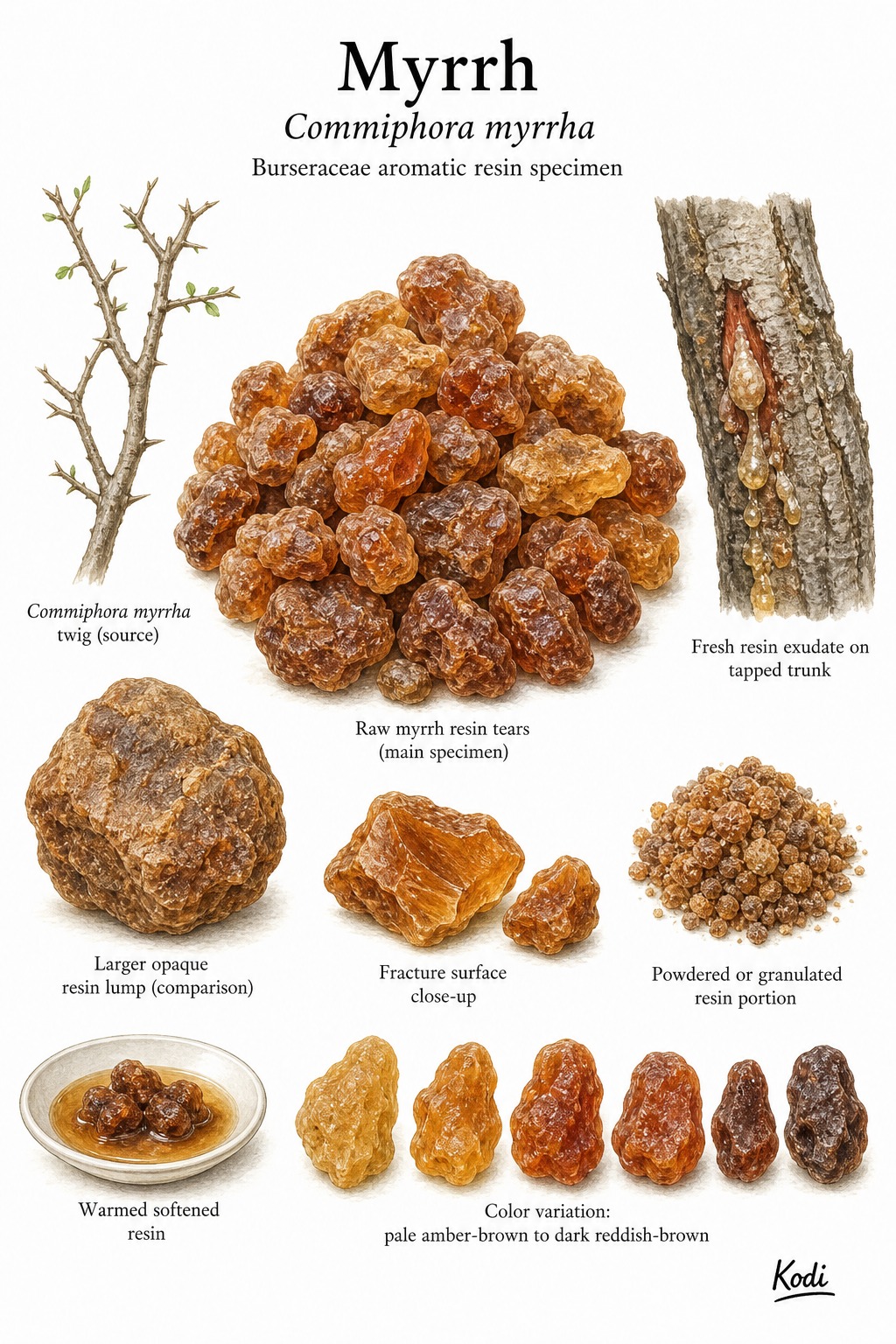
Known in TCM as Mo Yao (没药), this bitter, neutral herb enters the Heart, Liver, and Spleen. Traditionally, it invigorates Blood and dispels Blood stasis; treats sharp, fixed, stabbing pain that worsens at night, from chest and abdominal pain to traumatic injury, most often applied for blood stasis, traumatic injury, and chest pain. Modern research has identified Sesquiterpenes among its active constituents.
Part used: Resin
Also Known As
Latin: Resina Myrrhae | Pinyin: Mo Yao | Chinese: 没药
TCM Properties
- Taste
- bitter
- Temperature
- neutral
- Channels
- Heart, Liver, Spleen
Traditional Use
Primary Actions
- Invigorates Blood and dispels Blood stasis; treats sharp, fixed, stabbing pain that worsens at night, from chest and abdominal pain to traumatic injury
- Reduces swelling and generates flesh; used for sores, carbuncles, and non-healing wounds
Secondary Actions
- Almost always paired with Ru Xiang (Frankincense) in formulas, the two resins working together to invigorate Blood and reduce swelling
Classic Formulas
- Shi Xiao San (Sudden Smile Powder, with Ru Xiang added)
Classical References
- Documented in later Chinese materia medica as an imported resin for Blood stasis pain, paired with Ru Xiang (Frankincense) since the Song dynasty
Modern Research
Active Compounds
- Sesquiterpenes
- Furanoeudesma-1,3-diene
- Terpenoids and steroids
Studied Effects
- Anti-inflammatory and analgesic activity demonstrated in animal models, including reduced acetic-acid-induced writhing and decreased PGE2 in edema tissue
- Antimicrobial and wound-healing activity documented in resin extract studies
- Traditionally used for wounds, mouth ulcers, and inflammatory conditions across multiple cultures
PubMed References
Safety & Interactions
Contraindications
- Pregnancy, due to Blood-invigorating action
Cautions
- Spleen-Stomach Deficiency, as the raw resin can be irritating to digestion (the prepared/processed form is preferred for internal use)
Conditions
- Blood Stasis Traditional ★★★☆☆ JSON
- Traumatic Injury Traditional ★★★☆☆ JSON
- Chest Pain Traditional ★★☆☆☆ JSON
- Dysmenorrhea Traditional ★★☆☆☆ JSON
Frequently Asked Questions
What is Myrrh used for?
Myrrh is traditionally used to Invigorates Blood and dispels Blood stasis; treats sharp, fixed, stabbing pain that worsens at night, from chest and abdominal pain to traumatic injury, Reduces swelling and generates flesh; used for sores, carbuncles, and non-healing wounds. Research has investigated its effects on: Anti-inflammatory and analgesic activity demonstrated in animal models, including reduced acetic-acid-induced writhing and decreased PGE2 in edema tissue; Antimicrobial and wound-healing activity documented in resin extract studies.
What are other names for Myrrh?
Myrrh is also known as Commiphora myrrha, Commiphora molmol, Myrrha. In TCM: 没药 (Mo Yao); Resina Myrrhae.
Is Myrrh safe during pregnancy?
Myrrh is not recommended during pregnancy.
What are the contraindications for Myrrh?
Myrrh should not be used in: Pregnancy, due to Blood-invigorating action. Consult a qualified healthcare provider before use.