White Mustard Seed
- Chinese
- 芥子
- Pinyin
- Jie Zi
- Latin
- Semen Sinapis
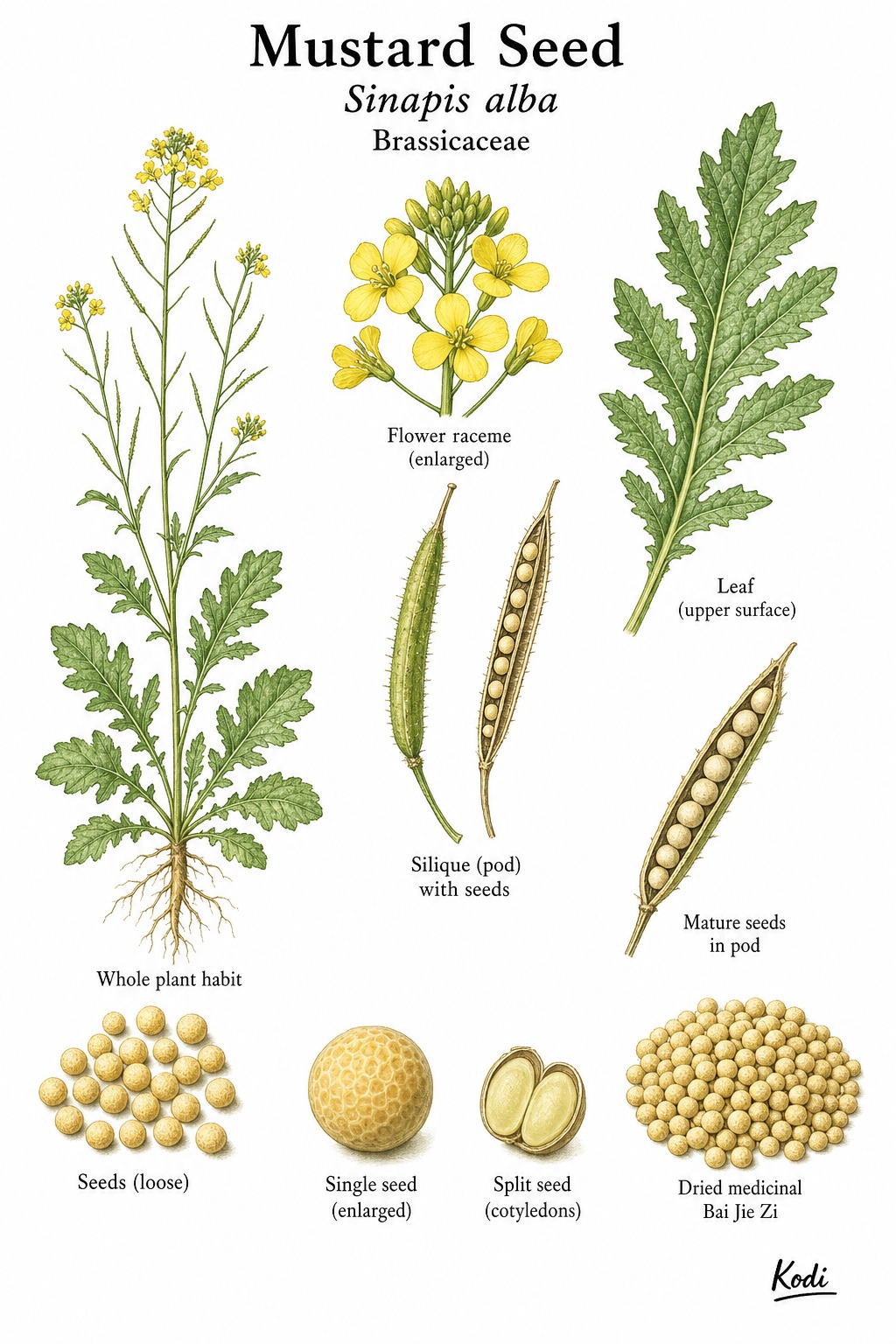
Known in TCM as Jie Zi (芥子), this acrid, warm herb enters the Lung and Stomach. Traditionally, it warms the Lung and dispels Cold-Phlegm; treats cough and wheezing from cold-phlegm accumulation in the chest, most often applied for cough, wheezing, and joint pain. Modern research has identified Sinalbin among its active constituents.
Part used: Seed
Also Known As
Latin: Semen Sinapis | Pinyin: Jie Zi | Chinese: 芥子
TCM Properties
- Taste
- acrid
- Temperature
- warm
- Channels
- Lung, Stomach
Traditional Use
Primary Actions
- Warms the Lung and dispels Cold-Phlegm; treats cough and wheezing from cold-phlegm accumulation in the chest
- Promotes Qi circulation, dissipates nodulation, and unblocks the channels and collaterals; reduces swelling and relieves pain from Phlegm-stagnation nodules and Bi syndrome
Secondary Actions
- Stir-baked preparation preferred for internal use; raw seed reserved primarily for external application
Classic Formulas
- San Zi Yang Qin Tang (Three Seed Decoction to Nourish the Parents)
Classical References
- Documented in later Chinese materia medica for cold-phlegm accumulations and channel-obstructing nodules
Modern Research
Active Compounds
- Sinalbin
- Sinigrin
- Allyl isothiocyanate (from related Brassica/Sinapis species)
Studied Effects
- Isothiocyanate metabolites show anti-inflammatory, antimicrobial, and antioxidant activity
- Allyl isothiocyanate-rich mustard seed powder inhibited bladder cancer growth and blocked muscle invasion in preclinical models
- Chemopreventive mechanisms include inhibition of carcinogen-activating cytochrome P450 enzymes
PubMed References
Safety & Interactions
Contraindications
- Lung Yin deficiency with dry cough
- Excess Heat patterns
Cautions
- Raw seed and topical plasters can cause skin irritation or blistering with prolonged contact
- Overuse may consume Qi and injure Yin
Conditions
- Cough Traditional ★★★☆☆ JSON
- Wheezing Traditional ★★★☆☆ JSON
- Joint Pain Traditional ★★☆☆☆ JSON
- Phlegm Accumulation Traditional ★★☆☆☆ JSON
Frequently Asked Questions
What is White Mustard Seed used for?
White Mustard Seed is traditionally used to Warms the Lung and dispels Cold-Phlegm; treats cough and wheezing from cold-phlegm accumulation in the chest, Promotes Qi circulation, dissipates nodulation, and unblocks the channels and collaterals; reduces swelling and relieves pain from Phlegm-stagnation nodules and Bi syndrome. Research has investigated its effects on: Isothiocyanate metabolites show anti-inflammatory, antimicrobial, and antioxidant activity; Allyl isothiocyanate-rich mustard seed powder inhibited bladder cancer growth and blocked muscle invasion in preclinical models.
What are other names for White Mustard Seed?
White Mustard Seed is also known as Sinapis alba, Bai Jie Zi, Sinapis. In TCM: 芥子 (Jie Zi); Semen Sinapis.
Is White Mustard Seed safe during pregnancy?
The safety of White Mustard Seed during pregnancy has not been established. Consult a qualified healthcare provider before use.
What are the contraindications for White Mustard Seed?
White Mustard Seed should not be used in: Lung Yin deficiency with dry cough; Excess Heat patterns. Consult a qualified healthcare provider before use.