Muskmelon Pedicel
- Chinese
- 瓜蒂
- Pinyin
- Gua Di
- Latin
- Calycis Melo
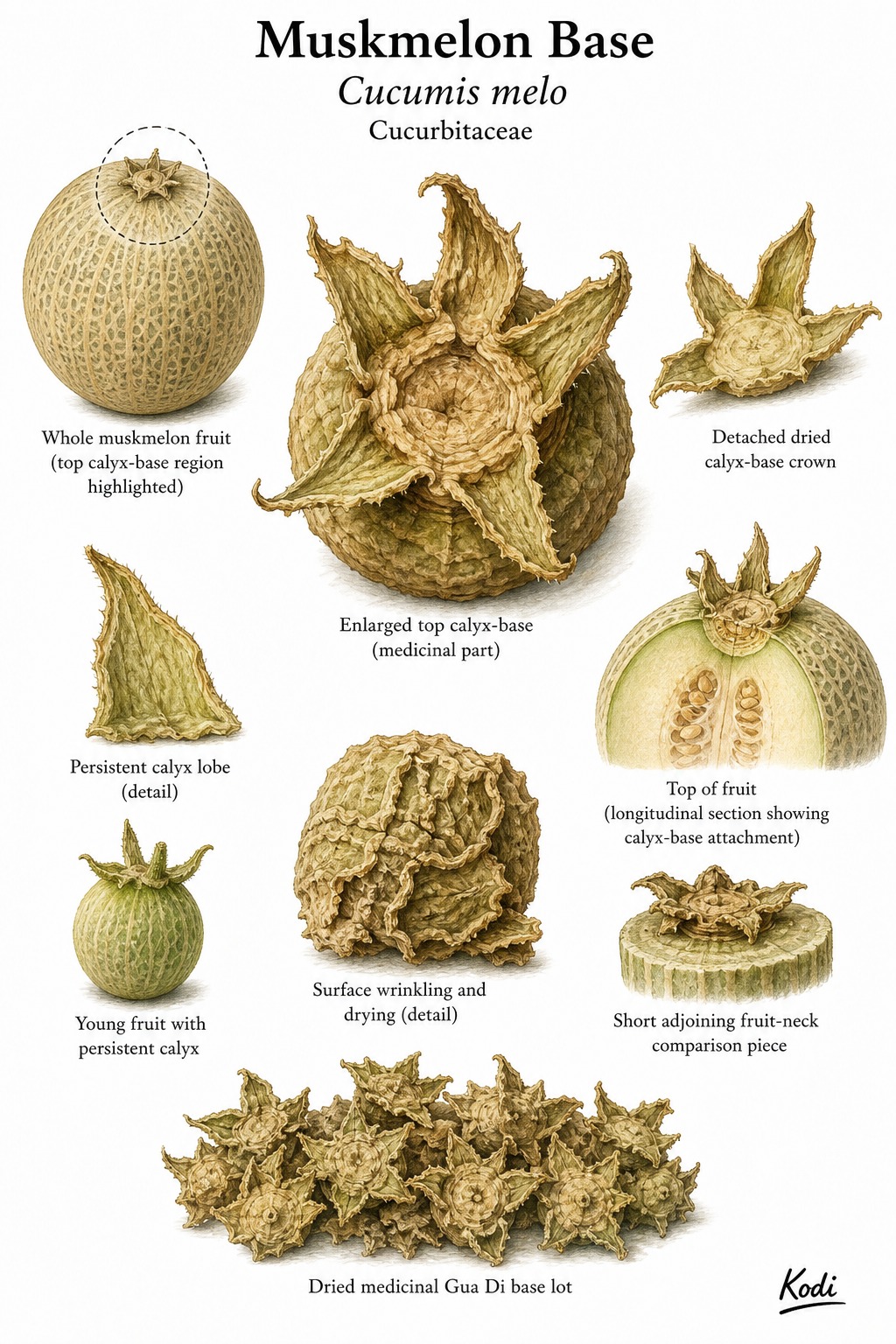
Known in TCM as Gua Di (瓜蒂), this bitter, cold herb enters the Spleen and Stomach. Traditionally, it induces vomiting; the classic emetic herb for retained food or Phlegm-Heat lodged in the chest and epigastrium, most often applied for phlegm accumulation, jaundice, and epilepsy. Modern research has identified Cucurbitacins among its active constituents.
Also Known As
Latin: Calycis Melo | Pinyin: Gua Di | Chinese: 瓜蒂
TCM Properties
- Taste
- bitter
- Temperature
- cold
- Channels
- Spleen, Stomach
Traditional Use
Primary Actions
- Induces vomiting; the classic emetic herb for retained food or Phlegm-Heat lodged in the chest and epigastrium
- Drains Damp-Heat to treat jaundice, taken orally or insufflated as a powder into the nose
Classic Formulas
- Gua Di San (Muskmelon Pedicel Powder)
Classical References
- Shang Han Lun (Treatise on Cold Damage, Zhang Zhongjing, c. 200 CE) includes Gua Di San, combining Gua Di with Chi Xiao Dou and Dou Chi for retained food and chest distension
Modern Research
Active Compounds
- Cucurbitacins
Studied Effects
- Traditional emetic action is consistent with the known gastric-irritant activity of cucurbitacin compounds; dedicated modern clinical pharmacology is limited
Safety & Interactions
Contraindications
- Pregnancy
- Weak or frail patients, upper gastrointestinal bleeding, or cardiac disease, where induced vomiting carries real risk
- Spleen-Stomach Qi deficiency
Cautions
- Toxic and easily injures Stomach Qi; used only in small, carefully measured doses (2.5-5g decocted, 0.3-1g as powder)
- Not for prolonged or repeated use
Conditions
Frequently Asked Questions
What is Muskmelon Pedicel used for?
Muskmelon Pedicel is traditionally used to Induces vomiting; the classic emetic herb for retained food or Phlegm-Heat lodged in the chest and epigastrium, Drains Damp-Heat to treat jaundice, taken orally or insufflated as a powder into the nose. Research has investigated its effects on: Traditional emetic action is consistent with the known gastric-irritant activity of cucurbitacin compounds; dedicated modern clinical pharmacology is limited.
What are other names for Muskmelon Pedicel?
Muskmelon Pedicel is also known as Cucumis melo pedicel, Muskmelon Base, Tian Gua Di (synonym). In TCM: 瓜蒂 (Gua Di); Calycis Melo.
Is Muskmelon Pedicel safe during pregnancy?
Muskmelon Pedicel is not recommended during pregnancy.
What are the contraindications for Muskmelon Pedicel?
Muskmelon Pedicel should not be used in: Pregnancy; Weak or frail patients, upper gastrointestinal bleeding, or cardiac disease, where induced vomiting carries real risk; Spleen-Stomach Qi deficiency. Consult a qualified healthcare provider before use.