Musk
- Chinese
- 麝香
- Pinyin
- She Xiang
- Latin
- Moschus
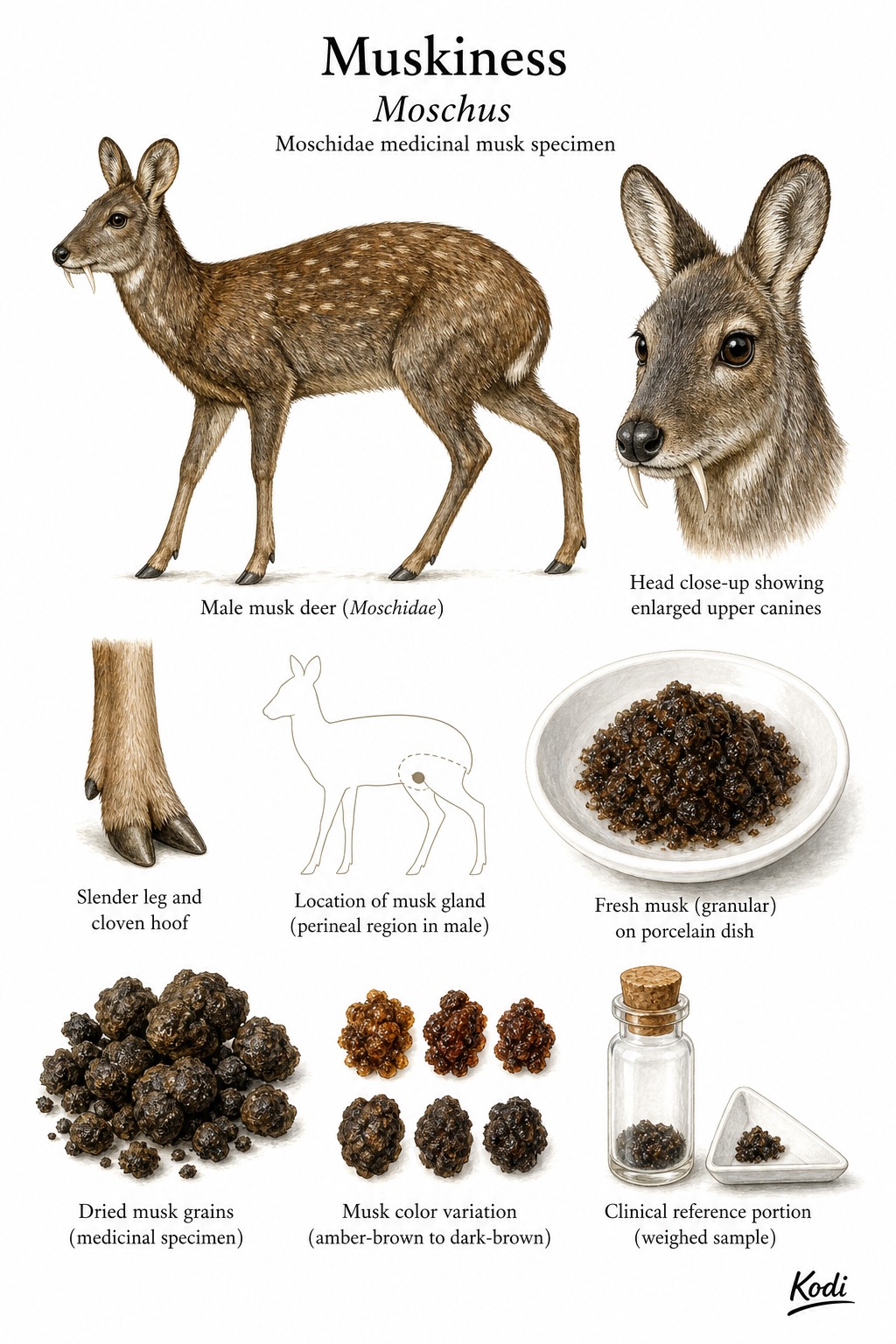
Known in TCM as She Xiang (麝香), this acrid, warm herb enters the Heart, Spleen, and Liver. Traditionally, it opens the orifices and awakens the Spirit; the premier herb for loss of consciousness, stroke, and seizure with phlegm misting the sensory orifices, most often applied for stroke, epilepsy, and traumatic injury. Modern research has identified Muscone among its active constituents.
Part used: Musk
Also Known As
Latin: Moschus | Pinyin: She Xiang | Chinese: 麝香
TCM Properties
- Taste
- acrid
- Temperature
- warm
- Channels
- Heart, Spleen, Liver
Traditional Use
Primary Actions
- Opens the orifices and awakens the Spirit; the premier herb for loss of consciousness, stroke, and seizure with phlegm misting the sensory orifices
- Invigorates Blood and unblocks the channels; dissolves masses and reduces swelling
- Reduces swelling and relieves pain for sores, carbuncles, and traumatic injury
Secondary Actions
- Extremely aromatic and highly penetrating, traditionally regarded as able to reach every part of the body almost instantly when administered
Classic Formulas
- An Gong Niu Huang Wan (Calm the Palace Pill with Cattle Gallstone)
Classical References
- Shen Nong Ben Cao Jing (Divine Farmer's Materia Medica, c. 200 CE) lists She Xiang among the orifice-opening substances for loss of consciousness and convulsion
Modern Research
Active Compounds
- Muscone
- Androstane steroids
- Peptides
Studied Effects
- Muscone protects against myocardial ischemia-reperfusion injury via PI3K/Akt pathway activation in animal models
- Anti-inflammatory, antioxidant, and neuroprotective activity documented across multiple studies
- Angiogenic effects observed, including promotion of skin flap vascularization in preclinical models
PubMed References
Safety & Interactions
Contraindications
- Pregnancy (its penetrating, Blood-invigorating nature may injure the fetus)
Cautions
- Sourced from CITES Appendix I/II-listed, critically endangered musk deer species; genuine natural musk is now restricted, and over 99% of Chinese patent medicines have substituted synthetic or alternative musk
- Verify legal, sustainable sourcing before use
- Used in extremely small doses given its potency and cost
Conditions
Frequently Asked Questions
What is Musk used for?
Musk is traditionally used to Opens the orifices and awakens the Spirit; the premier herb for loss of consciousness, stroke, and seizure with phlegm misting the sensory orifices, Invigorates Blood and unblocks the channels; dissolves masses and reduces swelling, Reduces swelling and relieves pain for sores, carbuncles, and traumatic injury. Research has investigated its effects on: Muscone protects against myocardial ischemia-reperfusion injury via PI3K/Akt pathway activation in animal models; Anti-inflammatory, antioxidant, and neuroprotective activity documented across multiple studies.
What are other names for Musk?
Musk is also known as Deer Musk, Moschus moschiferus, Moschus berezovskii. In TCM: 麝香 (She Xiang); Moschus.
Is Musk safe during pregnancy?
Musk is not recommended during pregnancy.
What are the contraindications for Musk?
Musk should not be used in: Pregnancy (its penetrating, Blood-invigorating nature may injure the fetus). Consult a qualified healthcare provider before use.