Jasminorange Leaf and Twig
- Chinese
- 九里香
- Pinyin
- Jiu Li Xiang
- Latin
- Folium Et Cacumen Murrayae
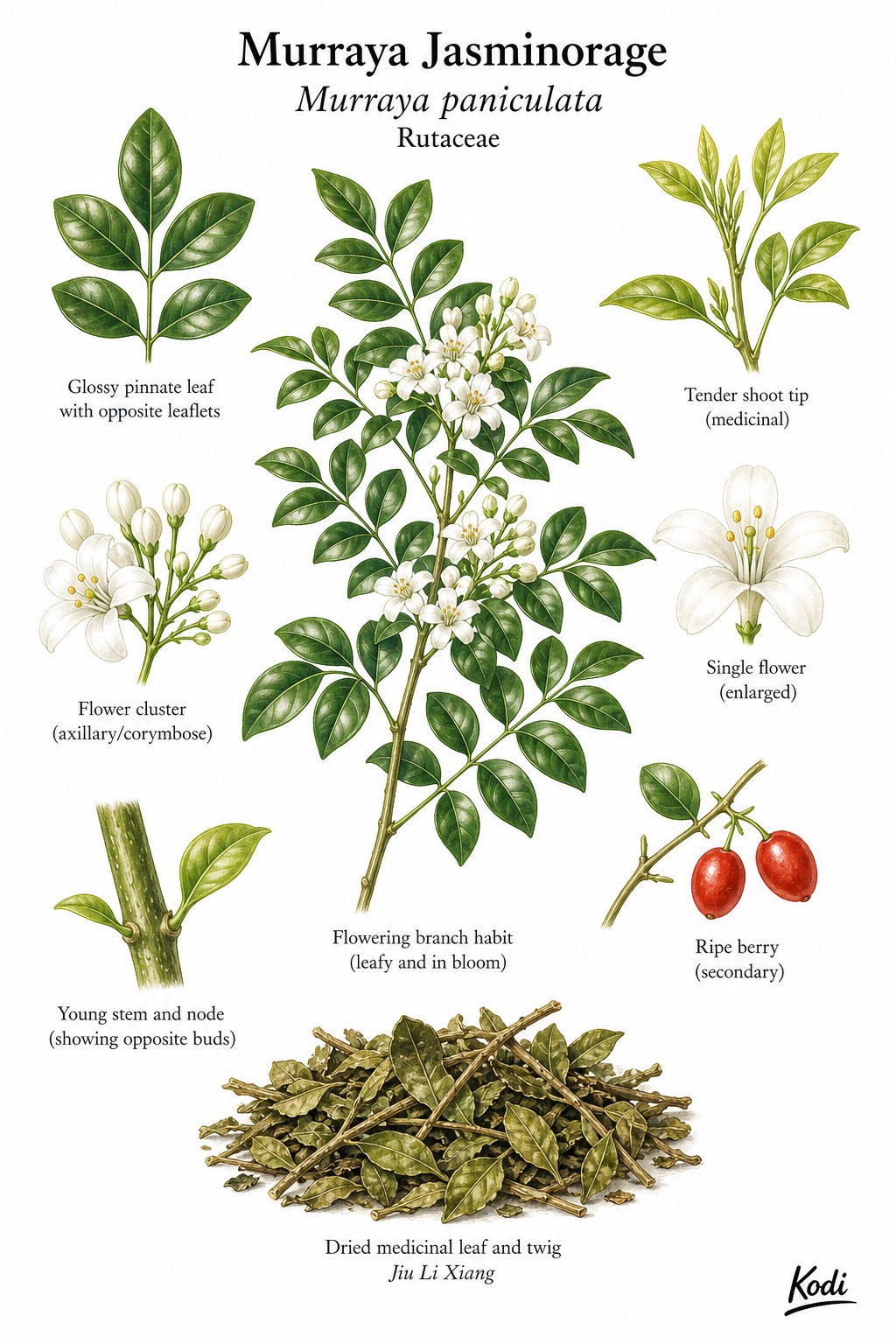
Known in TCM as Jiu Li Xiang (九里香), this bitter and acrid, slightly warm herb enters the Liver and Stomach. Traditionally, it promotes Qi circulation and alleviates pain; treats stomachache and bloating from Qi stagnation, most often applied for abdominal pain, traumatic injury, and toothache. Modern research has identified Coumarins among its active constituents.
Part used: Leaf
Also Known As
Latin: Folium Et Cacumen Murrayae | Pinyin: Jiu Li Xiang | Chinese: 九里香
TCM Properties
- Taste
- bitter, acrid
- Temperature
- slightly warm
- Channels
- Liver, Stomach
Traditional Use
Primary Actions
- Promotes Qi circulation and alleviates pain; treats stomachache and bloating from Qi stagnation
- Invigorates Blood and dissipates Blood stasis; used for traumatic injury and rheumatic joint pain
Secondary Actions
- Applied externally for insect and snake bites, toothache, and traumatic injury
Classical References
- Documented in southern Chinese regional materia medica as a Qi-moving, Blood-invigorating shrub used both internally and topically
Modern Research
Active Compounds
- Coumarins
- Flavonoids
- Alkaloids (concentrated in the root)
- Volatile oils
Studied Effects
- Anti-inflammatory and analgesic activity demonstrated across multiple animal studies
- Antidiarrheal, antibacterial, and antioxidant activity documented
- Coumarin derivatives isolated from leaves and twigs show anti-inflammatory activity
PubMed References
Safety & Interactions
Contraindications
- Pregnancy, due to Blood-invigorating action
Cautions
- Toxicology of concentrated alkaloid fractions (particularly from the root) is less well characterized than the leaf and twig used in this record
Conditions
- Abdominal Pain Traditional ★★☆☆☆ JSON
- Traumatic Injury Traditional ★★☆☆☆ JSON
- Toothache Traditional ★★☆☆☆ JSON
- Rheumatism Traditional ★☆☆☆☆ JSON
Frequently Asked Questions
What is Jasminorange Leaf and Twig used for?
Jasminorange Leaf and Twig is traditionally used to Promotes Qi circulation and alleviates pain; treats stomachache and bloating from Qi stagnation, Invigorates Blood and dissipates Blood stasis; used for traumatic injury and rheumatic joint pain. Research has investigated its effects on: Anti-inflammatory and analgesic activity demonstrated across multiple animal studies; Antidiarrheal, antibacterial, and antioxidant activity documented.
What are other names for Jasminorange Leaf and Twig?
Jasminorange Leaf and Twig is also known as Murraya paniculata, Murraya exotica, Orange Jasmine. In TCM: 九里香 (Jiu Li Xiang); Folium Et Cacumen Murrayae.
Is Jasminorange Leaf and Twig safe during pregnancy?
Jasminorange Leaf and Twig is not recommended during pregnancy.
What are the contraindications for Jasminorange Leaf and Twig?
Jasminorange Leaf and Twig should not be used in: Pregnancy, due to Blood-invigorating action. Consult a qualified healthcare provider before use.