Mung Bean
- Chinese
- 绿豆
- Pinyin
- Lv Dou
- Latin
- Semen Phaseoli Radiati
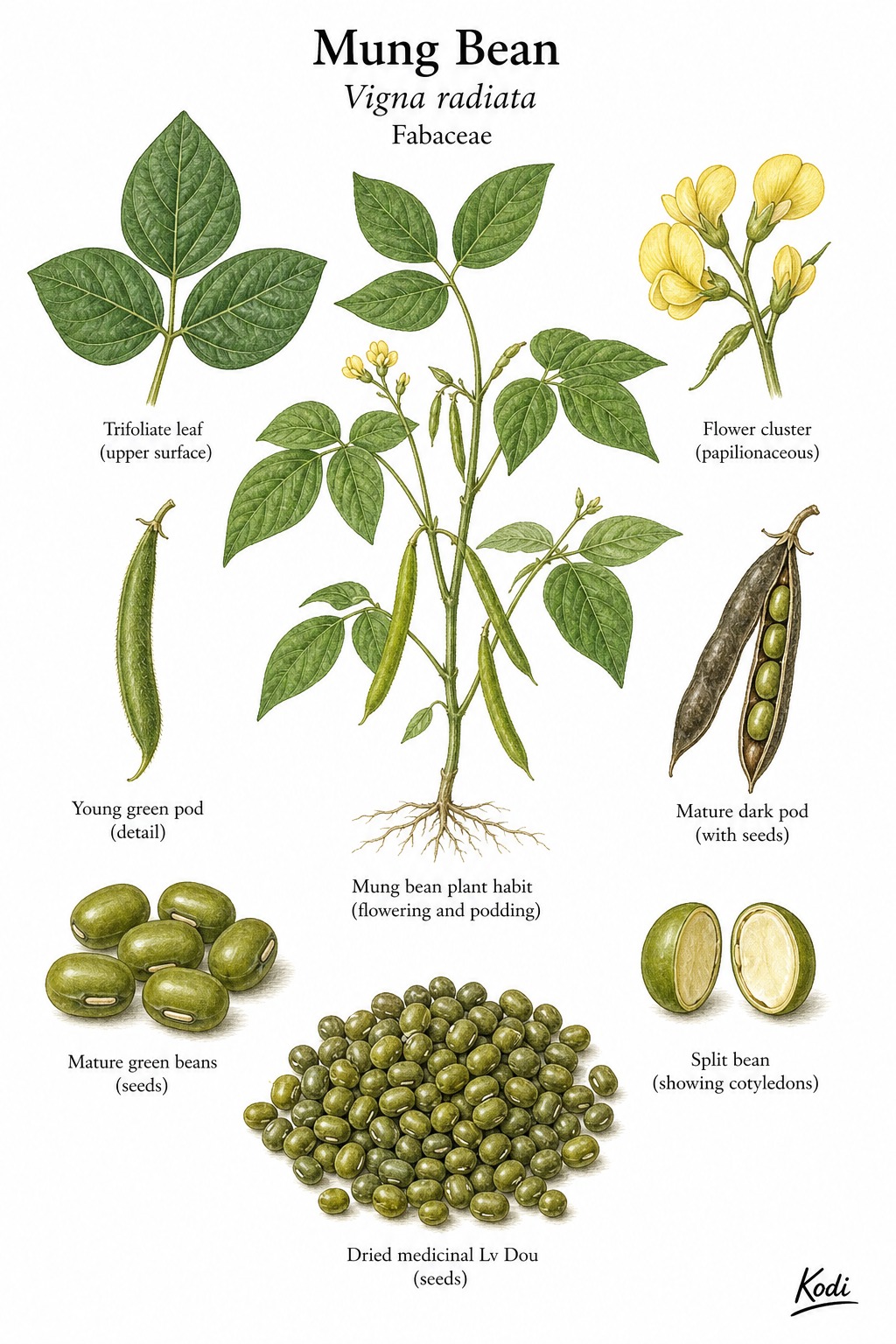
Known in TCM as Lv Dou (绿豆), this sweet, cold herb enters the Heart and Stomach. Traditionally, it clears Heat and resolves toxicity; treats Heat-toxin skin disorders including carbuncles, boils, and infected sores, most often applied for carbuncle, edema, and jaundice. Modern research has identified Polyphenols among its active constituents.
Part used: Seed
Also Known As
Latin: Semen Phaseoli Radiati | Pinyin: Lv Dou | Chinese: 绿豆
TCM Properties
- Taste
- sweet
- Temperature
- cold
- Channels
- Heart, Stomach
Traditional Use
Primary Actions
- Clears Heat and resolves toxicity; treats Heat-toxin skin disorders including carbuncles, boils, and infected sores
- Dispels Summerheat and relieves thirst
- Promotes urination and reduces edema, and is traditionally used to counter ingested toxins
Secondary Actions
- Widely used as a food-medicine, particularly as a cooling summer soup or porridge
Classical References
- Documented in later Chinese materia medica as a food-grade Heat-clearing and detoxifying legume, non-toxic and safe for regular dietary use
Modern Research
Active Compounds
- Polyphenols
- Flavonoids (vitexin, isovitexin)
- Proteins and resistant starch
Studied Effects
- Antidiabetic activity demonstrated in alloxan-induced diabetic animal models
- Antioxidant and antimicrobial activity documented across seed extracts
- Supports traditional dietary use for Heat-clearing and detoxification
PubMed References
Safety & Interactions
Cautions
- Very cold in nature; use cautiously in weak digestion or Cold-constitution individuals
Conditions
Frequently Asked Questions
What is Mung Bean used for?
Mung Bean is traditionally used to Clears Heat and resolves toxicity; treats Heat-toxin skin disorders including carbuncles, boils, and infected sores, Dispels Summerheat and relieves thirst, Promotes urination and reduces edema, and is traditionally used to counter ingested toxins. Research has investigated its effects on: Antidiabetic activity demonstrated in alloxan-induced diabetic animal models; Antioxidant and antimicrobial activity documented across seed extracts.
What are other names for Mung Bean?
Mung Bean is also known as Vigna radiata, Phaseoli. In TCM: 绿豆 (Lv Dou); Semen Phaseoli Radiati.
Is Mung Bean safe during pregnancy?
Mung Bean is generally considered safe during pregnancy in normal amounts. Therapeutic or concentrated doses should be discussed with a qualified healthcare provider before use.