Mume Flower, Japanese Apricot Flower
- Chinese
- 绿萼梅
- Pinyin
- Lu E Mei
- Latin
- Flos Mume
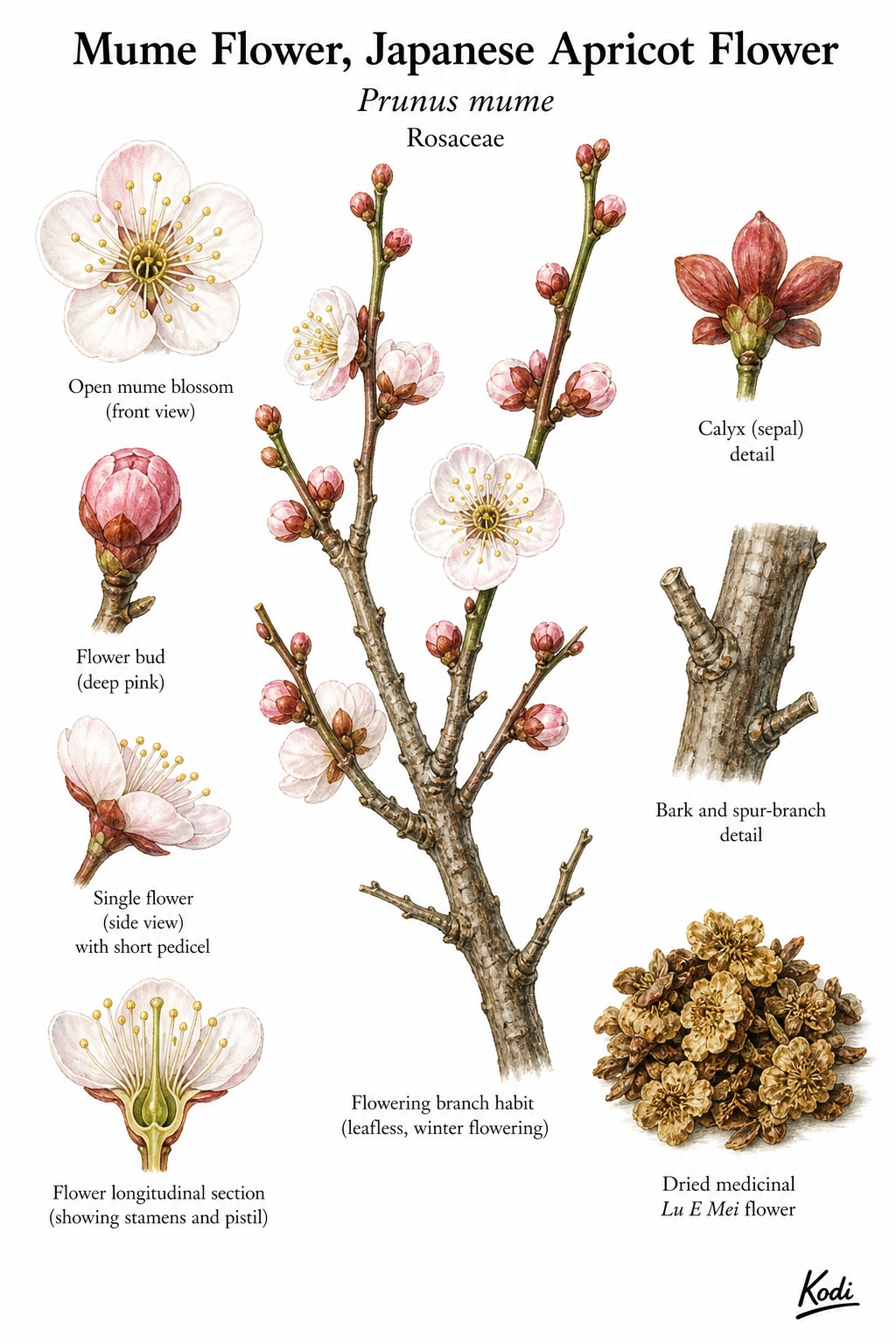
Known in TCM as Lu E Mei (绿萼梅), this bitter and slightly sweet, neutral herb enters the Liver, Stomach, and Lung. Traditionally, it soothes the Liver and regulates Qi; relieves chest and epigastric distension from Liver Qi stagnation, most often applied for liver qi stagnation, poor appetite, and indigestion. Modern research has identified Volatile among its active constituents.
Part used: Flower
Also Known As
Latin: Flos Mume | Pinyin: Lu E Mei | Chinese: 绿萼梅
TCM Properties
- Taste
- bitter, slightly sweet
- Temperature
- neutral
- Channels
- Liver, Stomach, Lung
Traditional Use
Primary Actions
- Soothes the Liver and regulates Qi; relieves chest and epigastric distension from Liver Qi stagnation
- Harmonizes the Stomach and resolves Phlegm; treats poor appetite, indigestion, and a globus sensation from Qi stagnation
Secondary Actions
- The single-petalled, green-calyx variety is the preferred medicinal grade; double-petalled ornamental varieties have weaker therapeutic effect
Classical References
- Documented in later Chinese materia medica as a gentle Qi-regulating flower, distinct from Wu Mei (Mume fruit), which is used as an astringent rather than a Qi-mover
Modern Research
Active Compounds
- Volatile aromatic oils
- Flavonoids
Studied Effects
- Dedicated modern pharmacological study specific to the flower is limited; supporting evidence is largely traditional
Conditions
- Liver Qi Stagnation Traditional ★★★☆☆ JSON
- Poor Appetite Traditional ★★☆☆☆ JSON
- Indigestion Traditional ★★☆☆☆ JSON
- Chest Pain Traditional ★☆☆☆☆ JSON
Frequently Asked Questions
What is Mume Flower, Japanese Apricot Flower used for?
Mume Flower, Japanese Apricot Flower is traditionally used to Soothes the Liver and regulates Qi; relieves chest and epigastric distension from Liver Qi stagnation, Harmonizes the Stomach and resolves Phlegm; treats poor appetite, indigestion, and a globus sensation from Qi stagnation. Research has investigated its effects on: Dedicated modern pharmacological study specific to the flower is limited; supporting evidence is largely traditional.
What are other names for Mume Flower, Japanese Apricot Flower?
Mume Flower, Japanese Apricot Flower is also known as Prunus mume flower, Green Calyx Plum Blossom, Mume. In TCM: 绿萼梅 (Lu E Mei); Flos Mume.
Is Mume Flower, Japanese Apricot Flower safe during pregnancy?
Mume Flower, Japanese Apricot Flower is generally considered safe during pregnancy in normal amounts. Therapeutic or concentrated doses should be discussed with a qualified healthcare provider before use.